
Paul
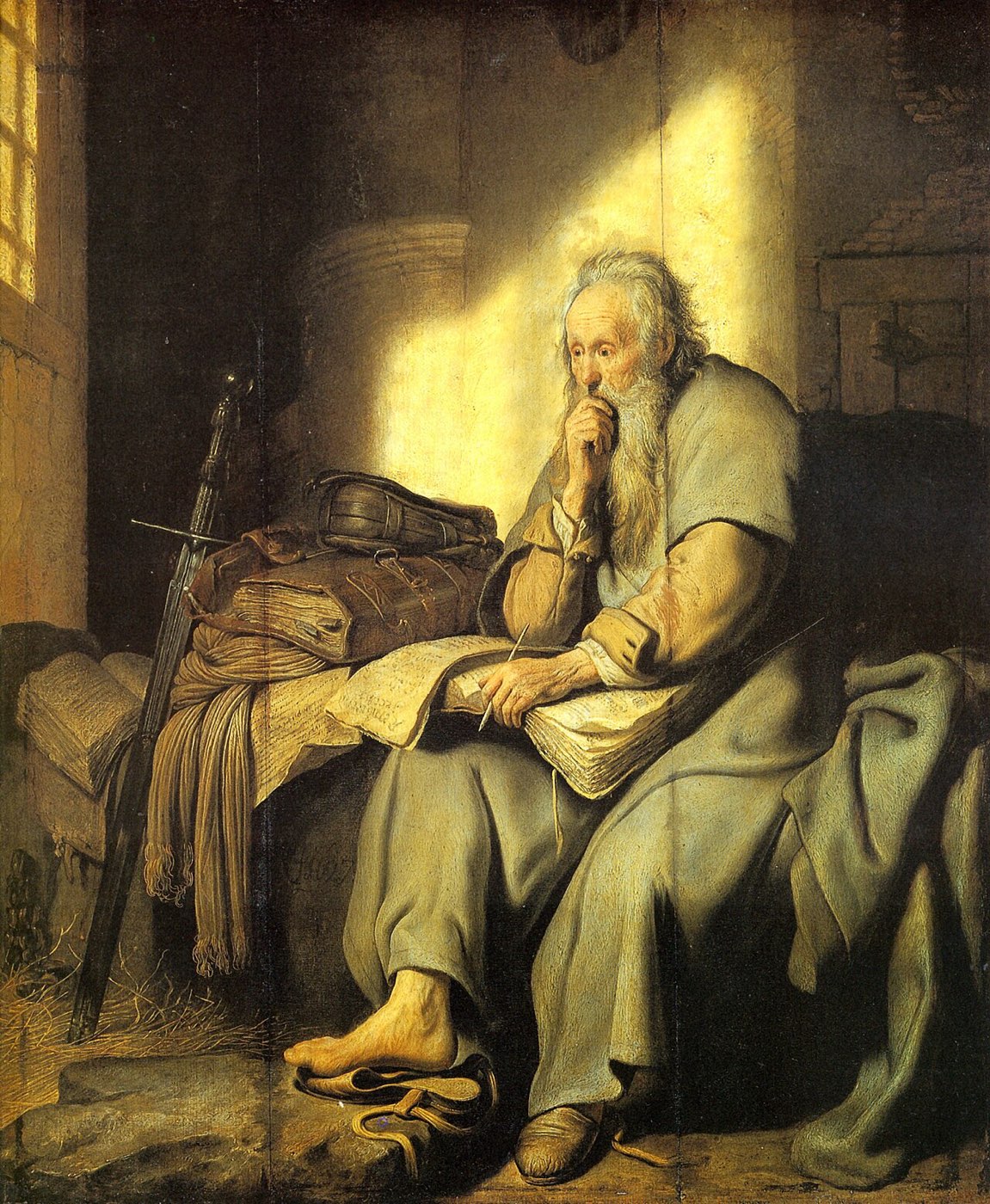
Saul of Tarsus had the perfect resume for the wrong side: a Roman citizen from a Greek university city, trained in Jerusalem under Gamaliel, “as to righteousness under the law, blameless” – and so zealous that he made himself the young church’s chief predator, “breathing threats and murder” (Philippians 3:4-6; Acts 9:1). The risen Christ dropped him on the Damascus road with a question that fused Christ and church forever: “Saul, Saul, why are you persecuting me?” Three days blind, then baptized, then immediately preaching Jesus in the synagogues he had come to purge (Acts 9:1-22).
The next three decades rewired the Mediterranean. From Antioch he launched three missionary journeys, planting churches across Cyprus, Galatia, Macedonia, Greece, and Asia – stoned at Lystra, jailed singing at Philippi, mocked at Athens, eighteen months at Corinth, three years at Ephesus – while fighting the war that mattered most to him: that Gentiles come to Christ by faith alone, without the law’s yoke (Acts 13-20; Galatians 2). Arrested in the temple, he spent years defending himself before governors and kings, survived shipwreck, and reached Rome in chains, “proclaiming the kingdom of God… without hindrance” (Acts 21-28).
Thirteen letters carry his name – from the thunder of Galatians and the cathedral of Romans to the tenderness of Philemon – written mostly on the road and in cells. His theology never strayed far from his biography: the chief of sinners saved by grace, strength perfected in weakness, a treasure carried in a jar of clay. The farewell stands written from his last prison: “I have fought the good fight, I have finished the race, I have kept the faith” (2 Timothy 4:7). Tradition says Nero’s Rome beheaded him; his letters have outlived the empire by a comfortable margin.
In the New Testament
- Persecutor (Acts 7:58-8:3; Galatians 1:13)
- The Damascus road (Acts 9; 22; 26)
- The missionary journeys (Acts 13-20)
- Arrest, trials, voyage, Rome (Acts 21-28)
- The thirteen letters, Romans through Philemon
Key Locations
- Damascus The ancient Syrian city on whose road Saul met the risen Christ.
- Antioch The great city on the Orontes where believers were first called Christians and Paul's missions were launched.
- Galatia The Anatolian province whose churches -- Antioch, Iconium, Lystra, Derbe -- received Paul's fieriest letter.
- Philippi The Roman colony in Macedonia -- Lydia, the jailer, the midnight hymns, and Paul's most joyful letter.
- Athens The intellectual capital of the Greek world, where Paul preached the unknown God on the Areopagus.
- Corinth The rich, rough port on the isthmus where Paul stayed eighteen months and wrote his hardest pastoral letters.
- Ephesus The great city of Asia -- Artemis' temple, Paul's three-year ministry, and the first church of Revelation.
- Jerusalem The holy city -- David's capital, the temple's home, the stage of the crucifixion, resurrection, and Pentecost.
- Caesarea Maritima Herod's harbor city, Rome's capital in Judea -- home of Cornelius, Philip, and Paul's two-year imprisonment.
- Malta The island where the shipwreck survivors wintered, the viper failed, and the sick were healed.
- Rome The capital of the empire -- Paul's destination, his prison, and the "Babylon" from which Peter wrote.
- Spain Paul's intended western frontier -- the edge of the known world, and the measure of his unfinished ambition.