
Rome
Rome was simply “the city”: a million people, the center of the world’s roads, money, and power, seat of the Caesars whose title “lord” would collide with the church’s oldest confession. A large Jewish community lived there, and the gospel arrived early and anonymously – perhaps with Pentecost pilgrims (Acts 2:10) – so that when Paul wrote his greatest letter to Rome around AD 57, he was writing to a church he had never met, to prepare his way west toward Spain (Romans 1:8-15; 15:22-29).
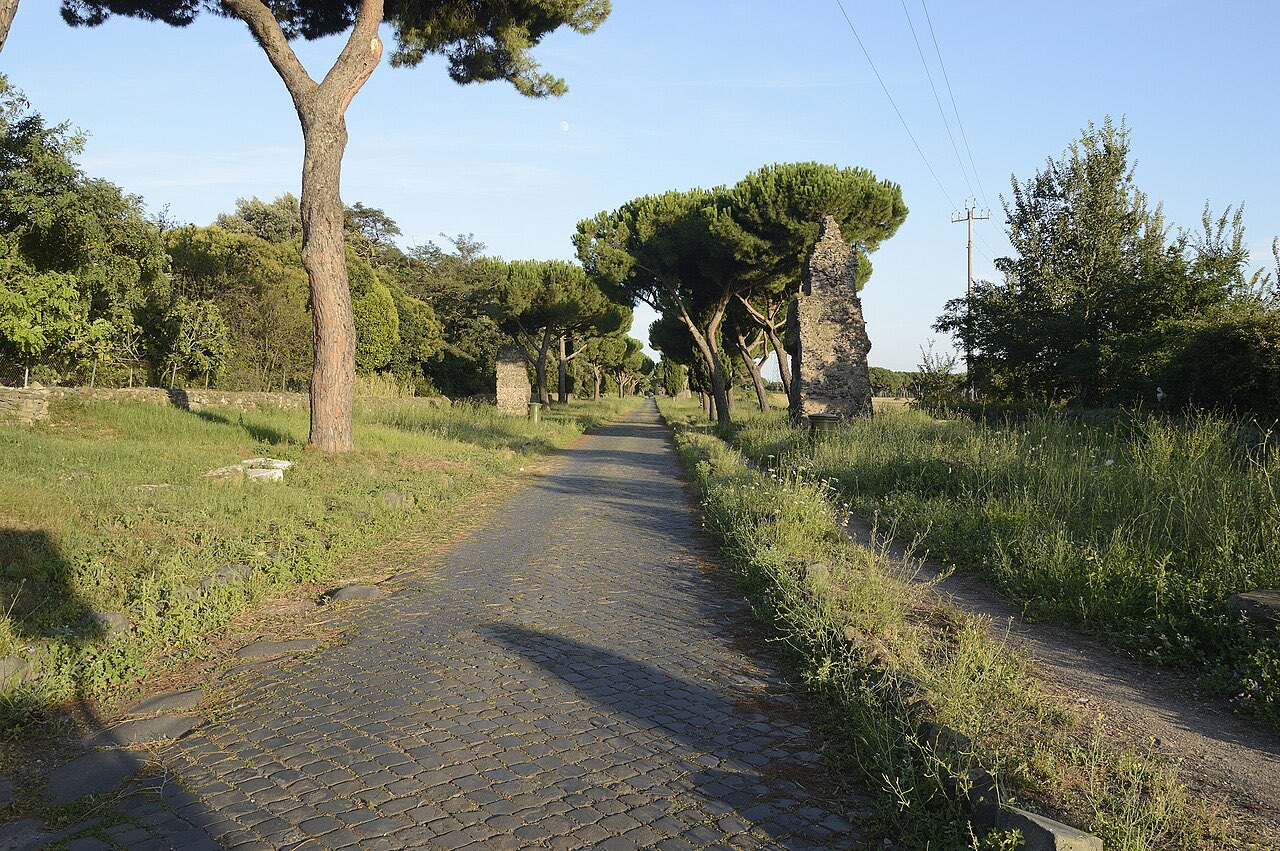
He arrived at last as a prisoner. After shipwreck and a winter on Malta, believers walked out thirty miles along the Appian Way to meet him, “and on seeing them, Paul thanked God and took courage” (Acts 28:15). Acts closes with him under house arrest, “proclaiming the kingdom of God… with all boldness and without hindrance” – the gospel loose in Caesar’s capital, and the word even reaching “the whole imperial guard” and “Caesar’s household” (Philippians 1:13; 4:22). From that Roman custody came Ephesians, Philippians, Colossians, and Philemon.
Tradition and early testimony place both Paul’s and Peter’s martyrdoms at Rome under Nero, after the fire of AD 64; 2 Timothy, written from a harsher second imprisonment, is Paul’s farewell – “the time of my departure has come” (2 Timothy 4:6-8). Peter’s greeting from “she who is at Babylon” (1 Peter 5:13) is widely read as code for Rome, and Revelation’s Babylon the Great wears the city’s seven hills (Revelation 17:9). The capital that killed the apostles could not stop their letters.
In the New Testament
- The letter to the Romans
- Paul’s arrival and house arrest (Acts 28:11-31)
- The prison letters; the gospel in Caesar’s household (Philippians 1:12-13; 4:22)
- The final imprisonment (2 Timothy 1:16-17; 4:6-18)
- “Babylon” as Rome (1 Peter 5:13; Revelation 17)