
Week 29: Paul in Ephesus
Remember? Reconnect with the story before you read on -- take the warm-up quiz on the weeks behind you.
When am I? This week's readings sit near AD 54 -- see this week on the timeline.
The Big Picture
Paul’s extended stay in Ephesus, which lasted over two years according to Acts 19:10, represents one of the most significant chapters in the expansion of early Christianity. Ephesus was the de facto capital of the Roman province of Asia, a city of approximately 250,000 people, and home to one of the Seven Wonders of the Ancient World: the Temple of Artemis (Diana). It was a center of commerce, religion, and magic, a place where the spiritual powers of the Greco-Roman world were concentrated in extraordinary density. Into this environment Paul brings the gospel, and the results are both spectacular and volatile.
Acts 19 reads like an action-packed narrative: Paul encounters disciples who know only John’s baptism and lays hands on them to receive the Holy Spirit. He teaches daily in the lecture hall of Tyrannus for two years, and “all the residents of Asia heard the word of the Lord, both Jews and Greeks.” God performs “extraordinary miracles” through Paul – even handkerchiefs and aprons that had touched him carry healing power. Seven sons of a Jewish chief priest named Sceva attempt to use the name of Jesus as a magic formula and are violently attacked by a demonized man. The incident triggers a citywide reckoning: practitioners of magic bring their scrolls and burn them publicly in a bonfire valued at 50,000 pieces of silver. And then, at the height of Paul’s success, the silversmiths who make shrines of Artemis incite a riot that nearly destroys the church.
It is during this Ephesian period, around 53-55 AD, that Paul writes his first letter to the Corinthians. Reports have reached him – through “Chloe’s people” (1 Corinthians 1:11) and through a letter the Corinthians themselves sent (1 Corinthians 7:1) – that the church he planted in Corinth is fracturing along multiple fault lines. There are personality-based factions (“I follow Paul,” “I follow Apollos,” “I follow Cephas”), lawsuits between believers, sexual immorality, disputes about food offered to idols, chaos in worship, and confusion about the resurrection. First Corinthians is Paul’s pastoral response to this cascade of problems, and it begins where all good theology must begin: with the cross.
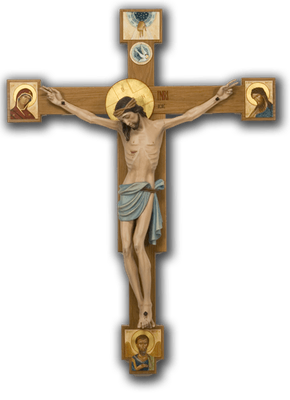
The opening chapters of 1 Corinthians (1-4) lay the theological foundation for everything that follows. The divisions in Corinth are not merely a leadership problem; they reflect a fundamental misunderstanding of the gospel itself. The Corinthians have imported the values of their culture – rhetorical sophistication, social status, philosophical factionalism – into the church. Paul’s response is not to choose a better leader but to dismantle the entire value system by pointing to the cross. The message of the cross is “foolishness” (moria) to the perishing but “the power of God” to those being saved. God has deliberately chosen the foolish, the weak, and the low to shame the wise and strong. The foundation of the church is not human wisdom but Christ crucified, and no one can lay any other.
This Week’s Readings
| Day | Reading | Title |
|---|---|---|
| 1 | Acts 19 | Ephesus — Disciples of John, Extraordinary Miracles, Sons of Sceva, Riot of Silversmiths |
| 2 | 1 Corinthians 1 | Divisions in Corinth, Wisdom of the Cross, Foolishness of God |
| 3 | 1 Corinthians 2 | God’s Wisdom Revealed by the Spirit, Mind of Christ |
| 4 | 1 Corinthians 3 | Spiritual Immaturity, God’s Temple, Building on the Foundation |
| 5 | 1 Corinthians 4 | Servants of Christ, Fools for Christ, Kingdom of Power |
Key Characters
- Paul – Apostle ministering in Ephesus and writing to Corinth to address divisions and confusion.
- Apollos – Gifted teacher whose work in Corinth inadvertently became a rallying point for factions.
- Cephas (Peter) – Another figure around whom Corinthian factions have formed.
- Chloe’s people – Messengers from Corinth who report the divisions to Paul.
- Sons of Sceva – Jewish exorcists whose failed attempt to invoke Jesus’ name exposes the difference between genuine faith and magical manipulation.
- Demetrius – Silversmith in Ephesus who incites a riot to protect his trade in Artemis shrines.
Key Locations
- Ephesus – Major city in Asia Minor, center of the Artemis cult and a hub of magic and commerce.
- The Hall of Tyrannus – Lecture hall where Paul teaches daily during the heat of the day.
- The Temple of Artemis – One of the Seven Wonders, center of Ephesian civic and religious identity.
- Corinth – The church Paul is writing to, now plagued by divisions and moral confusion.
Key Themes
- The power of the gospel over the powers of darkness – In Ephesus, the gospel confronts and defeats magic, idolatry, and demonic forces
- The foolishness of the cross – God’s wisdom is revealed in the crucified Christ, which overturns all human systems of status and power
- Unity in Christ versus personality cults – The church belongs to Christ, not to any human leader, and divisions based on teacher loyalty betray the gospel
- Spiritual maturity versus spiritual infancy – The Corinthians’ divisions reveal that they are still thinking like the world, not like people taught by the Spirit
- Christ as the only foundation – All ministry is building on the one foundation already laid; the quality of that building will be tested by fire
Discussion
Comments are powered by GitHub Discussions. To post, sign in with your GitHub account using the link below the reaction icons.