
Day 2: Divisions in Corinth, Wisdom of the Cross, Foolishness of God
Reading: 1 Corinthians 1
Listen to: 1 Corinthians chapter 1
Historical Context
First Corinthians was written from Ephesus around 53-55 AD during Paul’s extended stay there (Acts 19). The letter is Paul’s response to multiple reports of problems in the Corinthian church. He has received oral information from “Chloe’s people” (1:11) about divisions and factions, and he has also received a letter from the Corinthians asking questions about marriage, food offered to idols, spiritual gifts, and the resurrection (7:1). First Corinthians is therefore both a reactive and a responsive document – Paul is addressing problems he has been told about and answering questions he has been asked.
To understand why the Corinthian church was so divided, we must understand Corinthian culture. Corinth, as we saw in Week 27, was a prosperous Roman colony rebuilt by Julius Caesar in 44 BC. Its population was a mix of Roman colonists (many of them freedmen), Greeks, Jews, and immigrants from across the Mediterranean. Social stratification was severe. A small elite of wealthy patrons dominated civic life, and social mobility was primarily achieved through attaching oneself to a powerful patron. The patron-client system permeated every aspect of Corinthian society: politics, business, religion, and intellectual life. Philosophers and rhetoricians competed for wealthy patrons who would fund their teaching in exchange for prestige. Students formed fierce loyalty to their teachers, defending their rhetorical style, their philosophical positions, and their social status as superior to all rivals.
This is the cultural DNA that the Corinthian Christians brought into the church. When Paul writes, “each one of you says, ‘I follow Paul,’ or ‘I follow Apollos,’ or ‘I follow Cephas,’ or ‘I follow Christ’” (verse 12), he is describing the importation of the patron-client factionalism of Corinthian society into the body of Christ. The issue is not that Paul, Apollos, and Peter taught contradictory doctrines; it is that their followers have turned them into competing brands, each faction boasting about its teacher’s superiority. The “I follow Christ” party is likely not a humble group but the most arrogant faction of all – those who claim to need no human teacher at all and appeal directly to Christ as a way of one-upping everyone else.
Paul’s first rhetorical move is devastating: “Is Christ divided? Was Paul crucified for you? Or were you baptized in the name of Paul?” (verse 13). The questions are absurd on their face, and that is the point. The very idea that the church could be divided into factions named after human leaders is theologically incoherent. There is one Christ, one cross, one baptism. Paul then distances himself from any cult of personality by noting that he baptized very few Corinthians personally (Crispus, Gaius, and the household of Stephanas) – “for Christ did not send me to baptize but to preach the gospel” (verse 17).
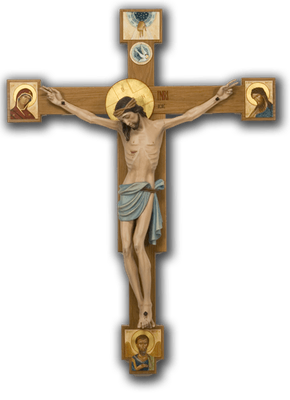
The theological heart of the chapter begins at verse 18: “For the word of the cross is folly to those who are perishing, but to us who are being saved it is the power of God.” The Greek word for “folly” is moria, from which we derive “moron” – the cross is moronic, idiotic, absurd to those who evaluate it by the world’s standards. And those standards, Paul argues, are precisely what the Corinthians have been using. They have been evaluating the gospel the same way they evaluate everything else: by rhetorical skill, social prestige, and intellectual sophistication. But the cross explodes all of these categories.
Paul’s argument draws on Isaiah 29:14: “I will destroy the wisdom of the wise, and the discernment of the discerning I will thwart.” The cross is God’s deliberate subversion of human wisdom. Jews demand signs – miraculous demonstrations of divine power – and Greeks seek wisdom – philosophical sophistication and rhetorical elegance. But Paul preaches “Christ crucified, a stumbling block to Jews and folly to Gentiles” (verse 23). To the Jewish sensibility, a crucified Messiah was a contradiction in terms; the Messiah was supposed to conquer, not be conquered. Deuteronomy 21:23 declared that anyone hung on a tree was under God’s curse. To the Greek sensibility, the idea that God would reveal himself through the shameful execution of a Galilean peasant was intellectually ridiculous. Crucifixion was the most degrading form of Roman punishment, reserved for slaves, pirates, and the lowest criminals. A crucified god was, to the sophisticated Greek mind, a category error.
Yet this is precisely where God’s power and wisdom are revealed. “The foolishness of God is wiser than men, and the weakness of God is stronger than men” (verse 25). Paul is not saying God is foolish or weak; he is saying that even the lowest expression of God’s wisdom and power infinitely surpasses the highest achievement of human intelligence and strength. The cross appears foolish because it operates on a completely different plane than human wisdom. Human wisdom seeks to ascend through achievement; the cross descends through suffering. Human power dominates through force; the cross conquers through self-sacrifice. The entire value system of the world is inverted.
Paul clinches the argument by pointing to the Corinthians themselves as evidence (verses 26-31). “Not many of you were wise according to worldly standards, not many were powerful, not many were of noble birth.” The composition of the Corinthian church – a mix of slaves, freedmen, manual laborers, and a few wealthier patrons – was itself a demonstration of God’s strategy. God chose the foolish to shame the wise, the weak to shame the strong, the low and despised to nullify the things that are. The purpose is crystal clear: “so that no human being might boast in the presence of God” (verse 29). The elimination of boasting is the theological goal of the entire argument. If God saved through human wisdom, the wise could boast. If God saved through human strength, the strong could boast. But God saves through a crucified Messiah, and no one can boast in a cross. The only legitimate boast is the one Jeremiah prescribed: “Let the one who boasts, boast in the Lord” (verse 31, quoting Jeremiah 9:24).
Key Themes
- The cross as the criterion of all wisdom – Every value system, every claim to superiority, every source of boasting is dismantled by the crucified Christ
- God’s deliberate inversion of human values – God chooses the foolish, weak, and despised not despite their inadequacy but because of it, so that his power alone receives glory
- Unity grounded in Christ, not in human leaders – The church’s identity is found in the one who was crucified for them, not in the teachers who serve them
Connections
- Old Testament Roots: Paul quotes Isaiah 29:14 (destruction of human wisdom) and Jeremiah 9:23-24 (boast in the Lord); the pattern of God choosing the unlikely echoes the entire Old Testament narrative: younger sons (Jacob, David), barren women (Sarah, Hannah), the smallest nation (Israel)
- New Testament Echoes: The theology of the cross here is developed further in 1 Corinthians 2, Galatians 6:14 (“far be it from me to boast except in the cross”), and Philippians 2:5-11 (the self-emptying of Christ); the theme of God choosing the weak pervades Paul’s letters (2 Corinthians 12:9-10)
Reflection Questions
- The Corinthians divided along the lines of their favorite teachers. In what ways do modern Christians divide along similar lines – denominational loyalty, celebrity pastors, theological camps, or political allegiances?
- Paul says the cross is “foolishness” to the world’s way of thinking. Where do you feel the tension between the message of the cross and the values your culture celebrates (success, power, prestige, self-promotion)?
- “God chose what is weak in the world to shame the strong.” How does this principle shape the way you view your own weaknesses and inadequacies? Does it change how you think about who God uses and how?
Prayer
God of the cross, forgive us for importing the world’s value system into your church. We confess that we are drawn to power, prestige, and eloquence – and that we often evaluate your work by the same criteria the world uses. Break our addiction to human wisdom. Show us again the stunning foolishness of the cross, which is wiser than all our philosophies. Let no one among us boast except in you – the God who chose the weak, the low, and the despised to display your glory. Unite us around the crucified Christ, the only foundation worth building on. Amen.
Discussion
Comments are powered by GitHub Discussions. To post, sign in with your GitHub account using the link below the reaction icons.