
Day 3: God's Wisdom Revealed by the Spirit, Mind of Christ
Reading: 1 Corinthians 2
Listen to: 1 Corinthians chapter 2
Historical Context
First Corinthians 2 continues and deepens the argument Paul began in chapter 1 about the relationship between divine wisdom and human wisdom. Having established that the cross overturns all human categories of wisdom and power, Paul now makes two further moves: first, he provides an autobiographical illustration of his own deliberate rejection of rhetorical sophistication (verses 1-5); second, he develops a theology of spiritual revelation, arguing that God’s wisdom is inaccessible to human reason alone and can only be known through the Spirit (verses 6-16). The chapter is one of the most important treatments of epistemology – how we know what we know about God – in the entire New Testament.
Paul opens with a personal testimony: “When I came to you, brothers, I did not come proclaiming to you the testimony of God with lofty speech or wisdom” (verse 1). The Greek phrase hyperoche logou e sophias describes the rhetorical fireworks that the Corinthians would have expected from a traveling teacher. Corinth was a city that prized sophistic rhetoric – the art of persuasion through verbal elegance, dramatic delivery, and intellectual dazzle. Professional orators drew crowds and earned substantial fees. Some of the Corinthians apparently found Paul’s speaking style underwhelming; in 2 Corinthians 10:10, Paul quotes their criticism: “his letters are weighty and strong, but his bodily presence is weak, and his speech of no account.”
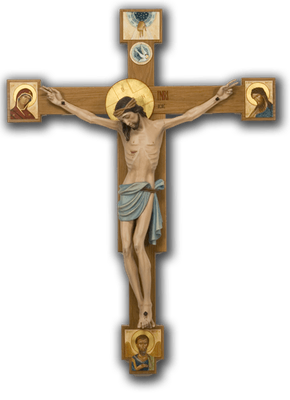
Paul’s rejection of rhetorical sophistication was not a concession to limited ability but a deliberate theological strategy. “I decided to know nothing among you except Jesus Christ and him crucified” (verse 2). The verb “decided” (ekrina) indicates a conscious choice – Paul made a judgment that the content of his message (a crucified Messiah) demanded a form of presentation that was consistent with it. A message about God’s power revealed through weakness could not be delivered through human displays of strength. To wrap the cross in rhetorical grandeur would undermine the very point of the cross. Paul came in “weakness and in fear and much trembling” (verse 3), and his speech was “not in plausible words of wisdom, but in demonstration of the Spirit and of power” (verse 4). The Greek word apodeixis (“demonstration”) was a technical term in rhetoric meaning “compelling proof” – but Paul’s compelling proof was not verbal brilliance; it was the manifest power of the Spirit at work in transformed lives.
The purpose of this approach is stated with precision: “so that your faith might not rest in the wisdom of men but in the power of God” (verse 5). This is not anti-intellectualism. Paul is not opposed to thinking; he is one of the most intellectually sophisticated writers in the ancient world. What he opposes is a faith that is grounded in human persuasiveness rather than divine power. A faith built on clever arguments will collapse when it encounters cleverer counter-arguments. A faith built on the Spirit’s power will endure because its foundation is beyond human manipulation.
In verse 6, Paul introduces a surprising turn: “Yet among the mature we do impart wisdom, a wisdom, though it is not a wisdom of this age or of the rulers of this age, who are doomed to pass away.” Paul does not reject wisdom altogether; he distinguishes between the wisdom of this age (sophia tou aionos toutou) and the hidden wisdom of God (theou sophian en mysterio). The “rulers of this age” (archontes tou aionos toutou) likely has a double reference: the human political and religious authorities who crucified Jesus, and the spiritual powers behind them (cf. Ephesians 6:12, Colossians 2:15). Both operated in ignorance: “None of the rulers of this age understood this, for if they had, they would not have crucified the Lord of glory” (verse 8). The phrase “Lord of glory” is stunning – the one hanging on the cross was the Lord of glory, the visible expression of God’s kavod (glory), and his executioners had no idea whom they were dealing with.
Paul then quotes a composite text (loosely based on Isaiah 64:4 with possible allusions to Isaiah 65:17 and Jeremiah 3:16): “What no eye has seen, nor ear heard, nor the heart of man imagined, what God has prepared for those who love him” (verse 9). This verse is often used to describe heaven, but in Paul’s argument, it actually describes what God has already revealed to believers through the Spirit: “these things God has revealed to us through the Spirit” (verse 10). The emphasis is not on the unknowability of God’s plan but on its surprising mode of revelation – not through human investigation but through the Spirit’s disclosure.
Verses 10-16 develop a theology of the Spirit as the agent of divine revelation. Paul uses an analogy from human experience: just as no one knows the thoughts of a person except the spirit of that person, so no one comprehends the thoughts of God except the Spirit of God (verse 11). Believers have received “not the spirit of the world, but the Spirit who is from God, that we might understand the things freely given us by God” (verse 12). The Spirit does not add new content beyond the gospel but illuminates the gospel’s depths. The Spirit takes what God has done in Christ and makes it comprehensible to those who have received him.
Paul introduces a crucial distinction in verses 14-15: the “natural person” (psychikos anthropos) versus the “spiritual person” (pneumatikos). The psychikos person is not “unspiritual” in the modern sense of being irreligious; the word describes a person operating with ordinary human capacities, without the illumination of the Holy Spirit. This person “does not accept the things of the Spirit of God, for they are folly to him, and he is not able to understand them because they are spiritually discerned” (verse 14). The Greek word anakrinein (“discerned” or “examined”) is a legal term meaning to investigate or cross-examine. Spiritual realities require spiritual faculties to evaluate them, just as visual realities require eyes. A person without the Spirit is not stupid; they simply lack the faculty required to perceive what God has revealed.
The chapter concludes with one of Paul’s most audacious claims: “we have the mind of Christ” (verse 16). This is quoted from Isaiah 40:13: “Who has known the mind of the Lord?” In Isaiah, the answer is obviously “no one” – God’s thoughts are infinitely beyond human comprehension. But Paul gives an astonishing answer: those who have the Spirit have access to the very mind of Christ. This does not mean believers are omniscient; it means they have a new capacity for understanding reality from God’s perspective, seeing the cross not as foolishness but as the power and wisdom of God.
Key Themes
- The Spirit as the agent of divine revelation – God’s wisdom cannot be discovered through human investigation but only received through the Spirit’s illumination
- The consistency of message and method – Paul deliberately rejects rhetorical sophistication because the form of his preaching must match the content of the cross
- The mind of Christ – Through the indwelling Spirit, believers have access to a radically new way of perceiving reality, one that sees God’s wisdom where the world sees foolishness
Connections
- Old Testament Roots: Paul quotes Isaiah 64:4 (what God has prepared) and Isaiah 40:13 (who has known the mind of the Lord); the concept of the Spirit revealing divine secrets echoes Daniel 2:22-23, 28 (God reveals mysteries)
- New Testament Echoes: The Spirit’s role in revelation parallels John 14:26 and 16:13 (the Spirit will guide you into all truth); the distinction between natural and spiritual persons anticipates Romans 8:5-9 (those who live according to the flesh vs. the Spirit)
Reflection Questions
- Paul deliberately chose a humble, Spirit-dependent mode of preaching rather than impressive rhetoric. In your experience, when has flashy presentation actually obscured the gospel? When has simplicity allowed God’s power to be more visible?
- Paul says the “natural person” cannot understand spiritual things because they are “spiritually discerned.” How does this shape the way you approach sharing the gospel with people who find Christianity foolish or irrelevant?
- “We have the mind of Christ.” What does it mean in practical, daily terms to think with the mind of Christ? How would having the mind of Christ change the way you evaluate success, power, and wisdom?
Prayer
Spirit of the living God, you alone can illuminate the depths of God’s wisdom. Without you, we are blind to the glory of the cross. Open the eyes of our hearts to see what no eye has seen and no ear has heard – the astonishing things God has prepared for those who love him. Free us from dependence on human eloquence and intellectual sophistication. Give us the mind of Christ, so that we see the world as he sees it: the last as first, the weak as strong, the cross as the power of God. Teach us your wisdom in the hidden places of our hearts. Amen.
Discussion
Comments are powered by GitHub Discussions. To post, sign in with your GitHub account using the link below the reaction icons.