
Mary Magdalene
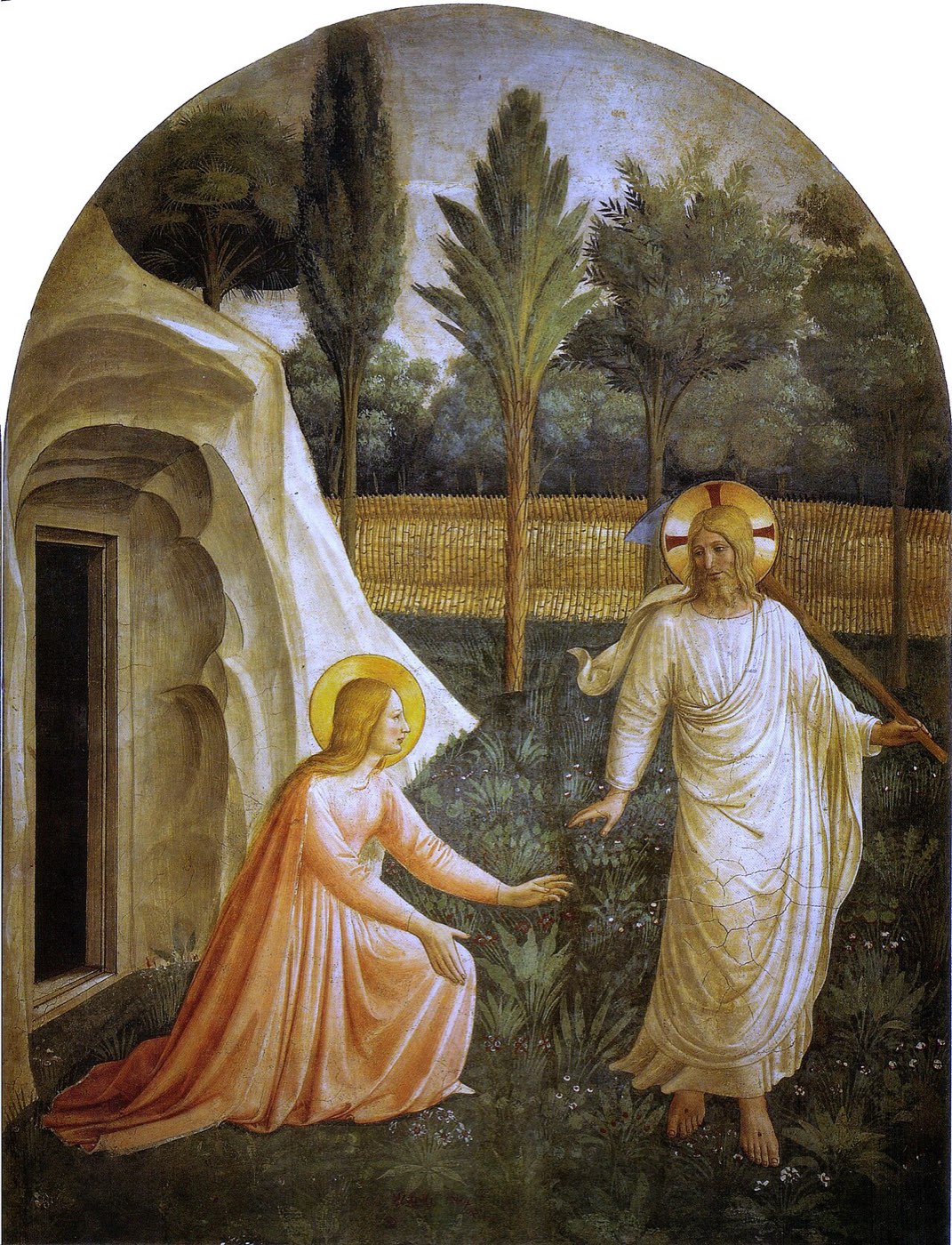
Luke introduces her among the women who traveled with Jesus and bankrolled the mission “out of their means”: “Mary, called Magdalene, from whom seven demons had gone out” (Luke 8:1-3). That is her whole backstory – deliverance and gratitude; the later legend that she was the sinful woman of Luke 7 has no basis in the text. From Magdala on the Sea of Galilee she followed him all the way to the end, and past it: named at the cross when the men had fled, watching where the body was laid, first at the tomb “while it was still dark” (John 19:25; Mark 15:47; John 20:1).
John 20 gives her the greatest recognition scene in literature. Weeping at the empty tomb, she begs the “gardener” for the body – and he says her name: “Mary.” One word, and the shepherd’s promise (“he calls his own sheep by name”) comes true in a garden at dawn. Her announcement to the hiding disciples – “I have seen the Lord” – made her, in the church’s ancient phrase, apostola apostolorum, the apostle to the apostles: the first commissioned witness of the resurrection (John 20:11-18).
The choice was deliberate. In a world where a woman’s testimony carried no legal weight, God entrusted the news on which everything depends to Mary of Magdala first.
In the New Testament
- Delivered and devoted (Luke 8:1-3)
- At the cross and the burial (Matthew 27:55-56, 61; John 19:25)
- First witness of the risen Christ (Matthew 28:1-10; John 20:1-18; Mark 16:9)
Key Locations
- Galilee The northern hill region where Jesus grew up, based his ministry, and did most of his teaching.
- Golgotha / Calvary "The Place of the Skull" outside the city wall, where Jesus was crucified.
- The Garden Tomb The new rock-hewn tomb of Joseph of Arimathea, found empty on the third day.