
The Garden Tomb
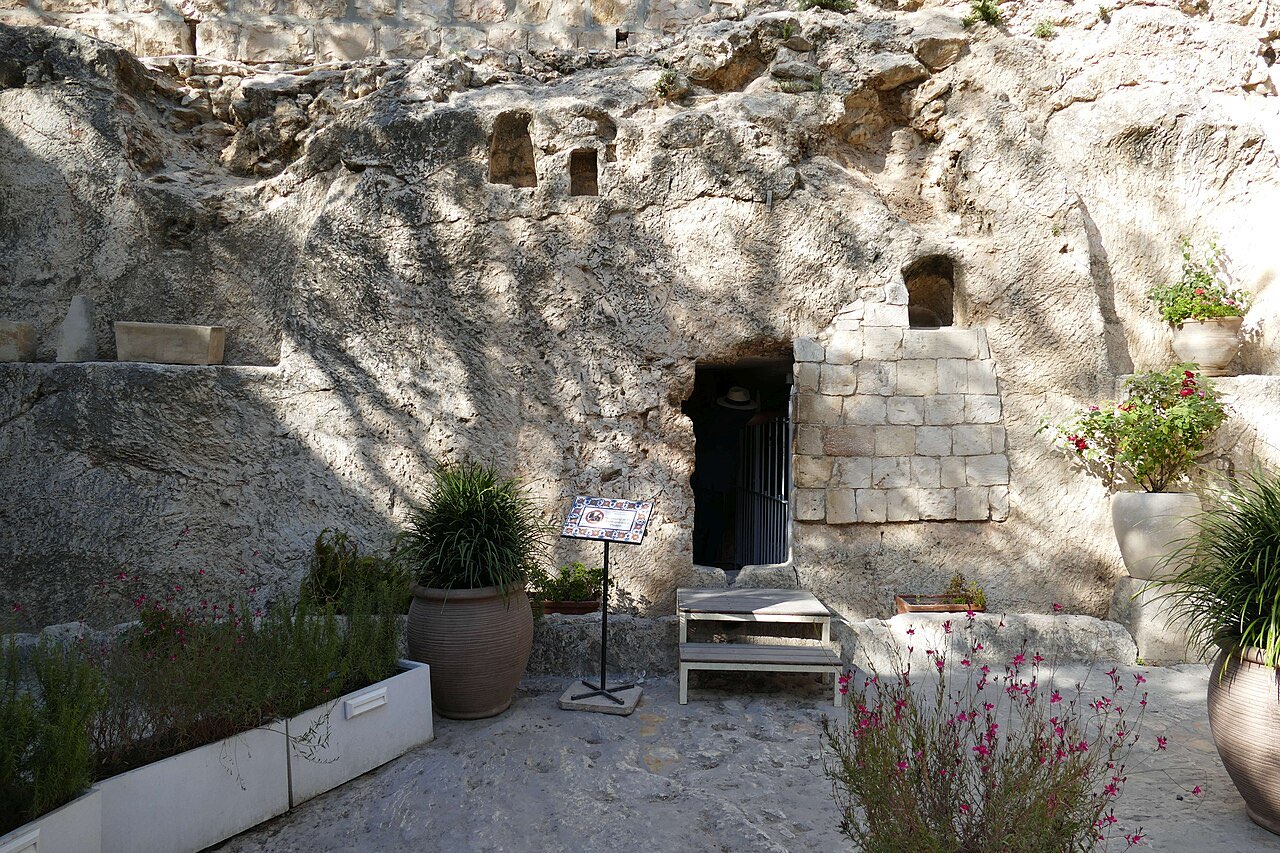
John gives the geography in one verse: “in the place where he was crucified there was a garden, and in the garden a new tomb in which no one had yet been laid” (John 19:41). It belonged to Joseph of Arimathea, a rich council member and secret disciple who found his courage on the darkest afternoon, begged Pilate for the body, and laid Jesus in his own rock-cut tomb before the Sabbath fell – fulfilling, incidentally, Isaiah’s word about a grave “with a rich man in his death” (Matthew 27:57-60; Isaiah 53:9).
Two sites are venerated today. The weight of history favors the tomb inside the Church of the Holy Sepulchre, enclosed with Golgotha in Constantine’s basilica on the strength of an unbroken local memory. The Garden Tomb near Damascus Gate, identified in the nineteenth century beside a skull-like cliff, preserves what the Sepulchre’s marble cannot: a rock-hewn tomb in a quiet garden, where a visitor can see with their own eyes what the women saw at dawn.
And what they saw was the point: the stone rolled away, the linen cloths lying folded, and the angel’s announcement that made the tomb the most important empty room in history – “He is not here, for he has risen, as he said. Come, see the place where he lay” (Matthew 28:6).
In the New Testament
- The burial by Joseph and Nicodemus (Matthew 27:57-66; John 19:38-42)
- The empty tomb at dawn (Matthew 28:1-10; Luke 24:1-12; John 20:1-18)