
Golgotha / Calvary
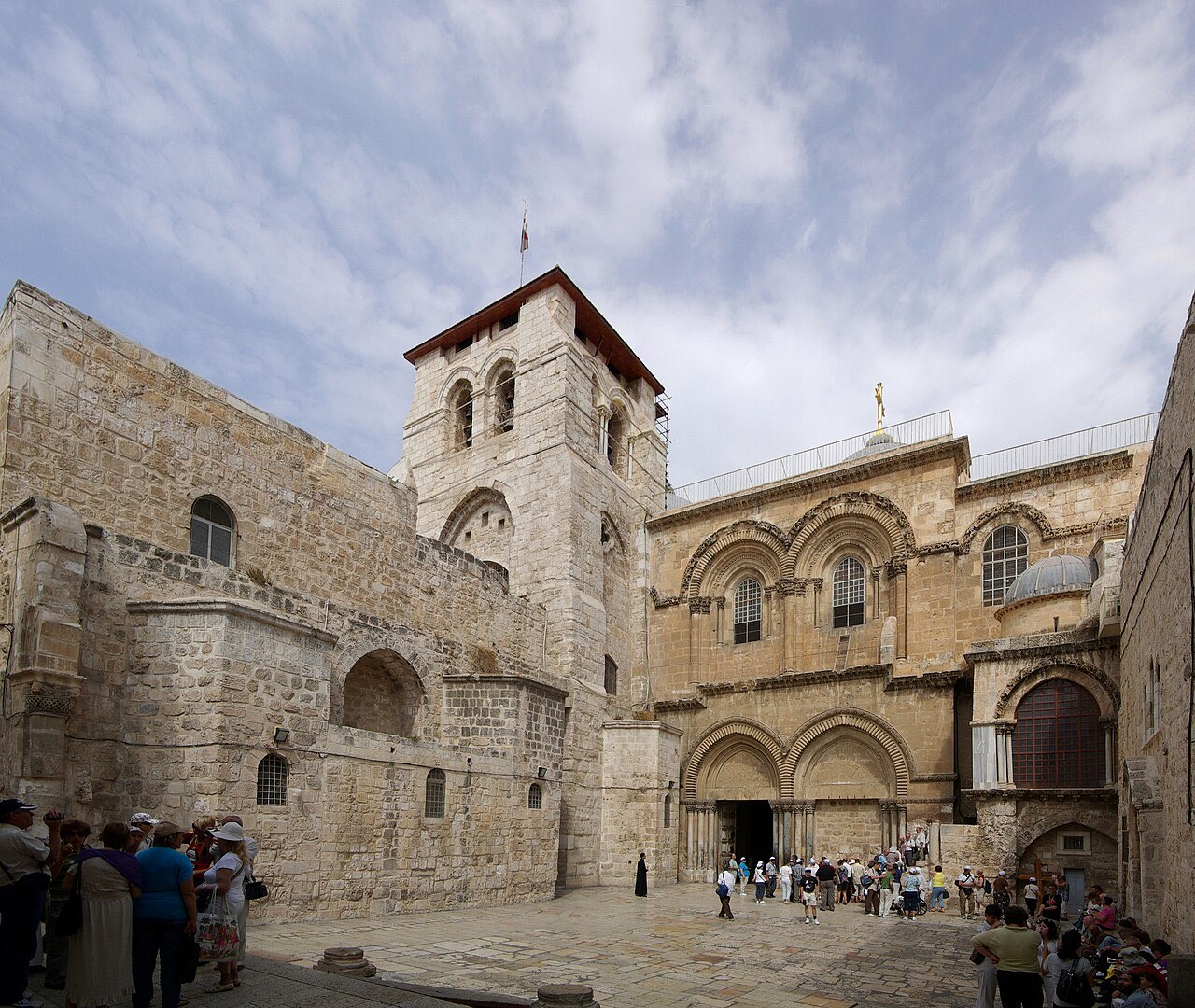
All four Gospels name the place: Golgotha, Aramaic for “skull” – Calvaria in Latin, whence Calvary. It was an execution ground just outside the city gate, beside a road where passersby could read the charge and wag their heads (Matthew 27:39; Hebrews 13:12), close to a garden with a new tomb (John 19:41). A disused quarry northwest of the city, with a skull-shaped knob of rejected stone left standing, fits every detail; the spot was outside the wall in AD 30 and enclosed by a new wall a decade later, which is why it now lies deep inside the Old City, under the Church of the Holy Sepulchre.
What happened there needs no geography lesson: “there they crucified him” (Luke 23:33). Between two criminals, under a mocking placard – “The King of the Jews” in three languages – Jesus forgave his executioners, promised paradise to a thief, gave his mother to John, cried out the opening of Psalm 22, and with “It is finished” gave up his spirit while darkness covered the land and the temple veil tore from top to bottom (Luke 23; John 19; Matthew 27:45-54).
Constantine’s engineers cut away the quarry in the fourth century, leaving the rock of Calvary standing inside his basilica; today’s church, shared by six ancient communions, still holds that rock – and the empty tomb sixty yards away.
In the New Testament
- The crucifixion at Golgotha (Matthew 27:32-56; Mark 15:21-41; Luke 23:26-49; John 19:16-37)
- “Outside the gate,” bearing the reproach (Hebrews 13:12-13)