
Herod Antipas
Antipas was Herod the Great’s son and heir to a quarter of his kingdom – Galilee and Perea, which made him ruler over both Jesus’ home region and the Baptist’s. He had his father’s appetite for building (the lakeside capital Tiberias was his) without the old man’s iron; the Gospels show him as a study in weakness dressed as power. He imprisoned John for condemning his marriage to Herodias, “feared John, knowing that he was a righteous and holy man… and heard him gladly” – and then beheaded him to save face at a birthday party (Mark 6:14-29).
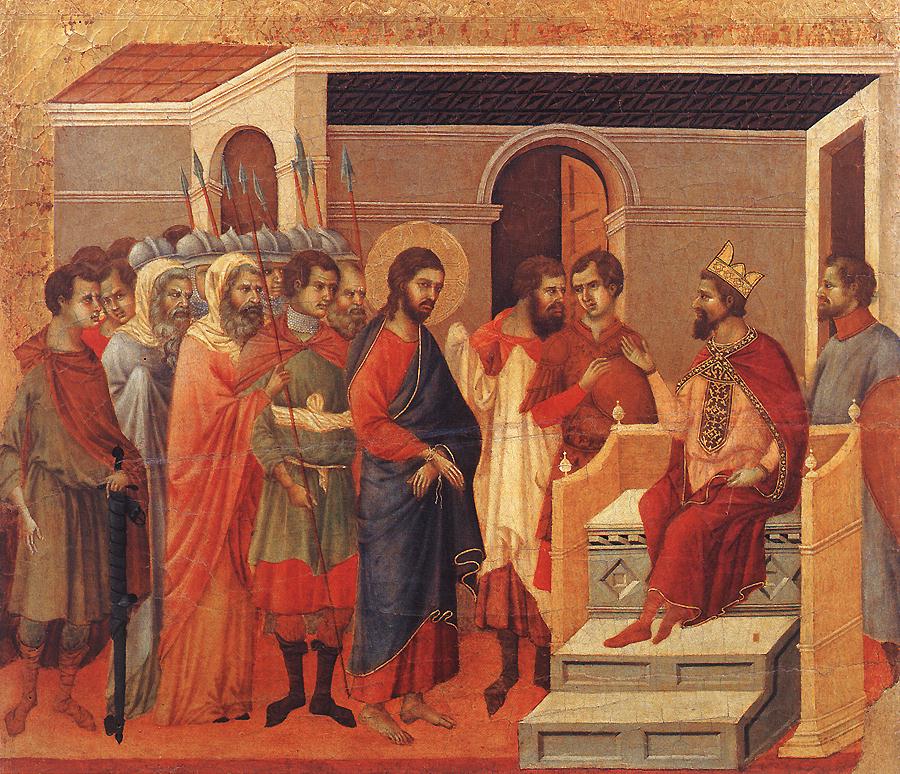
His relationship to Jesus was superstition mixed with appetite. Hearing the reports, he concluded John had come back from the dead (Mark 6:16); told that Antipas wanted to kill him, Jesus sent back the only insult he ever gave a ruler: “Go and tell that fox…” (Luke 13:31-33). They finally met on Good Friday, when Pilate shipped the prisoner to him. Antipas “was very glad… hoping to see some sign done by him.” Jesus, who answered high priests and governors, gave Antipas nothing at all – not one word. Mocked in a splendid robe, the silent King was returned to Pilate, and the two politicians became friends that day (Luke 23:6-12).
Herodias’ ambition eventually overreached; Rome exiled the couple to Gaul, and the fox died far from his den.
In the New Testament
- John’s imprisonment and execution (Mark 6:14-29; Luke 3:19-20)
- “Go and tell that fox” (Luke 13:31-33)
- Jesus before Antipas (Luke 23:6-12; Acts 4:27)
Key Locations
- Galilee The northern hill region where Jesus grew up, based his ministry, and did most of his teaching.
- Machaerus Herod's clifftop fortress east of the Dead Sea, where John the Baptist was imprisoned and beheaded.
- Perea The territory "beyond the Jordan" where Jesus ministered on his final approach to Jerusalem.
- Jerusalem The holy city -- David's capital, the temple's home, the stage of the crucifixion, resurrection, and Pentecost.