
Machaerus
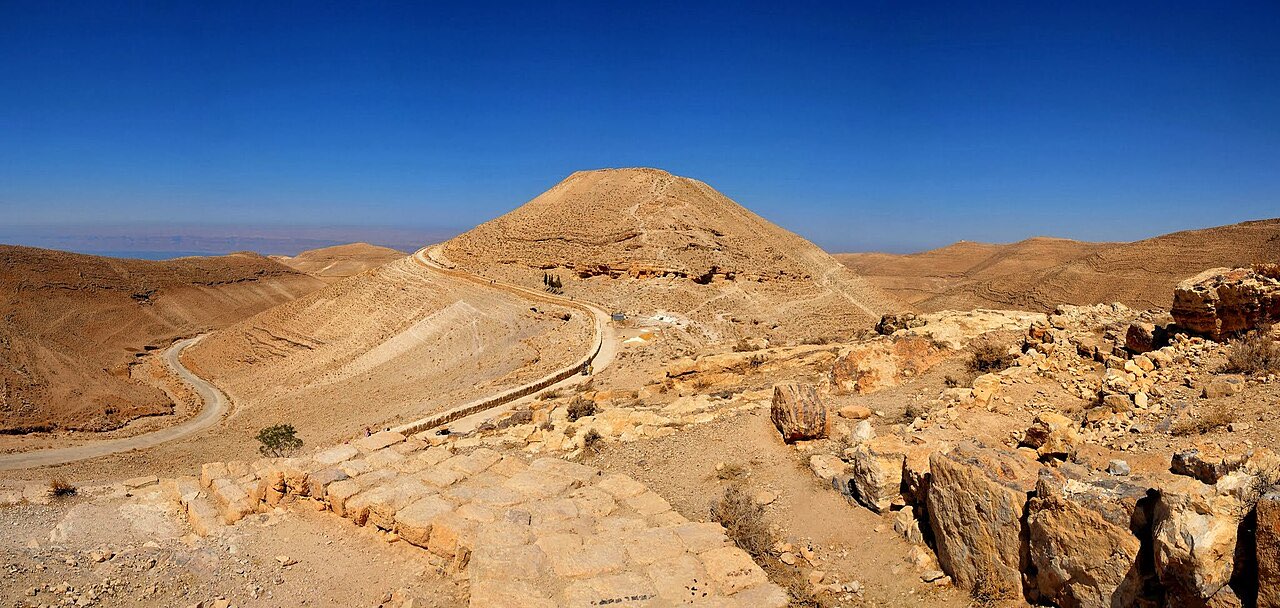
Machaerus was a mountaintop fortress-palace in the wild country east of the Dead Sea – built by the Hasmoneans, rebuilt lavishly by Herod the Great, and inherited by his son Herod Antipas. The Gospels never name it; we owe the location to the historian Josephus, who records that John the Baptist was imprisoned and executed here.
The story the Gospels do tell is chilling enough (Mark 6:14-29). John had publicly condemned Antipas’ marriage to Herodias, his brother’s wife. At a birthday banquet – in this remote palace, surrounded by courtiers – Herodias’ daughter danced, the flattered king swore to give her anything, and her mother’s answer came back: “The head of John the Baptist on a platter.” Antipas was “exceedingly sorry,” yet cared more for his oaths and his guests than for the life of the greatest man born of women (Matthew 11:11). The prophet who baptized Jesus in the Jordan below died in a dungeon above the Dead Sea.
Excavations at the site, known today as Mukawir in Jordan, have uncovered the palace courtyard where that banquet was plausibly held – one of the starkest places on earth to stand and consider the cost of speaking truth to power.
In the New Testament
- John imprisoned for confronting Herod Antipas (Luke 3:19-20)
- John’s question from prison, and Jesus’ tribute to him (Matthew 11:2-15)
- The banquet and the beheading (Mark 6:14-29; Matthew 14:1-12)