
Perea
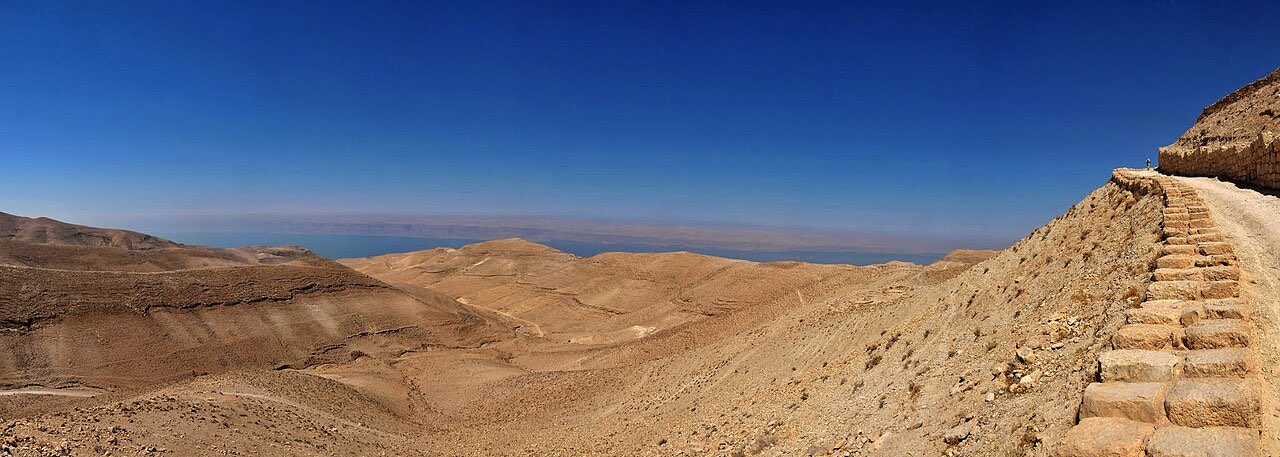
Perea – from the Greek peran, “beyond” – was the ribbon of territory east of the Jordan, running from the Decapolis down to the fortress of Machaerus above the Dead Sea. With Galilee, it made up the realm of Herod Antipas, and pious Galileans traveling to Jerusalem often crossed to its side of the river to avoid passing through Samaria. The Gospels simply call it “beyond the Jordan” or “across the Jordan.”
Matthew and Mark set an important stretch of teaching here on Jesus’ last journey south (Matthew 19-20; Mark 10): the teaching on marriage and divorce, the blessing of the children, the rich young ruler, and the third passion prediction all belong to the Perean road. John adds that when Jerusalem turned murderous, Jesus withdrew across the Jordan to where John had first baptized, “and many believed in him there” (John 10:40-42) – Perea was the safe ground from which he was summoned to Bethany to raise Lazarus (John 11:1-16).
It was also John the Baptist’s ground: he baptized on this side of the river, ran afoul of Antipas here, and died in Perean Machaerus.
In the New Testament
- Teaching beyond the Jordan on the final journey (Matthew 19:1-20:16; Mark 10:1-31)
- Jesus’ withdrawal across the Jordan (John 10:40-42)
- The summons to Bethany from Perea (John 11:1-16)
- John the Baptist’s ministry and imprisonment in Antipas’ territory (Luke 3:19-20)