
Elijah
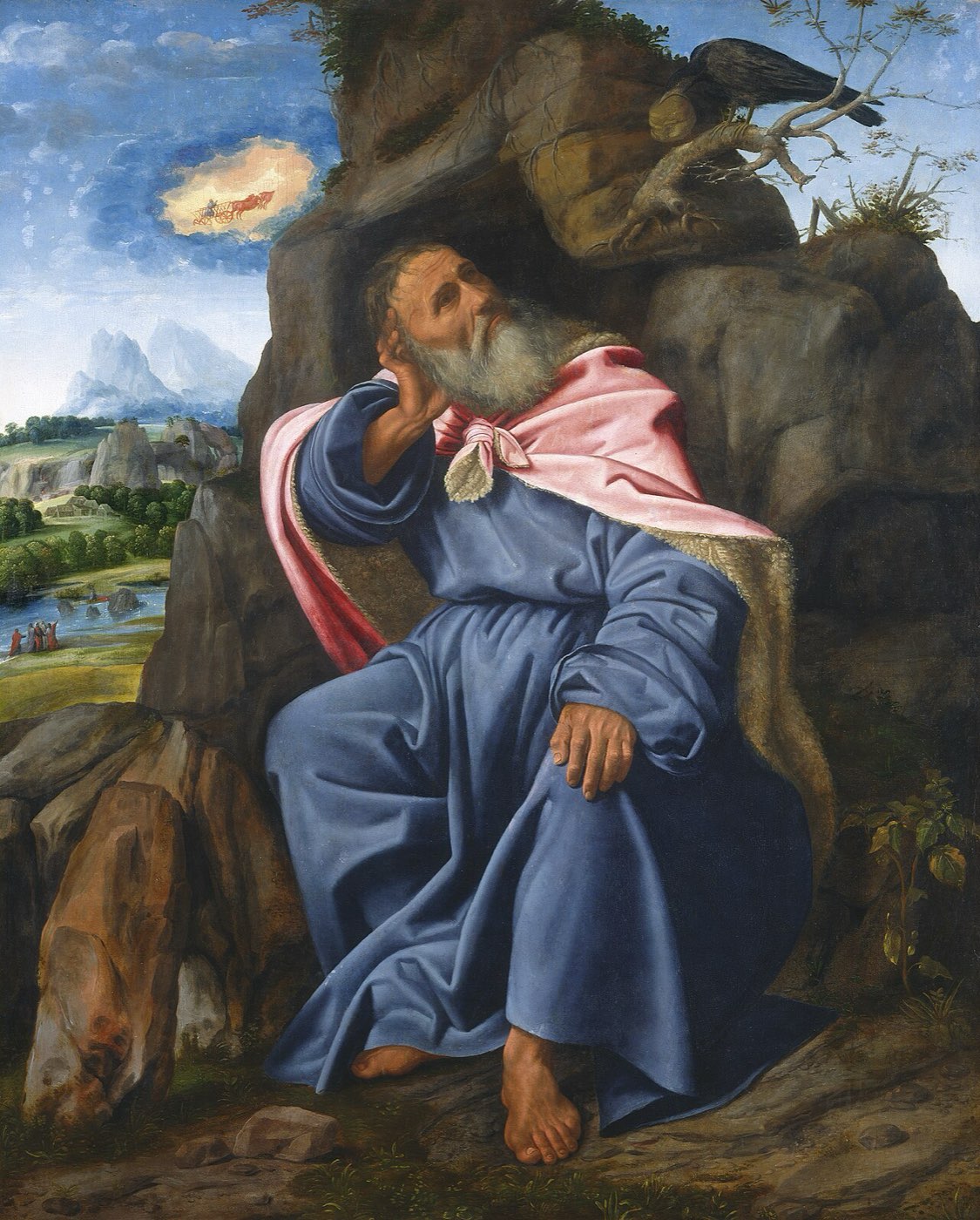
Elijah the Tishbite blew into Israel’s darkest royal court announcing a drought on his own prayer’s authority, and his career kept that voltage: fed by ravens, calling down fire on Carmel against the prophets of Baal, then running for his life to Horeb – Sinai itself – where God passed by not in wind, earthquake, or fire but in a low whisper, and gently re-commissioned his burned-out prophet (1 Kings 17-19). He left the world without dying, in a whirlwind with chariots of fire (2 Kings 2).
That exit made him the New Testament’s most awaited figure. Malachi’s last lines promised Elijah’s return “before the great and awesome day of the LORD” (Malachi 4:5), and the Gospels answer the expectation carefully: John the Baptist came “in the spirit and power of Elijah” (Luke 1:17) – camel hair, wilderness, confrontation – and Jesus said plainly, “Elijah has already come” (Matthew 17:11-13). Then, at the Transfiguration, Elijah himself stood with Moses beside the glorified Christ: the Prophets and the Law in person, deferring to the Son (Mark 9:4-7).
The epistles keep two more Elijahs in circulation: Paul’s, despairing at Horeb that he alone was left and answered with a hidden remnant of seven thousand (Romans 11:2-5); and James’s, the patron of ordinary intercessors – “Elijah was a man with a nature like ours, and he prayed fervently” (James 5:17-18). The fire-caller, it turns out, is chiefly remembered at the end of the Bible for something anyone can do: pray.
In the New Testament
- The forerunner in his spirit and power (Luke 1:17; Matthew 11:14; 17:10-13)
- At the Transfiguration (Mark 9:2-8)
- The remnant lesson (Romans 11:2-5)
- The praying man like us (James 5:17-18)
Key Locations
- The Mount of Transfiguration The high mountain where Jesus was transfigured before Peter, James, and John.
- The Jordan River The river of Israel's crossings and cleansings, where John baptized and Jesus was baptized.
- Mount Sinai The mountain of the law and the wilderness around it -- the covenant the New Testament reads Christ against.