
The Jordan River
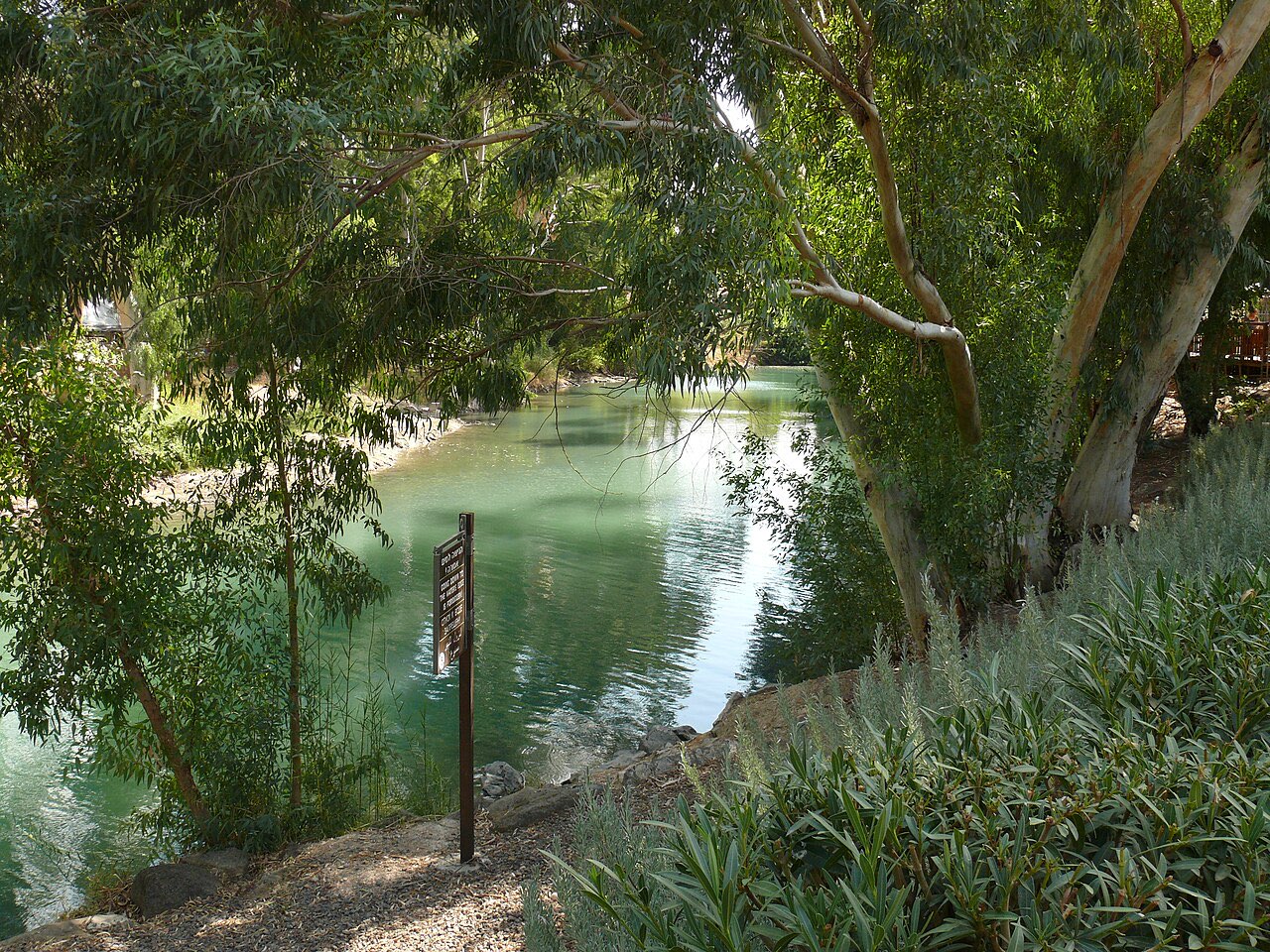
The Jordan is not a grand river – in most places a strong arm could throw a stone across it – but it carries more theological freight than any waterway on earth. It falls from the slopes of Mount Hermon through the Sea of Galilee and winds south through a deep rift valley to the Dead Sea, the lowest point on the planet’s surface. Its name comes from a root meaning “to descend.”
For Israel the Jordan was the threshold of promise. The nation crossed it on dry ground under Joshua (Joshua 3), Elijah and Elisha parted it (2 Kings 2), and Naaman the Syrian was cleansed of leprosy in its waters (2 Kings 5). So when John the Baptist appeared at the river calling Israel to a baptism of repentance, the setting itself was a sermon: come back to the border, cross over again, start anew.
Then Jesus came from Galilee to be baptized. As he came up from the water the heavens opened, the Spirit descended like a dove, and the Father spoke: “This is my beloved Son, with whom I am well pleased” (Matthew 3:13-17). The river of descent became the stage for the New Testament’s clearest unveiling of the Trinity.
In the New Testament
- John preaches and baptizes in the Jordan (Matthew 3:1-12; Luke 3:1-18)
- The baptism of Jesus (Matthew 3:13-17; Mark 1:9-11; Luke 3:21-22)
- Jesus withdraws “across the Jordan” late in his ministry (John 10:40-42)