
Day 1: Treasure in Jars of Clay
Reading: 2 Corinthians 4
Listen to: 2 Corinthians chapter 4
Historical Context
Second Corinthians 4 is one of the richest chapters in all of Paul’s writings, weaving together theology, autobiography, and pastoral exhortation into a single tapestry of breathtaking depth. To grasp its power, we must understand the crisis that provoked it. After Paul’s founding visit to Corinth (Acts 18) and his first letter addressing their many problems, the situation deteriorated rather than improved. Rival teachers arrived in Corinth – Paul calls them “super-apostles” (11:5) and “false apostles, deceitful workmen” (11:13) – who dazzled the congregation with rhetorical skill, letters of recommendation, and claims to spiritual superiority. They attacked Paul on every front: his speech was “of no account” (10:10), his physical presence was “weak” (10:10), he lacked proper credentials, and his suffering proved that God was not truly with him.
This last charge is the one Paul addresses most directly in chapter 4. In the Greco-Roman world, a teacher’s authority was closely tied to his appearance, eloquence, and social standing. Philosophers traveled with entourages, charged fees, and cultivated impressive public personas. Paul, by contrast, arrived in cities alone or with a small band, worked with his hands as a tentmaker, spoke plainly, and bore the scars of beatings, shipwrecks, and imprisonments. By every conventional measure, he looked like a failure. The “super-apostles” exploited this perception relentlessly.
Paul’s response in chapter 4 does not deny his weakness but reframes it theologically. He begins by grounding his ministry in divine calling rather than human qualification: “Having this ministry by the mercy of God, we do not lose heart” (4:1). The Greek verb translated “lose heart” (enkakeo) means to become weary, to give up, to be a coward in the face of opposition. Paul has every reason to quit – the slander, the rejection, the physical toll – but mercy sustains him. He then contrasts his transparent method with the underhanded tactics of his opponents: “We have renounced disgraceful, underhanded ways. We refuse to practice cunning or to tamper with God’s word” (4:2). The word “tamper” (doloo) means to adulterate, as a merchant might dilute wine with water. The super-apostles were mixing the gospel with self-promotion; Paul insists on pure proclamation.
The theological heart of the chapter arrives in verses 4-6, where Paul describes the gospel as light. The “god of this world” (a rare Pauline title for Satan) has blinded the minds of unbelievers “to keep them from seeing the light of the gospel of the glory of Christ, who is the image of God” (4:4). Paul then draws a stunning parallel to creation itself: “For God, who said, ‘Let light shine out of darkness,’ has shone in our hearts to give the light of the knowledge of the glory of God in the face of Jesus Christ” (4:6). Conversion is nothing less than a new creation – the same God who spoke light into primordial darkness speaks illumination into the darkened human heart. The Greek word for “face” (prosopo) can also mean “person” – we see God’s glory not in the abstract but in the concrete person of Jesus Christ.
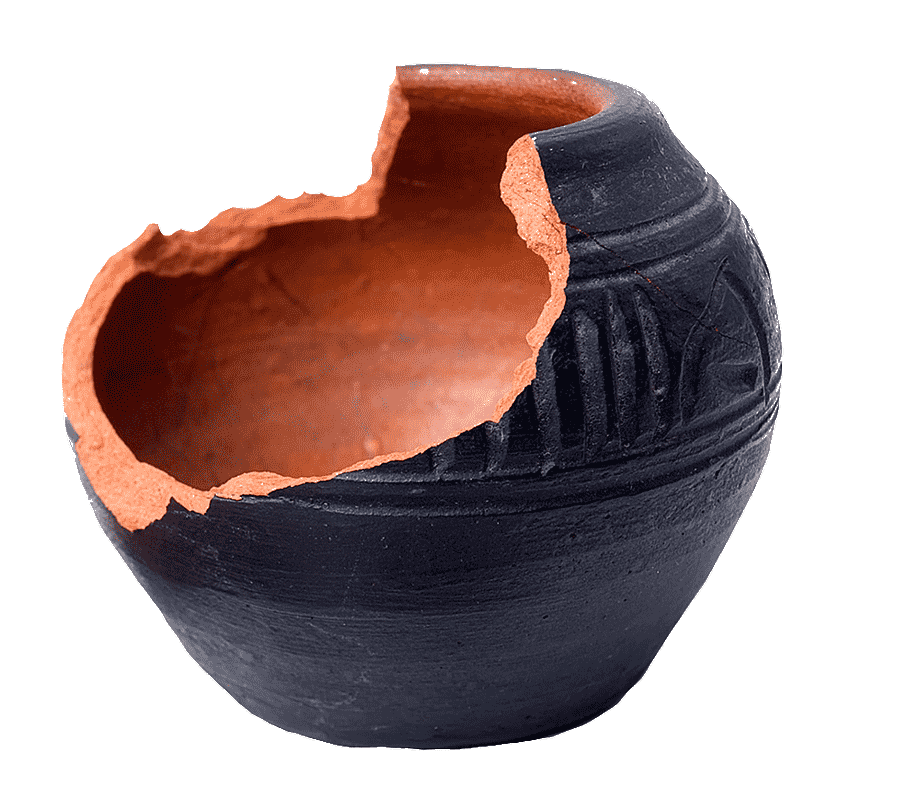
Verse 7 introduces the chapter’s most famous metaphor: “But we have this treasure in jars of clay, to show that the surpassing power belongs to God and not to us.” In the ancient world, clay jars (ostrakinos skeuos) were the cheapest, most disposable containers available – used for everyday storage, easily cracked, and of no intrinsic value. The “treasure” is the light of the gospel, the knowledge of God’s glory. The contrast is deliberate and devastating to the super-apostles’ argument: God chose fragile vessels precisely so that no one would mistake the container for the contents. The power that transforms lives does not originate in the messenger’s eloquence, education, or charisma. It is “surpassing” (hyperbole) – beyond all measure – and it belongs to God alone.
Verses 8-9 contain four antitheses that describe Paul’s experience: afflicted but not crushed, perplexed but not driven to despair, persecuted but not forsaken, struck down but not destroyed. Each pair acknowledges real suffering while denying that suffering has the final word. The pattern mirrors the death and resurrection of Jesus, which Paul makes explicit in verses 10-11: “always carrying in the body the death of Jesus, so that the life of Jesus may also be manifested in our bodies.” Paul’s scars are not evidence of God’s absence but the very means by which Christ’s resurrection life becomes visible. This is the paradox at the heart of Paul’s theology of ministry: death is at work in the apostle so that life can be at work in others (4:12).
The chapter concludes with Paul’s eternal perspective. “This light momentary affliction is preparing for us an eternal weight of glory beyond all comparison” (4:17). The Greek word for “weight” (baros) plays on the Hebrew concept of kabod (glory), which originally meant “heaviness” or “weightiness.” Paul is not minimizing his suffering – he has been beaten, stoned, and left for dead – but he is calibrating it against eternity. The visible world is temporary; the invisible world is permanent. Faith means fixing one’s gaze not on the crumbling jar of clay but on the imperishable treasure within it.
Key Themes
- Treasure in fragile vessels – God deliberately deposits gospel power in weak, ordinary people so that divine power is unmistakable
- Gospel as new-creation light – Conversion parallels the original creation, with God speaking light into spiritual darkness
- Suffering as credential – Paul’s afflictions do not disqualify his ministry but authenticate it by displaying the death and life of Jesus
Connections
- Old Testament Roots: Genesis 1:3 (God speaking light into darkness); Isaiah 9:2 (people walking in darkness see a great light); Judges 7:16-20 (Gideon’s clay jars broken to reveal torches – a striking typological parallel)
- New Testament Echoes: Romans 8:17-25 (present suffering and future glory); Philippians 3:10-11 (sharing in Christ’s sufferings); 1 Peter 1:6-7 (faith refined by fire)
Reflection Questions
- What specific contrasts does Paul draw between the treasure and the jar of clay, and why does he insist the fragility of the vessel is by design?
- How does Paul’s connection between Genesis 1:3 and conversion (4:6) reshape your understanding of what happens when someone comes to faith?
- What “light momentary affliction” are you facing right now, and how might viewing it against the backdrop of eternity change your response?
Prayer
Father, you have placed the treasure of the gospel in the cracked and fragile vessels of our lives. Forgive us for the times we have tried to present ourselves as something more impressive than jars of clay, as though the power were ours. Teach us to embrace our weakness as the very place where your surpassing power is displayed. When we are afflicted, perplexed, persecuted, or struck down, remind us that these are the marks of Jesus’ death working in us so that his life may shine through us. Fix our eyes on the eternal weight of glory that awaits, and give us courage not to lose heart. Through Christ our treasure, Amen.
Discussion
Comments are powered by GitHub Discussions. To post, sign in with your GitHub account using the link below the reaction icons.