
Thomas
History nicknamed him “doubting,” but John shows more. When Jesus turned toward Judea and the death threats waiting there, it was Thomas who said, “Let us also go, that we may die with him” (John 11:16) – pessimistic, and loyal to the bone. At the Last Supper his honest bafflement (“Lord, we do not know where you are going; how can we know the way?”) drew out one of Scripture’s summit sentences: “I am the way, and the truth, and the life” (John 14:5-6). Thomas’ questions kept purchasing treasures for everyone else.
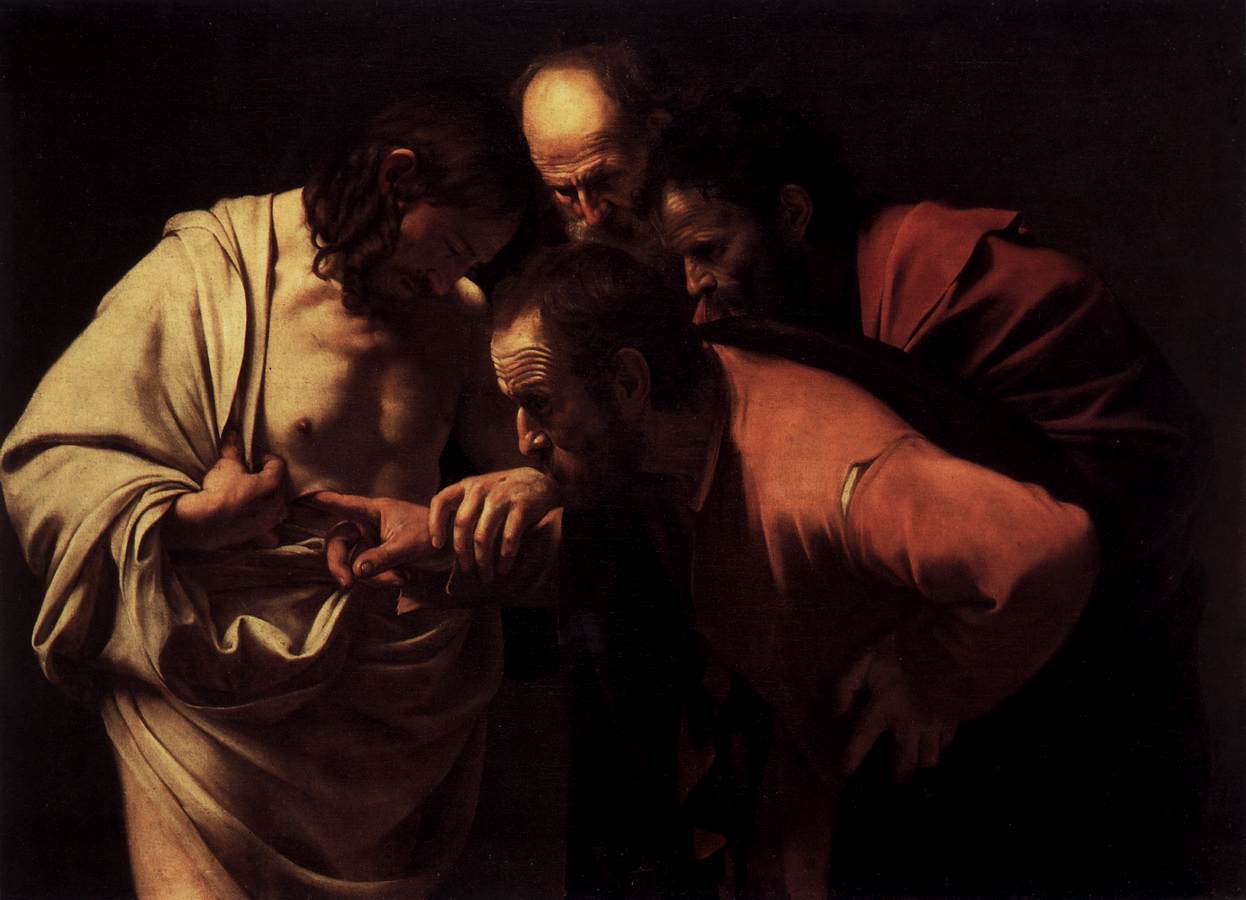
He missed the first Easter appearance, and refused secondhand joy: “Unless I see in his hands the mark of the nails… I will never believe” (John 20:24-25). A week later Jesus came back apparently for him alone, offering exactly the evidence demanded – “Put your finger here… Do not disbelieve, but believe.” Thomas’ answer outran everything asked of him: “My Lord and my God!” – the fullest confession of Christ’s deity in the four Gospels, from the mouth of their most demanding empiricist (John 20:26-28).
Jesus’ reply blesses every reader since: “Blessed are those who have not seen and yet have believed.” Tradition sends Thomas farthest of all the Twelve – to India, where the ancient “St. Thomas Christians” of Kerala still bear his name.
In the New Testament
- “Let us also go, that we may die with him” (John 11:16)
- “How can we know the way?” (John 14:5-6)
- Doubt and confession (John 20:24-29)
- Back in the boat at Galilee (John 21:2)
Key Locations
- The Upper Room The large furnished room in Jerusalem where the Last Supper was eaten and the disciples waited for Pentecost.
- The Sea of Galilee The freshwater lake at the heart of Jesus' ministry, ringed by fishing towns and sudden storms.
- Jerusalem The holy city -- David's capital, the temple's home, the stage of the crucifixion, resurrection, and Pentecost.