
The Two Beasts
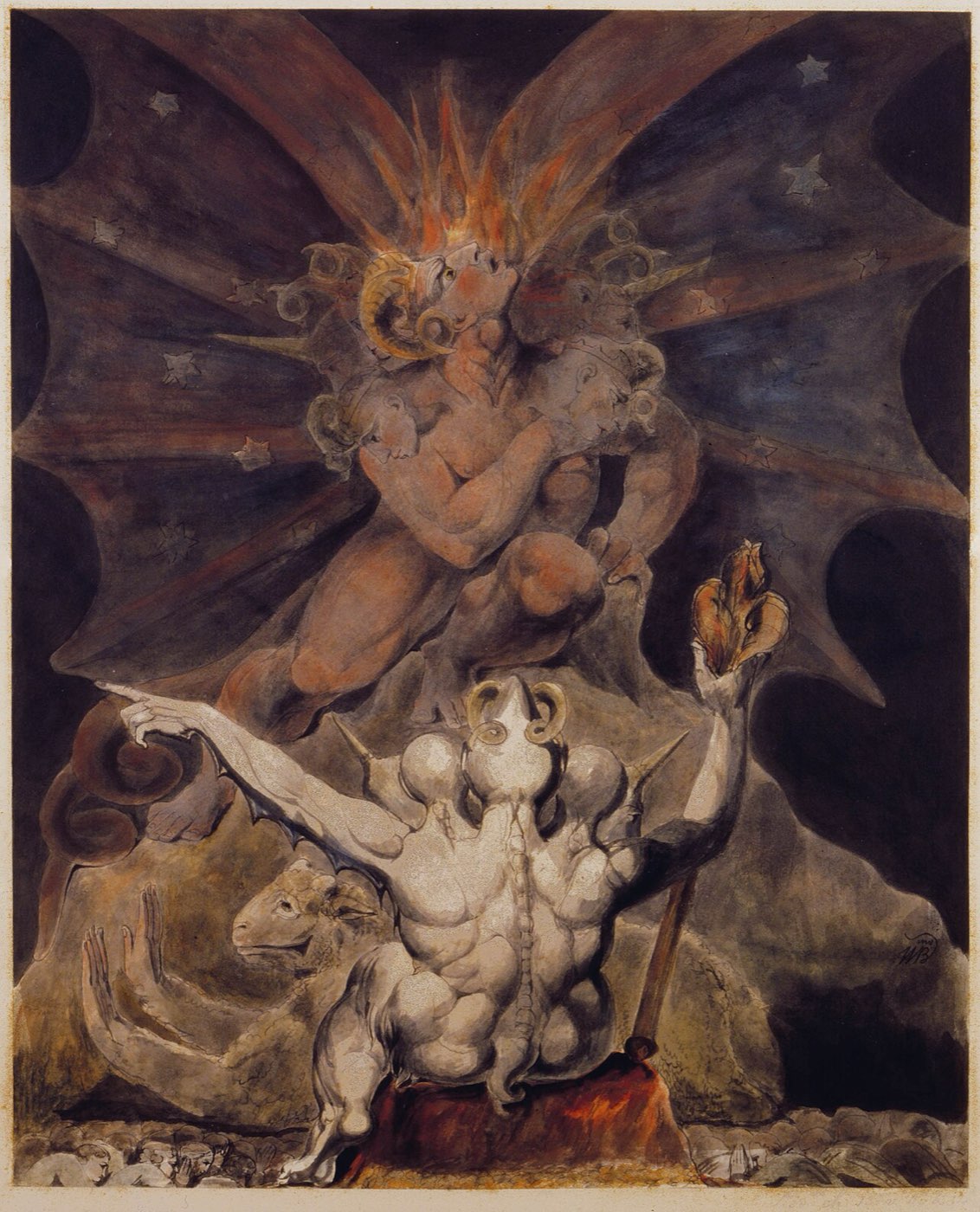
Revelation 13 completes the dragon’s counterfeit trinity. The first beast rises “out of the sea” – monstrous composite of Daniel’s empire-beasts, wearing blasphemous names, wielding the dragon’s delegated authority, with a mortally wounded head that healed: a parody of resurrection that sets the world marveling, “Who is like the beast?” (Revelation 13:1-4). John’s first readers could see its face on their coins; the beast is empire absolutized – political power demanding what belongs to God, making war on the saints who refuse.
The second beast rises “out of the earth,” lamb-horned but dragon-voiced: religion and propaganda in the service of power. It works signs, animates the image, and administers the mark – the parody of God’s seal on his servants – without which “no one can buy or sell” (Revelation 13:11-17). Then the famous riddle: “let the one who has understanding calculate the number of the beast, for it is the number of a man, and his number is 666” (Revelation 13:18) – persistently read since ancient times as the gematria of Nero Caesar, and structurally the number of falling short: six, six, six, humanity’s counterfeit of the divine seven, three times over.
Revelation’s comfort is the beasts’ expiration date. Their span is “forty-two months” – limited, permitted, counted – and at the Rider’s appearing both are “thrown alive into the lake of fire” (Revelation 19:20). The saints’ calling meanwhile is stated twice, like a heartbeat: “Here is a call for the endurance and faith of the saints” (Revelation 13:10; 14:12).
In the New Testament
- The beast from the sea (Revelation 13:1-10)
- The beast from the earth, the mark, the number (Revelation 13:11-18)
- Their end (Revelation 19:19-21)
- The pattern behind them (Daniel 7; 2 Thessalonians 2:3-12)
Key Locations
- Babylon the Great Revelation's symbolic city -- human power and luxury organized against God, destined to fall in a single hour.
- Armageddon Har-Magedon, the "mount of Megiddo" -- an ancient battlefield lending its name to the last battle.