
Babylon the Great
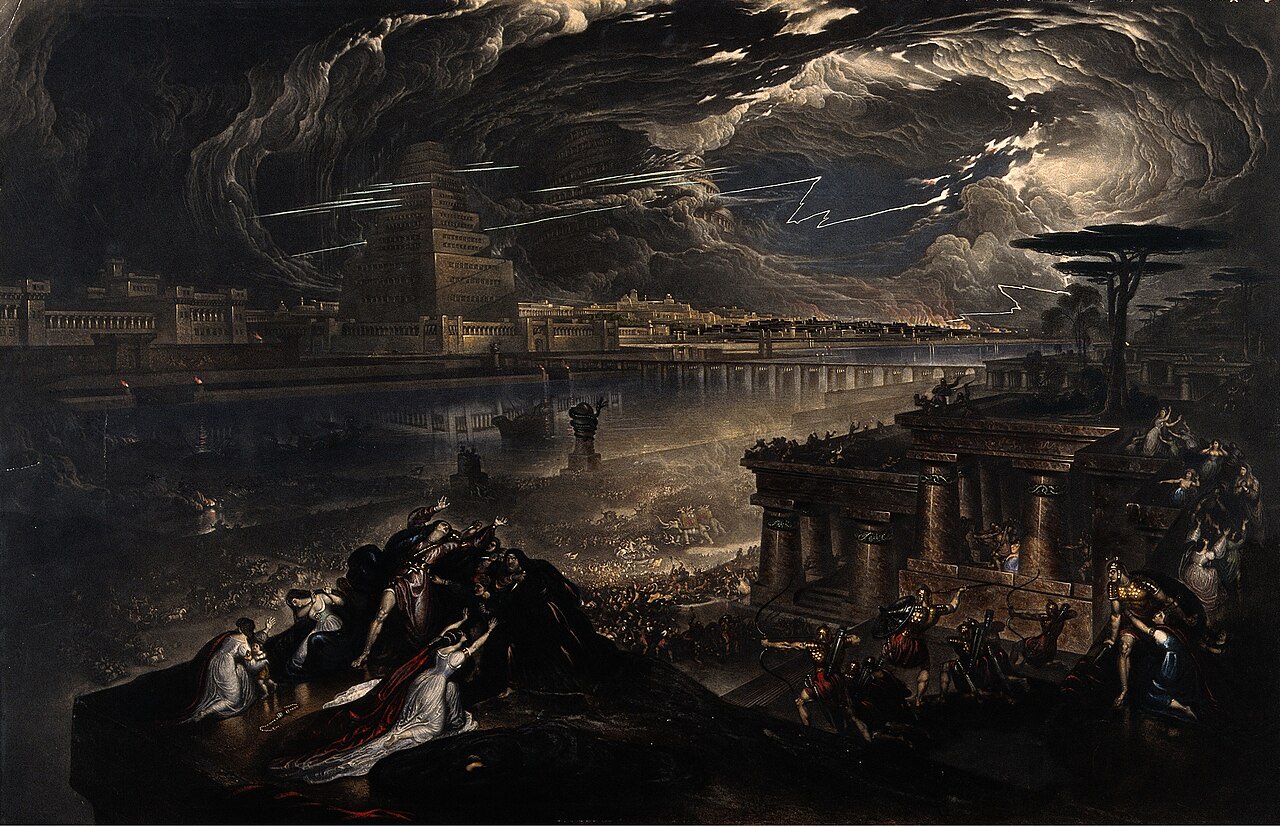
By John’s day the literal Babylon on the Euphrates was a fading ruin – yet Revelation gives its name top billing: “Babylon the great, mother of prostitutes and of earth’s abominations” (Revelation 17:5). The name is a deliberate reach back through Israel’s memory: the tower at Babel, the empire that burned Jerusalem and carried her children into exile, the golden city of Isaiah’s and Jeremiah’s doom songs. Babylon is what Scripture calls civilization when it organizes itself against God.
In Revelation 17-18 she is a woman “arrayed in purple and scarlet,” drunk on the blood of the saints, seated on seven hills – first-century readers could hardly miss Rome, and Peter had already used the code name (1 Peter 5:13). But the portrait outlives any one empire. Babylon is seductive rather than merely savage: her indictment is a merchant’s manifest of luxuries, ending with “slaves, that is, human souls” (Revelation 18:12-13). Her fall takes one hour, and heaven’s response is a hallelujah while the world’s merchants weep for their lost markets.
The chapter’s practical word is an address change: “Come out of her, my people” (Revelation 18:4) – not geographic relocation but allegiance. Every reader lives in some Babylon; none is required to belong to it. The tale of two cities ends with one thrown down like a millstone and one descending like a bride.
In the New Testament
- The woman on the beast (Revelation 17)
- The fall and the lament of the merchants (Revelation 18)
- Heaven’s hallelujah (Revelation 19:1-5)
- “Babylon” as code for Rome (1 Peter 5:13)