
Satan / The Devil
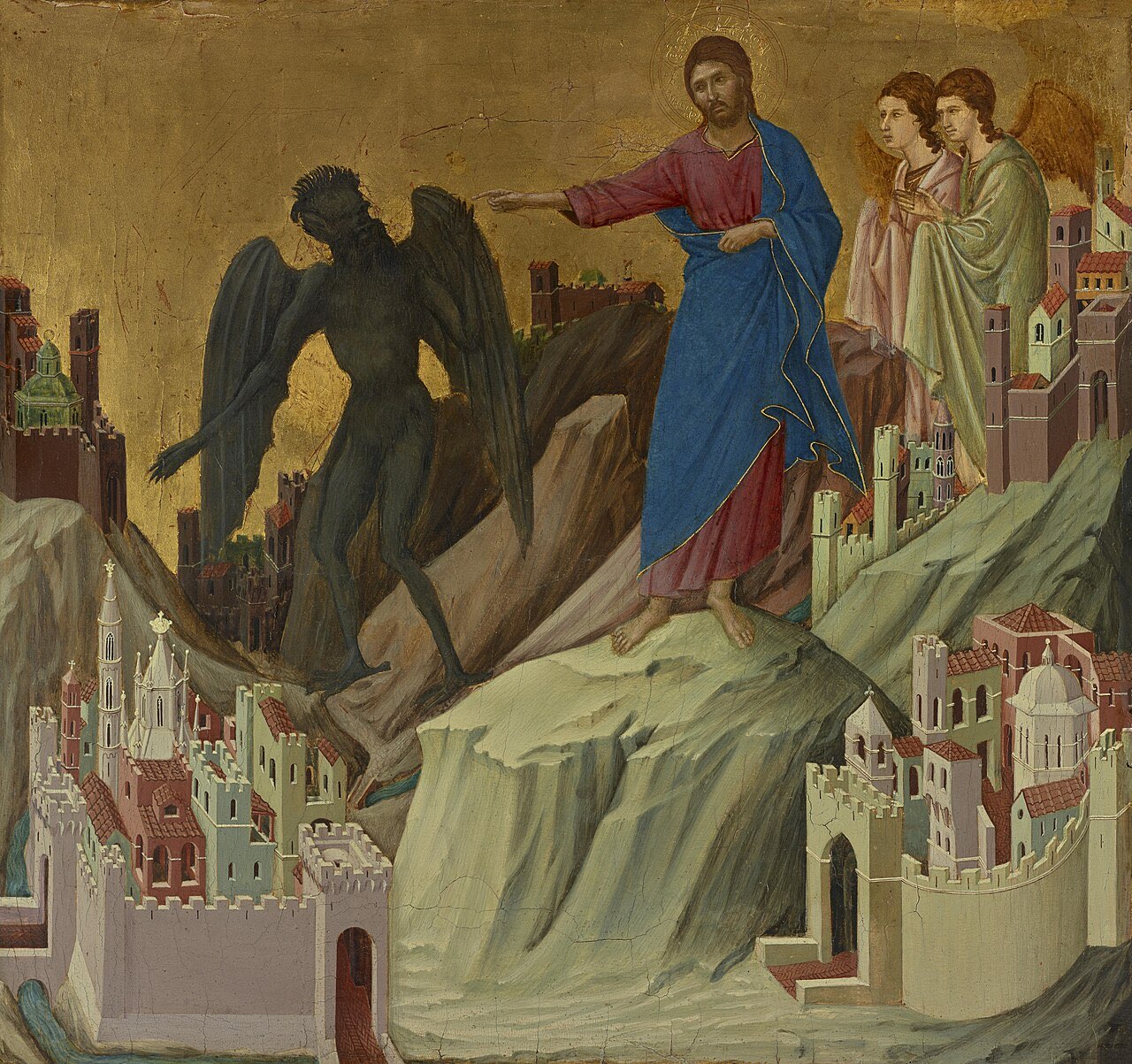
Scripture spends no time on the devil’s biography and all its time on his defeat. His names are job descriptions: satan, the adversary; diabolos, the slanderer; “the tempter,” “the accuser of the brothers,” “a murderer from the beginning… a liar and the father of lies” (John 8:44; Revelation 12:10). Jesus spoke of seeing him “fall like lightning from heaven” (Luke 10:18), and the New Testament treats him as a real, personal, limited creature – dangerous, doomed, and never for one verse God’s equal.
Week 3 of this study watches his frontal assault. In the wilderness he offered Jesus three shortcuts – bread without the Father, spectacle from the temple pinnacle, empire without a cross – and was answered three times from Deuteronomy, the book of Israel’s failed wilderness test (Matthew 4:1-11). Where the first Adam fell in a garden of plenty, the last Adam stood in a desert of hunger. The devil “departed from him until an opportune time” (Luke 4:13): he returns entering Judas, sifting Peter, and presiding over “the power of darkness” of Passion night (Luke 22:3, 31, 53).
That night was his undoing. The cross he engineered “disarmed the rulers and authorities” (Colossians 2:15); the resurrection broke “the one who has the power of death” (Hebrews 2:14). The believer’s stance is accordingly unafraid and unimpressed: “Resist the devil, and he will flee from you” (James 4:7).
In the New Testament
- The temptation in the wilderness (Matthew 4:1-11; Luke 4:1-13)
- Entering Judas; demanding Peter (Luke 22:3, 31-32; John 13:27)
- Defeated at the cross (Colossians 2:13-15; Hebrews 2:14-15)
- Resisted by believers (Ephesians 6:10-18; James 4:7; 1 Peter 5:8-9)
- Final judgment (Revelation 12; 20:1-10)
Key Locations
- The Judean Wilderness The barren desert between Jerusalem and the Dead Sea where Jesus fasted forty days and faced the tempter.
- The Temple in Jerusalem The center of Israel's worship, rebuilt on a massive scale by Herod the Great.