
The Temple in Jerusalem
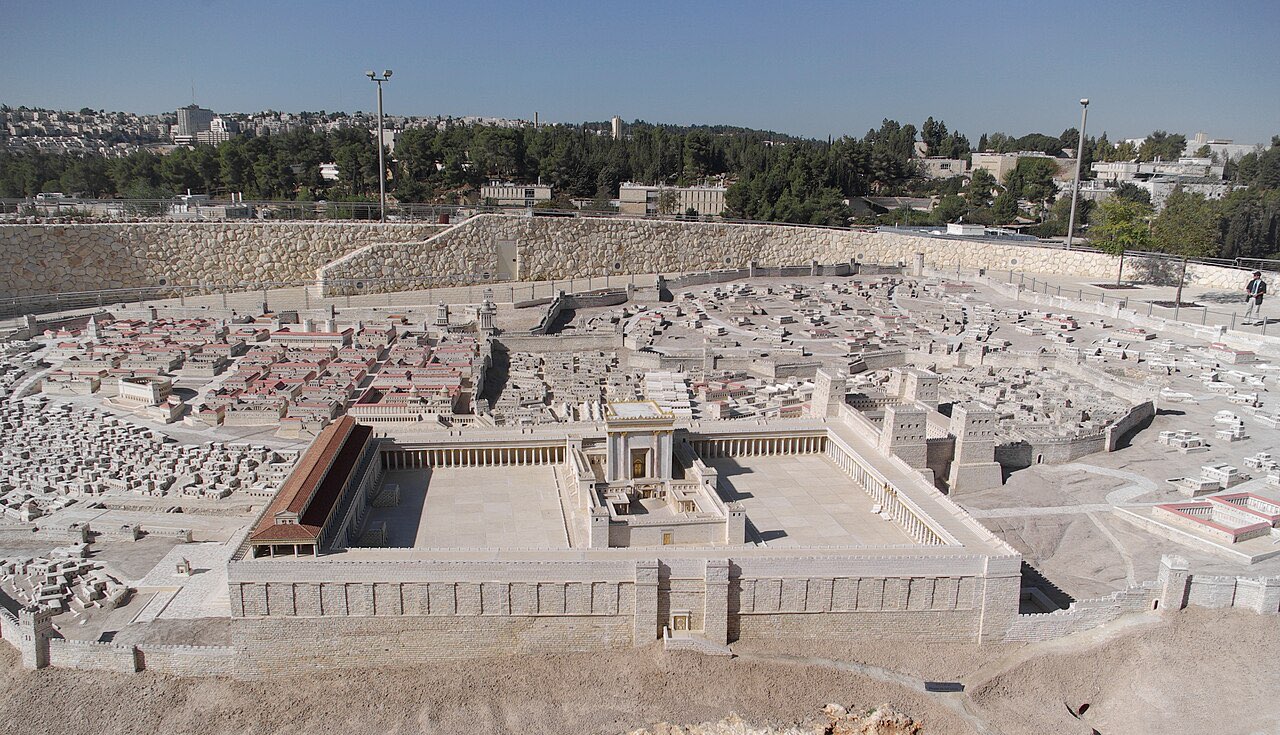
The temple that stands behind nearly every Jerusalem scene in the Gospels was the Second Temple, begun after the return from Babylonian exile and rebuilt on a staggering scale by Herod the Great starting around 20 BC. Herod doubled the size of the temple mount, ringed it with colonnades, and faced the sanctuary in white stone and gold. The rabbis said that whoever had not seen Herod’s temple had never seen a beautiful building. Work continued for decades after Jesus’ ministry, and the whole complex stood finished for only a few years before Rome destroyed it in AD 70 – exactly as Jesus had foretold (Mark 13:2).
For Israel the temple was not merely a landmark. It was the meeting place of heaven and earth, the one place where sacrifice could be offered and where God had set his name. That is what makes the New Testament’s claims so startling: Jesus calls it “my Father’s house,” and then speaks of “the temple of his body” (John 2:21) – the true meeting place of God and man.
In the New Testament
- Zechariah receives Gabriel’s announcement at the altar of incense (Luke 1:8-20)
- The infant Jesus is presented; Simeon and Anna respond (Luke 2:22-38)
- The twelve-year-old Jesus sits among the teachers (Luke 2:41-52)
- Jesus cleanses the temple courts (John 2:13-22; Matthew 21:12-17)
- The veil is torn at the crucifixion (Matthew 27:51)
- The early church gathers in Solomon’s Colonnade (Acts 3-5)