
The Judean Wilderness
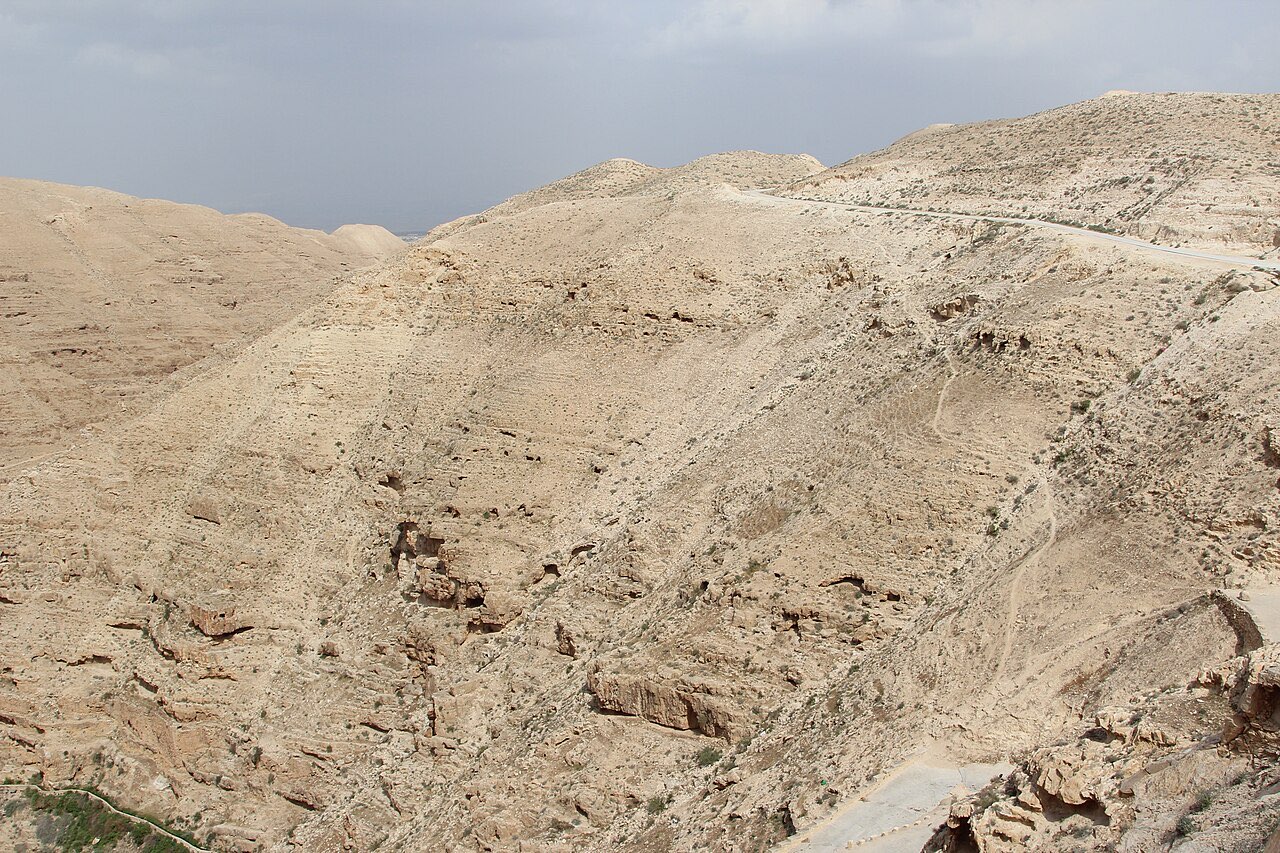
East of Jerusalem the land falls nearly four thousand feet in fifteen miles, dropping from the olive terraces of the hill country to the shores of the Dead Sea. The ridge blocks the rain, and what remains is the Judean wilderness: chalky hills, plunging ravines, blistering heat, and silence. It is desolate, but never far away – a person can stand in Jerusalem’s bustle and see the desert from the city’s edge. Scripture’s wilderness is like that: not a remote exile but the empty place just past the noise, where there is nothing left to lean on but God.
David hid from Saul in this wilderness and wrote psalms out of its dryness (“as in a dry and weary land where there is no water,” Psalm 63). John the Baptist made it his pulpit, “the voice of one crying in the wilderness” (Isaiah 40:3). And immediately after his baptism, Jesus was led by the Spirit up from the Jordan into these same hills to fast forty days and face Satan’s temptations (Matthew 4:1-11; Luke 4:1-13) – forty days echoing Israel’s forty years, with Jesus answering every temptation from Deuteronomy, the book of the wilderness.
The road from Jerusalem down to Jericho, setting of the Good Samaritan parable, cuts through this terrain – lonely, steep, and notorious for bandits.
In the New Testament
- John the Baptist’s wilderness ministry (Matthew 3:1-6; Mark 1:2-6)
- The temptation of Jesus (Matthew 4:1-11; Mark 1:12-13; Luke 4:1-13)
- The Jerusalem-Jericho road of the Good Samaritan (Luke 10:25-37)