
Philip the Evangelist
Like Stephen, Philip was chosen to wait on tables (Acts 6:5) and promptly redefined the job. When persecution scattered the Jerusalem church, “Philip went down to the city of Samaria and proclaimed to them the Christ” – the first recorded preacher to cross the Jewish-Samaritan line, with signs, joy, and baptisms following, and even Simon the sorcerer among the converts (Acts 8:4-13). Peter and John came down to confirm what the deacon had started.
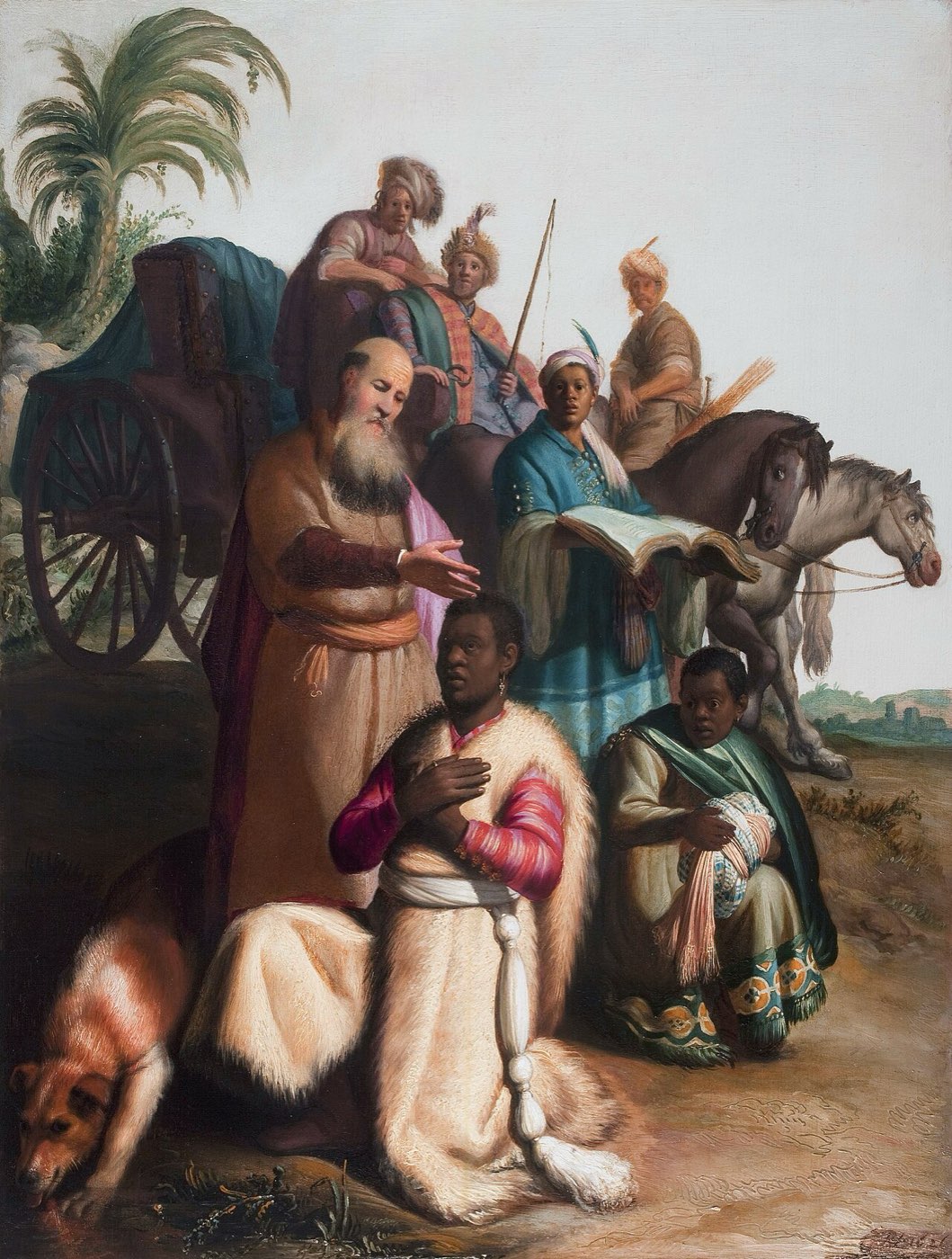
Then the Spirit sent the revivalist to an empty road, and Philip’s masterpiece was an audience of one: the Ethiopian treasurer puzzling over Isaiah 53 in his chariot. Philip ran to catch it, asked the perfect opening question, “and beginning with this Scripture he told him the good news about Jesus” – down to the water, up from it, and snatched away by the Spirit to preach up the coast (Acts 8:26-40). Revival crowds and a single seeker received the same energy; that is the evangelist’s portrait in two panels.
He settled at Caesarea with “four unmarried daughters, who prophesied,” and decades later hosted Paul’s company on the last journey to Jerusalem (Acts 21:8-9) – the persecuted refugee of Acts 8 calmly entertaining the converted persecutor.
In the New Testament
- Chosen among the Seven (Acts 6:5)
- The Samaria mission (Acts 8:4-25)
- The Ethiopian on the Gaza road (Acts 8:26-40)
- Host at Caesarea; the prophesying daughters (Acts 21:8-9)
Key Locations
- Samaria / Sychar The Samaritan town at Jacob's well, where Jesus offered a foreign woman living water.
- The Gaza Road The desert road toward Gaza where Philip baptized the Ethiopian eunuch.
- Caesarea Maritima Herod's harbor city, Rome's capital in Judea -- home of Cornelius, Philip, and Paul's two-year imprisonment.