
Philemon and Onesimus
Philemon was a Colossian householder converted through Paul (“you owe me even your own self”), prosperous enough to own slaves and host the church in his home, warm enough that “the hearts of the saints have been refreshed through you” (Philemon 1-7). Onesimus was his slave – who ran, apparently with cost to his master, and by providence’s long road ended up in Rome beside the imprisoned Paul, where the runaway became a believer: “my child… whose father I became in my imprisonment” (Philemon 10).
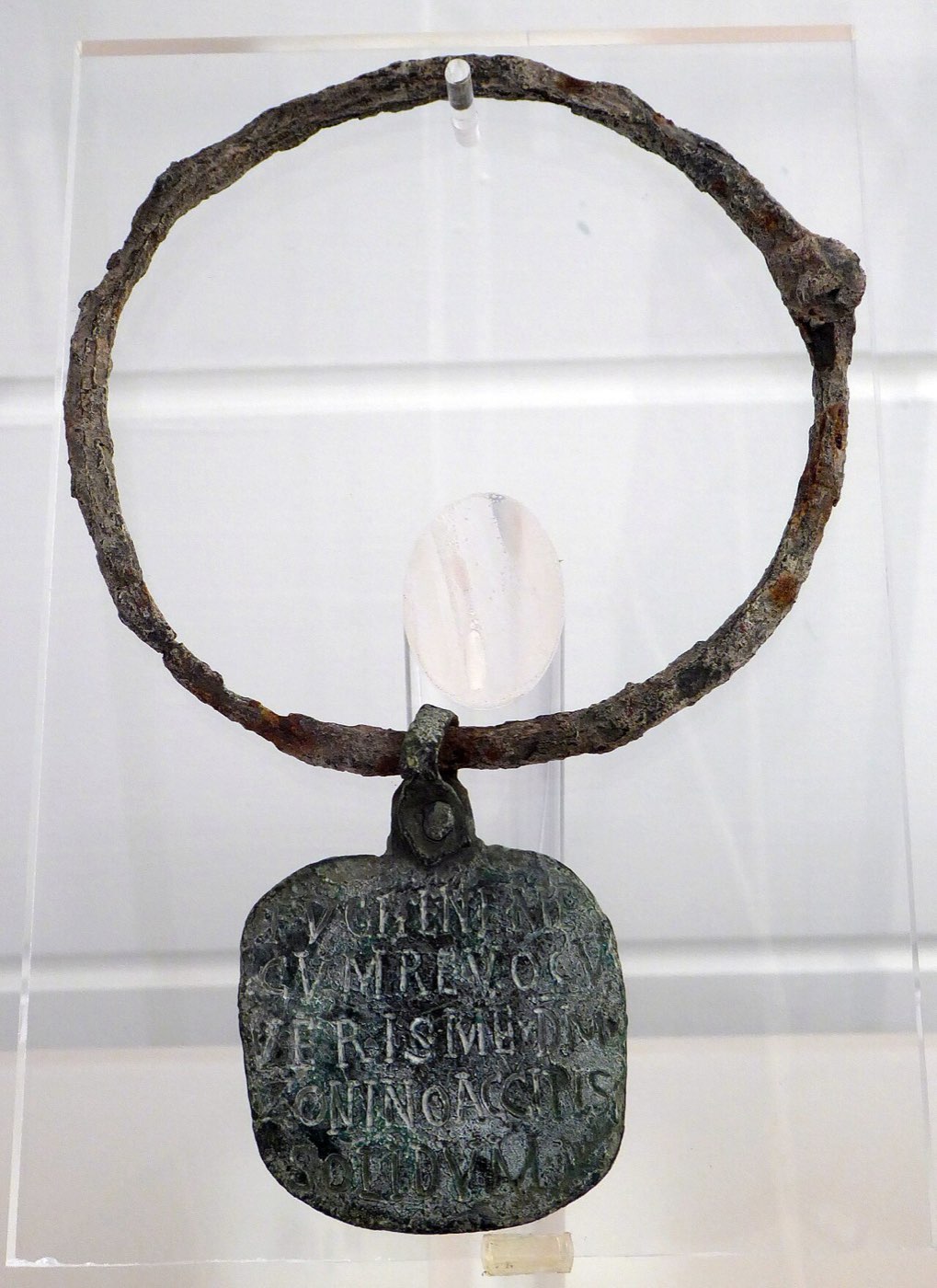
Roman law and the iron collars in the museums say what happened next was supposed to look like: capture, return, punishment. Paul sent Onesimus back instead with the shortest letter in the Pauline canon, a masterpiece of pastoral leverage that commands nothing and makes refusal impossible. He puns on the slave’s name (“Useless” made “useful”), offers his own account for any damages – “charge that to me” – and reframes the entire relationship: receive him “no longer as a bondservant but more than a bondservant, as a beloved brother… If you consider me your partner, receive him as you would receive me” (Philemon 11-21). A slave received as the apostle himself: the category has quietly been abolished even while the institution stands.
Colossians 4:9 shows the outcome in motion – Onesimus returning home as “our faithful and beloved brother, who is one of you.” A generation later, Ignatius of Antioch praised an Ephesian bishop named Onesimus; many have loved the thought, unprovable and irresistible, that the runaway ended his story holding a shepherd’s staff.
In the New Testament
- The letter to Philemon
- Onesimus commended to Colossae (Colossians 4:9)