
Nathanael
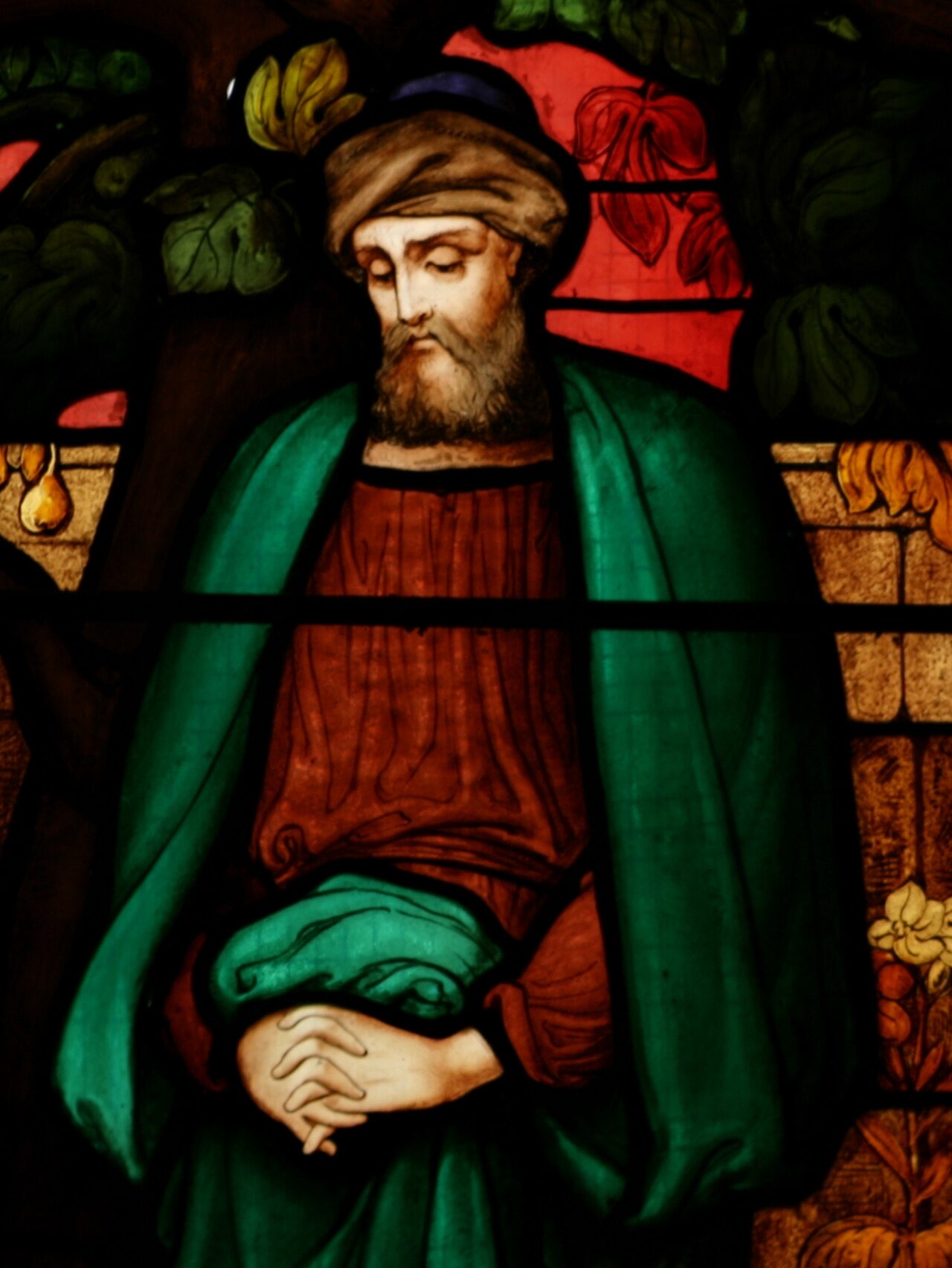
Nathanael of Cana – usually identified with the Bartholomew of the apostle lists – enters the Gospel story delivering its first insult. Told by Philip that the Messiah had been found, and that he came from Nazareth, Nathanael answered with the small-town scorn of a neighboring village: “Can anything good come out of Nazareth?” (John 1:46). Philip wisely skipped the argument: “Come and see.”
What he saw undid him in two sentences. Jesus greeted him as “an Israelite indeed, in whom there is no deceit” – a pointed compliment: an Israel-ite without the guile of Jacob – and, asked how he knew him, replied, “Before Philip called you, when you were under the fig tree, I saw you” (John 1:47-48). Whatever passed under that fig tree, it was private enough that being seen there collapsed Nathanael’s skepticism on the spot: “Rabbi, you are the Son of God! You are the King of Israel!” Jesus, smiling through the text, promised him more: “You will see heaven opened, and the angels of God ascending and descending on the Son of Man” – Jacob’s ladder, with Jesus himself as the stair (John 1:49-51).
The honest skeptic became a quiet fixture of the Twelve, and John grants him a last cameo: back home by the Sea of Galilee after the resurrection, in the boat the morning the risen Lord cooked breakfast on the shore (John 21:2).
In the New Testament
- Skepticism, sight, and confession (John 1:43-51)
- Named among the Twelve as Bartholomew (Matthew 10:3; Acts 1:13)
- In the boat at the last breakfast (John 21:1-14)
Key Locations
- Cana of Galilee The Galilean village where Jesus performed his first sign, turning water to wine at a wedding.
- Bethany Beyond the Jordan The place on the east bank of the Jordan where John was baptizing when he pointed to the Lamb of God.
- The Sea of Galilee The freshwater lake at the heart of Jesus' ministry, ringed by fishing towns and sudden storms.