
The Hemorrhaging Woman
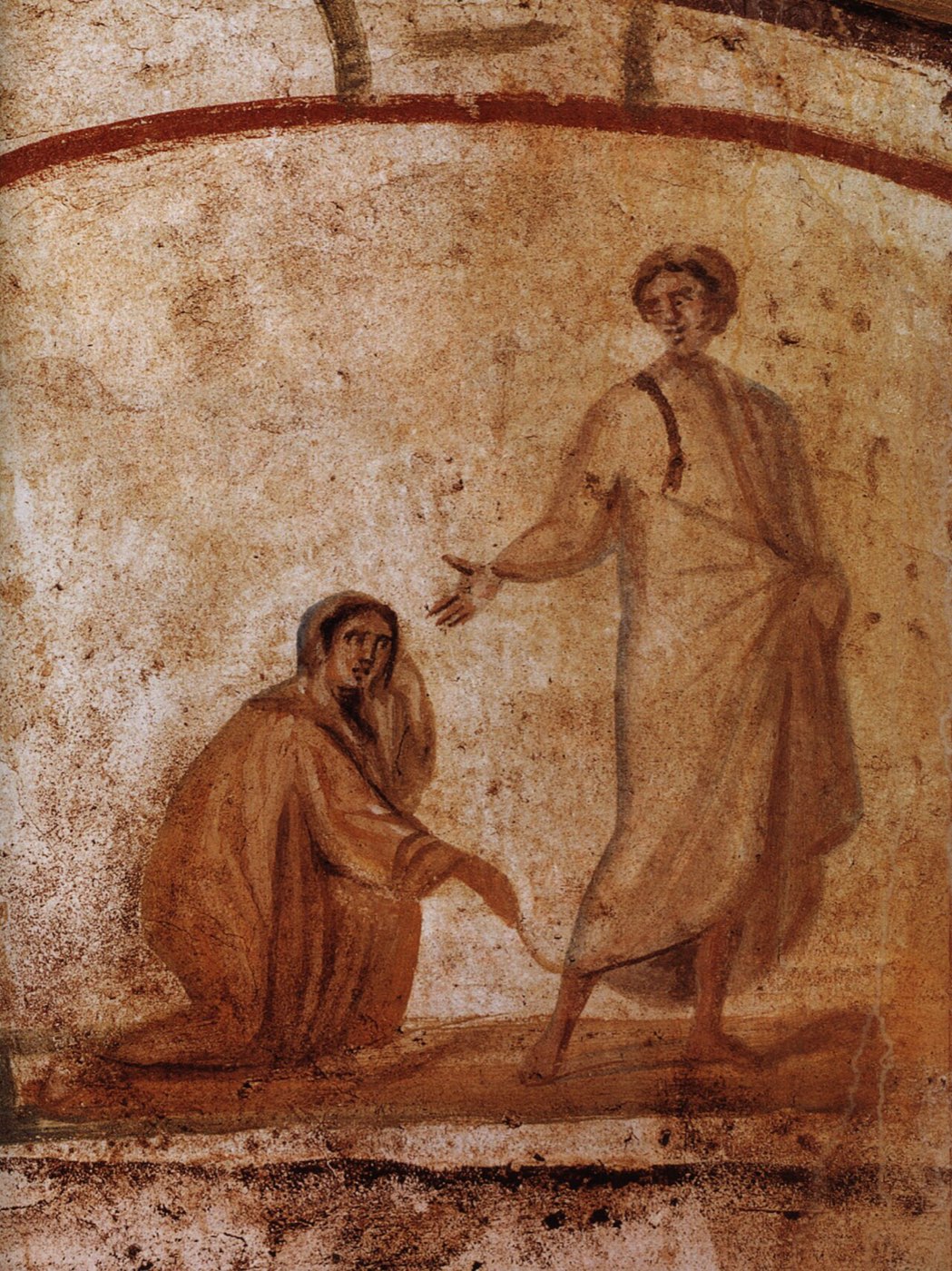
Twelve years of bleeding meant twelve years of ritual uncleanness: excluded from the temple, avoided by the scrupulous, and – Mark adds with a physician’s candor Luke tactfully softens – she “had suffered much under many physicians, and had spent all that she had, and was no better but rather grew worse” (Mark 5:26). Her plan was to steal a healing: slip through the crowd behind him, touch the fringe of his garment, and vanish. “If I touch even his garments, I will be made well.”
The healing worked instantly; the anonymity did not. “Who touched my garments?” The disciples pointed out the absurdity – the whole crowd was touching him – but Jesus kept looking until, “in fear and trembling,” she came and fell down and “told him the whole truth” (Mark 5:27-33). The exposure she dreaded became her blessing: he would not let her leave with a magical transaction when she could have a relationship. “Daughter” – the only woman in the Gospels he addresses by that name – “your faith has made you well; go in peace, and be healed of your disease.”
An unclean woman touched him, and instead of defilement flowing to him, healing flowed to her – the Gospels’ physics of grace in a single gesture, painted on catacomb walls by Christians within living memory of the age of martyrs.
In the New Testament
- The healing of the hemorrhaging woman (Mark 5:24-34; Matthew 9:20-22; Luke 8:42-48)
Key Locations
- Capernaum The fishing town on the lake's north shore that became Jesus' adopted home base.
- The Sea of Galilee The freshwater lake at the heart of Jesus' ministry, ringed by fishing towns and sudden storms.