
Capernaum
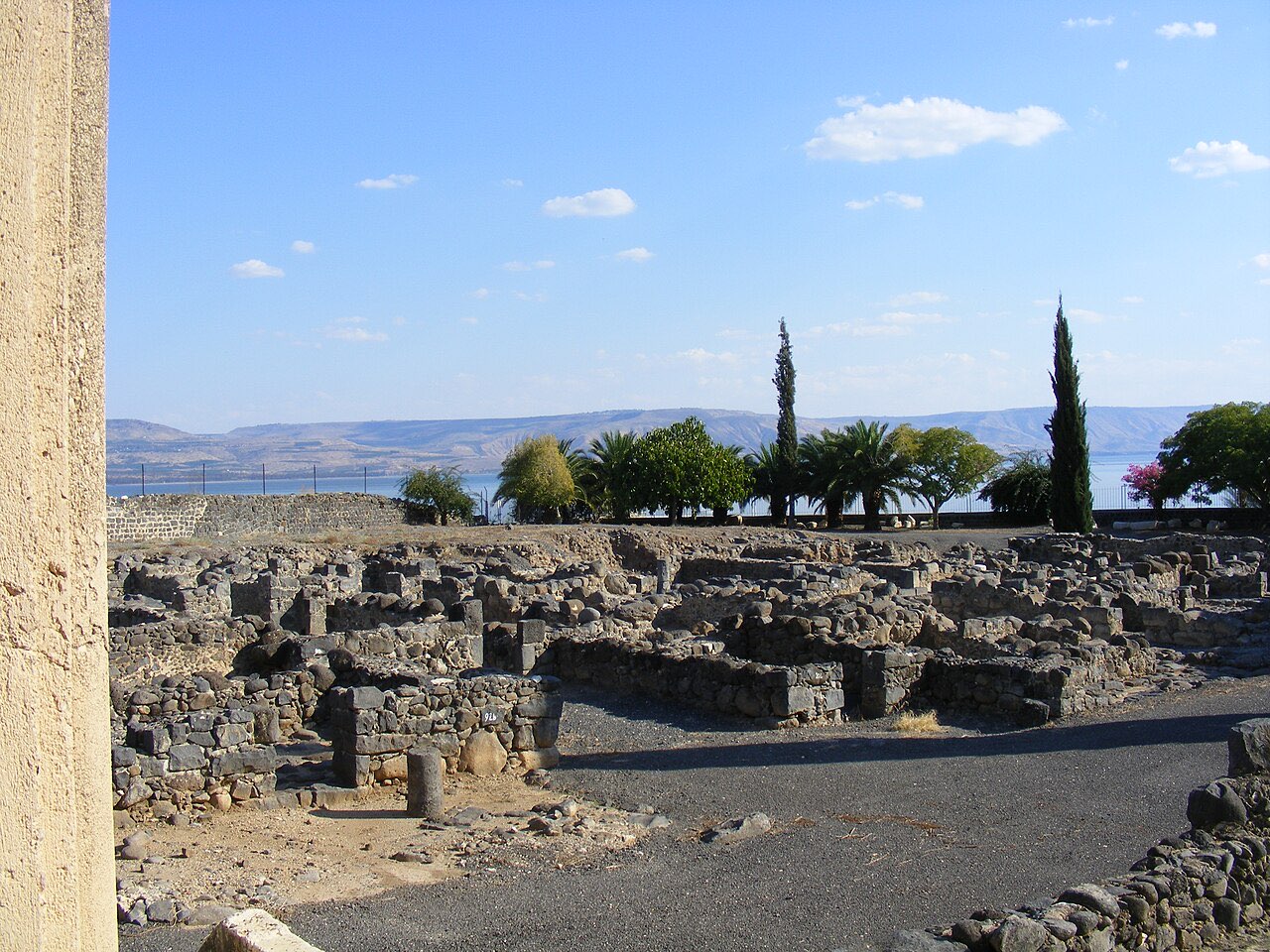
Capernaum (“village of Nahum”) was a prosperous fishing town on the northwest shore of the Sea of Galilee, sitting on the Via Maris trade route near the border between Herod Antipas’ Galilee and Philip’s territory – which is why it had a customs station (Levi’s tax booth, Mark 2:14) and a Roman centurion in residence. After Nazareth rejected him, Jesus “went and lived in Capernaum” (Matthew 4:13); Matthew can even call it “his own city” (Matthew 9:1).
The concentration of Gospel events here is astonishing: Peter’s mother-in-law healed in his house, the paralytic lowered through a roof, the centurion’s servant healed at a distance, Jairus’ daughter raised, the temple-tax coin found in a fish’s mouth, and the Bread of Life discourse delivered in the synagogue (John 6:59). Yet familiarity hardened into unbelief, and Jesus pronounced one of his sharpest woes over the town: “And you, Capernaum, will you be exalted to heaven? You will be brought down to Hades” (Matthew 11:23).
Archaeology has been kind to Capernaum. Excavations have exposed whole insulae of basalt houses, an octagonal fifth-century church built over a first-century house venerated from earliest times as Peter’s, and a grand white limestone synagogue of the fourth or fifth century – standing directly on the black basalt foundations of the synagogue Jesus taught in, the one the centurion built (Luke 7:5).
In the New Testament
- Jesus makes Capernaum his base (Matthew 4:13-17)
- A day of ministry: teaching, exorcism, healings (Mark 1:21-34)
- The paralytic through the roof (Mark 2:1-12)
- The call of Levi at the tax booth (Mark 2:13-17)
- The centurion’s servant (Matthew 8:5-13; Luke 7:1-10)
- The Bread of Life discourse in the synagogue (John 6:22-59)
- The woe over unrepentant Capernaum (Matthew 11:23-24)