
The Good Samaritan
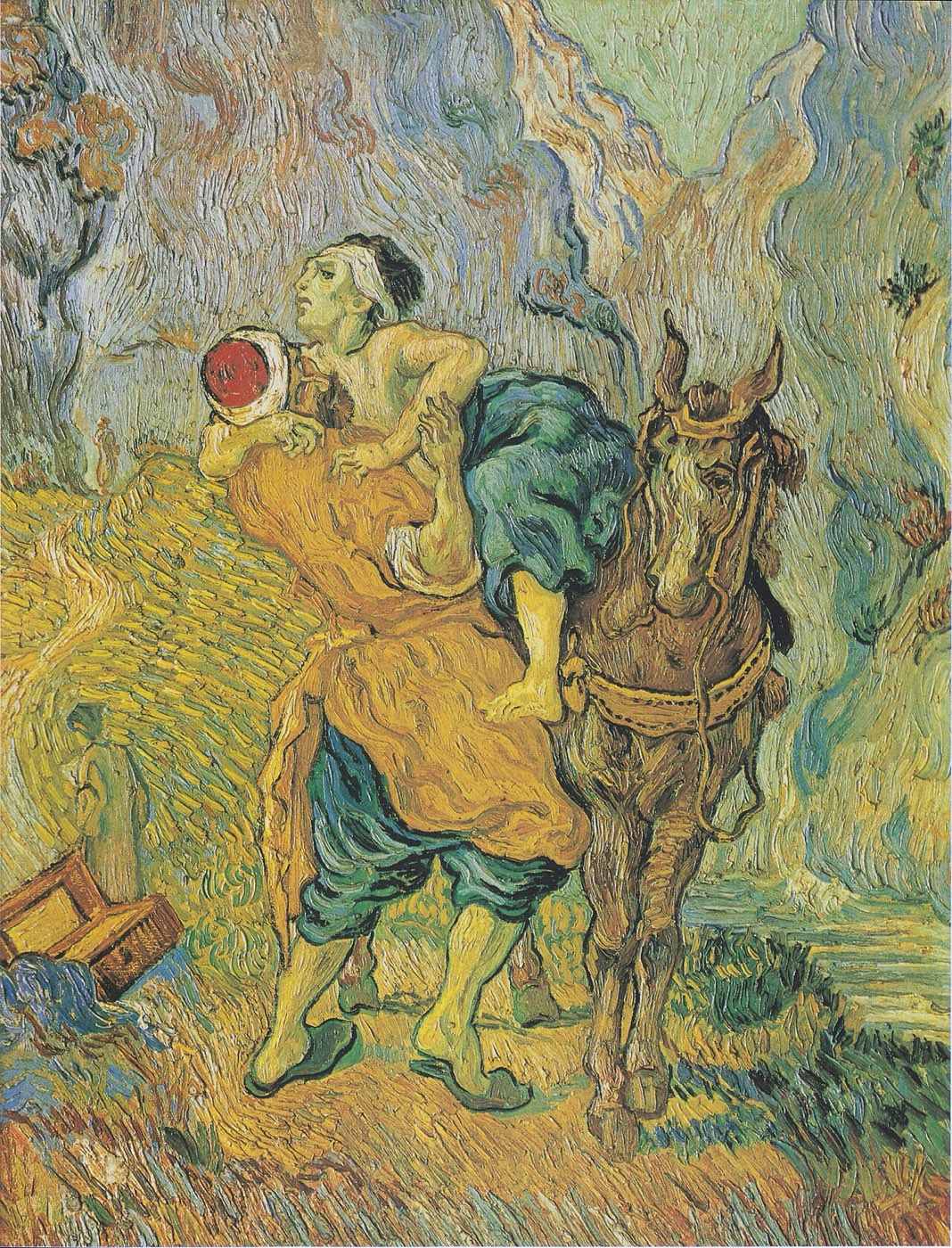
A lawyer, “desiring to justify himself,” asked the question that hoped for a short list: “And who is my neighbor?” (Luke 10:29). Jesus answered with a road every listener knew – the seventeen-mile plunge from Jerusalem to Jericho through bandit country – and a man left stripped, beaten, and half dead beside it.
The story’s engine is its casting. A priest sees him and passes by on the other side; a Levite does the same – the religious professionals, with plausible reasons (defilement, danger, schedule) that the parable does not dignify by mentioning. Then comes the twist Jesus’ audience would have braced against: the third traveler, the story’s hero, is a Samaritan – the despised half-breed heretic of Judean scorn. He “had compassion,” and the verbs pile up like proof: went to him, bound his wounds, poured oil and wine, set him on his own animal, brought him to an inn, took care of him, paid two denarii, and signed for the balance (Luke 10:30-35).
Jesus then flipped the lawyer’s question. Not “who qualifies as my neighbor?” but “which of these three proved neighbor?” The lawyer could not even say the word Samaritan: “The one who showed him mercy.” – “You go, and do likewise” (Luke 10:36-37). The parable relocates neighbor-love from a category to be limited into a mercy to be practiced – by anyone, toward anyone, at cost.
In the New Testament
- The parable of the Good Samaritan (Luke 10:25-37)
Key Locations
- Jericho The oasis city near the Jordan where Jesus healed blind Bartimaeus and called Zacchaeus down from his tree.
- The Judean Wilderness The barren desert between Jerusalem and the Dead Sea where Jesus fasted forty days and faced the tempter.