
The Gerasene Demoniac
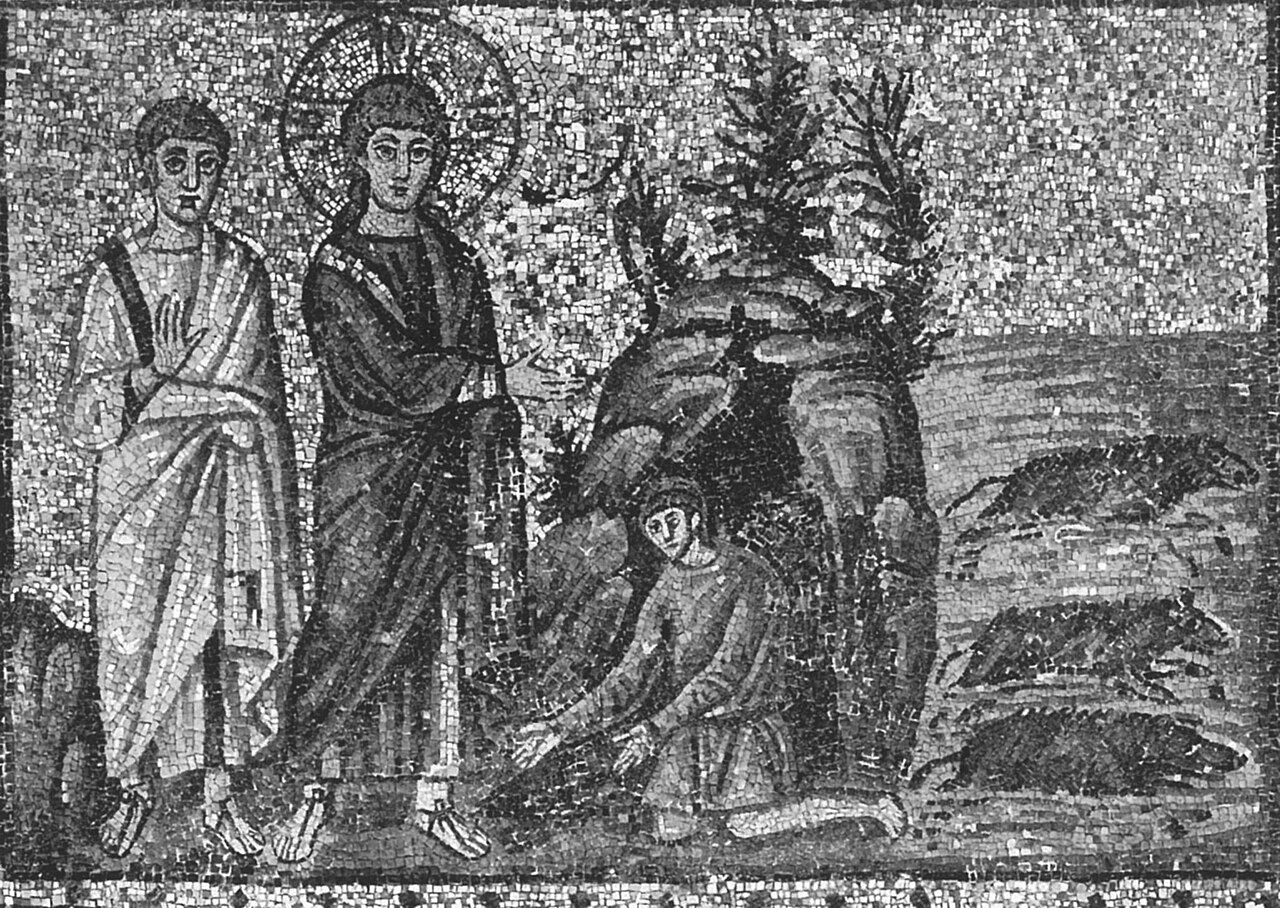
Mark spends more ink on this man’s condition than on any other sufferer in the Gospels: living among the tombs, howling night and day, cutting himself with stones, snapping every chain and shackle the townspeople tried (Mark 5:1-5). He was the man beyond help – which is exactly whom Jesus crossed a stormy lake to reach.
The deliverance reads like a military engagement. The demons, asked their name, answer “Legion, for we are many”; they beg not to be sent out of the region, and Jesus permits them into a herd of about two thousand pigs, which stampede down the steep bank into the sea (Mark 5:6-13). The economics were catastrophic, and the townspeople, finding their terror “sitting there, clothed and in his right mind,” were more afraid of the healer than they had ever been of the demoniac – and asked Jesus to leave.
The healed man begged to come along. Jesus gave him something harder and better: “Go home to your friends and tell them how much the Lord has done for you, and how he has had mercy on you.” He obeyed, proclaiming it “in the Decapolis, and everyone marveled” (Mark 5:18-20) – a one-man Gentile mission years before Peter met Cornelius, whose preparation for ministry consisted entirely of a testimony.
In the New Testament
- The deliverance among the tombs (Mark 5:1-20; Matthew 8:28-34; Luke 8:26-39)
- The Decapolis welcomes Jesus on his return (Mark 7:31-8:10)
Key Locations
- The Country of the Gerasenes Gentile territory on the eastern shore of the Sea of Galilee, where Jesus freed the man among the tombs.
- The Decapolis The league of ten Greek cities east of the Jordan, Gentile territory that heard the gospel early.