
The Decapolis
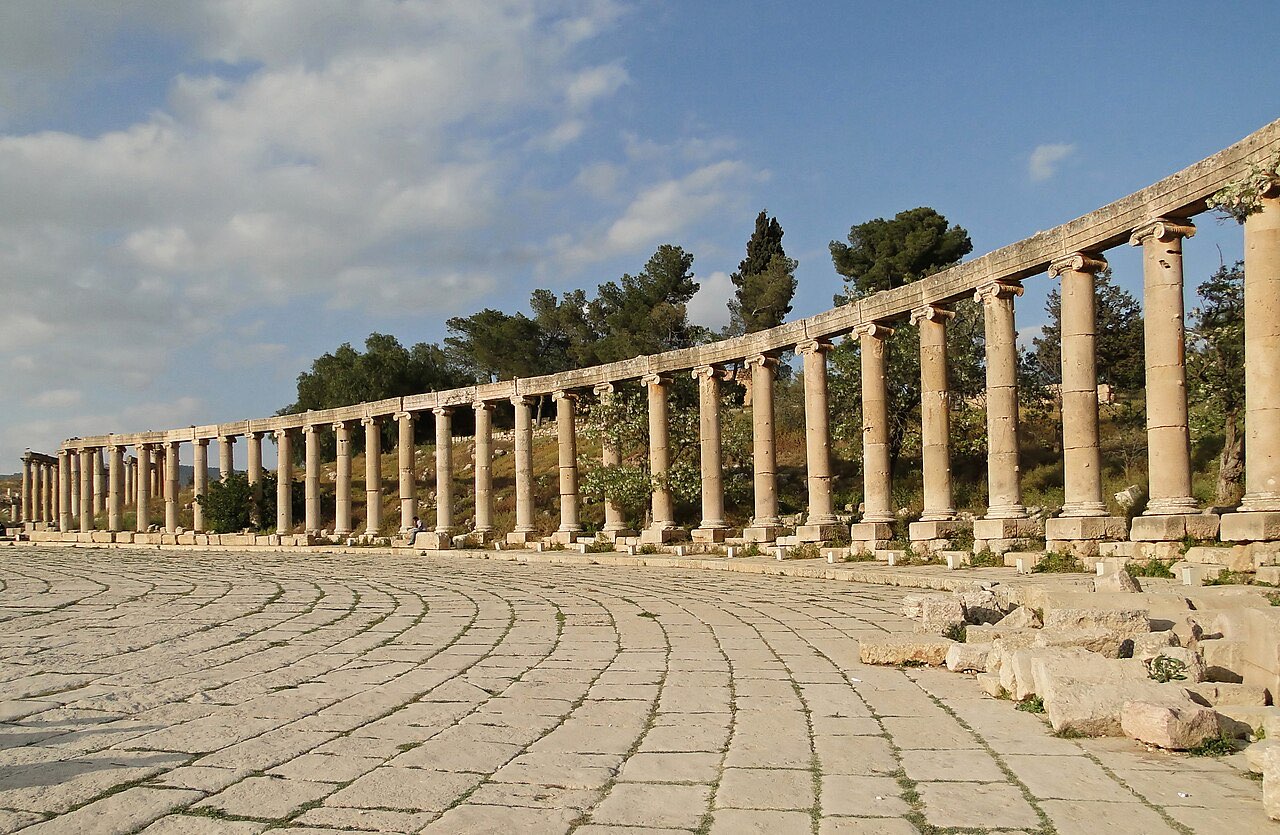
The Decapolis (“ten cities”) was a league of Greek cities east of the Jordan and the Sea of Galilee – places like Gerasa, Gadara, Hippos, and Scythopolis. Founded in the wake of Alexander’s conquests, they were islands of Greco-Roman culture on the edge of Jewish territory: temples, theaters, forums, gymnasia, and herds of pigs. To the rabbis this was unclean ground; to Rome it was a civilized buffer zone.
The Gospels put Jesus there anyway. Crowds from the Decapolis followed him from the beginning (Matthew 4:25). It was in this territory that he freed the Gerasene demoniac and, refusing the man’s request to join him, sent him home instead – “and he went away and began to proclaim in the Decapolis how much Jesus had done for him, and everyone marveled” (Mark 5:20). When Jesus returned later, the region that had once begged him to leave brought him their deaf and mute, and four thousand people sat with him for three days – the Gentile echo of the feeding of the five thousand (Mark 7:31-8:10).
The ruins of Jerash in Jordan, among the best-preserved Roman cities in the world, give the clearest picture of the world those first Gentile hearers lived in.
In the New Testament
- Crowds from the Decapolis follow Jesus (Matthew 4:25)
- The freed demoniac becomes the region’s first evangelist (Mark 5:18-20)
- Healing of the deaf man and feeding of the four thousand (Mark 7:31-8:10)