
The Country of the Gerasenes
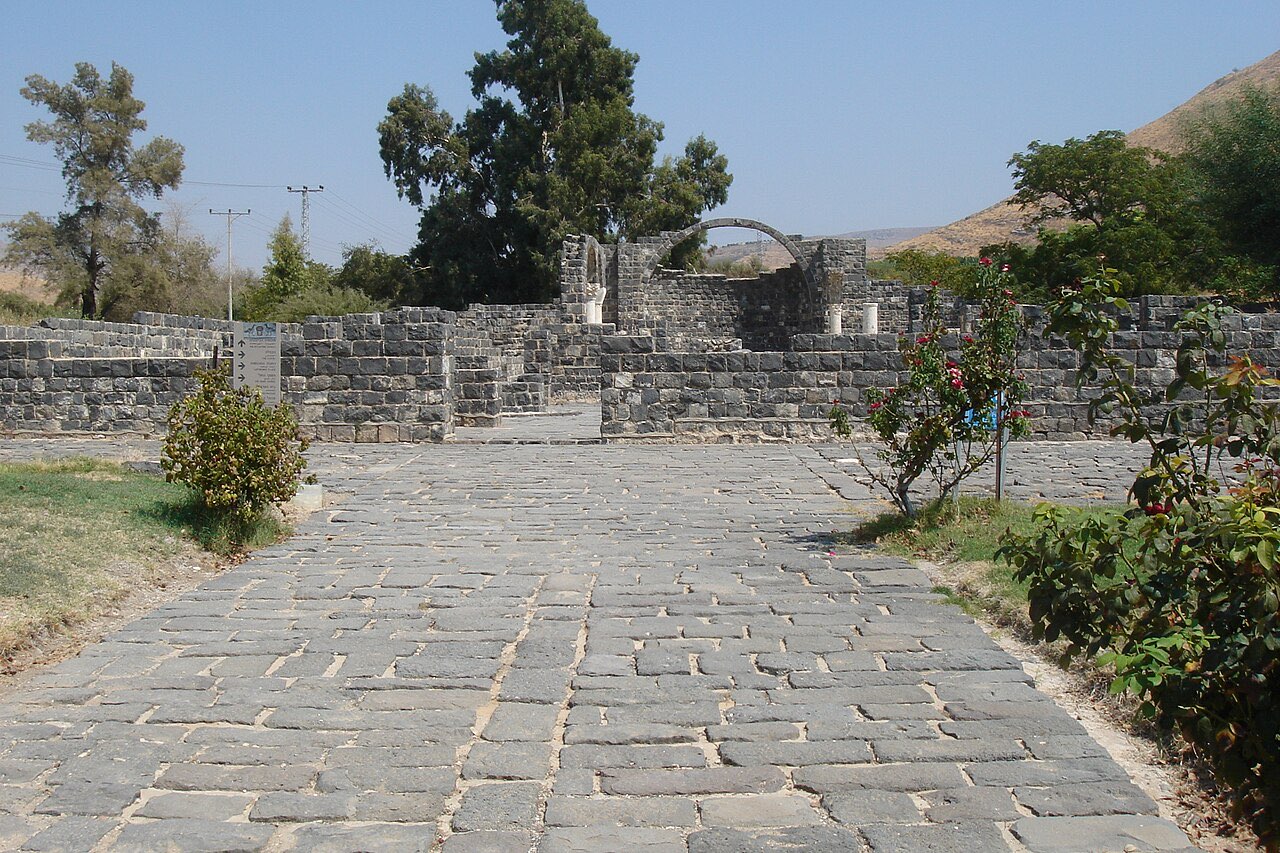
The eastern shore of the Sea of Galilee was another world. This was Decapolis country – Gentile territory, where pigs were herded and pagan temples stood, a place observant Jews avoided. The Gospel manuscripts variously call it the country of the Gerasenes, Gadarenes, or Gergesenes, names drawn from the nearby cities of Gerasa and Gadara; the traditional site of the miracle itself is Kursi, where the hills drop steeply to the water.
Jesus crossed the lake deliberately – through a storm he had to still on the way – to reach one man: naked, howling among the tombs, cutting himself with stones, possessed by a legion of demons. Everything about the scene is unclean by Jewish reckoning: Gentile land, tombs, demons, pigs. Jesus stepped off the boat into all of it, freed the man, and let the demons destroy the herd in the sea (Mark 5:1-20).
The healed man begged to come along. Instead Jesus gave him a commission: “Go home to your friends and tell them how much the Lord has done for you.” He became the first missionary to the Gentiles, and Mark notes that he proclaimed it “in the Decapolis” – which may explain the crowds that welcomed Jesus on his return to that region (Mark 7:31-8:10).
In the New Testament
- The healing of the Gerasene demoniac (Mark 5:1-20; Matthew 8:28-34; Luke 8:26-39)
- Jesus’ later ministry in the Decapolis (Mark 7:31-37)