
The Father of the Boy
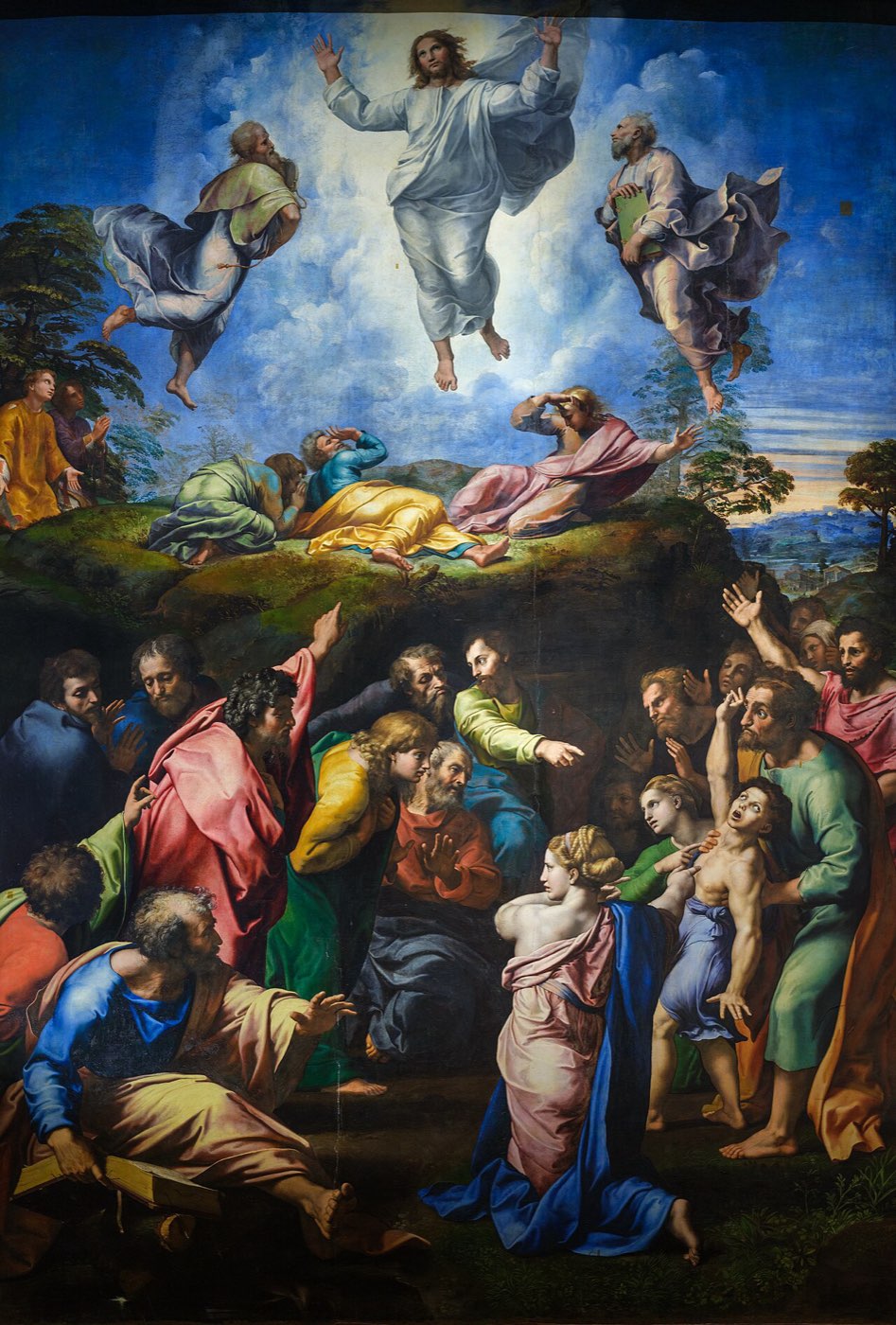
While Jesus shone on the mountain, a father was failing in the valley. His son had suffered from childhood – seized, thrown into fire and water, ground down – and the nine disciples left below could not cast the spirit out. By the time Jesus descended, the scene was a scrum of arguing scribes, embarrassed apostles, and one exhausted parent whose request had shrunk to fit his experience: “if you can do anything, have compassion on us and help us” (Mark 9:14-22).
Jesus handed the “if” back to him – “‘If you can’! All things are possible for one who believes” – and the man answered with the most honest prayer in the Bible, the cry of every believer who has ever held faith and fear in the same heart: “I believe; help my unbelief!” (Mark 9:23-24). It was enough. Jesus rebuked the spirit, lifted the boy from what looked like death, “and he arose.”
Raphael chose this scene for his final painting, setting the valley’s chaos directly beneath the mountain’s glory – the same juxtaposition Mark intends. To the disciples’ embarrassed “why couldn’t we?”, Jesus gave the quiet diagnosis: “This kind cannot be driven out by anything but prayer” (Mark 9:28-29).
In the New Testament
- The boy healed at the foot of the mountain (Mark 9:14-29; Matthew 17:14-20; Luke 9:37-43)
Key Locations
- The Mount of Transfiguration The high mountain where Jesus was transfigured before Peter, James, and John.
- Caesarea Philippi The pagan city at the foot of Mount Hermon where Peter confessed Jesus as the Christ.