
Caiaphas
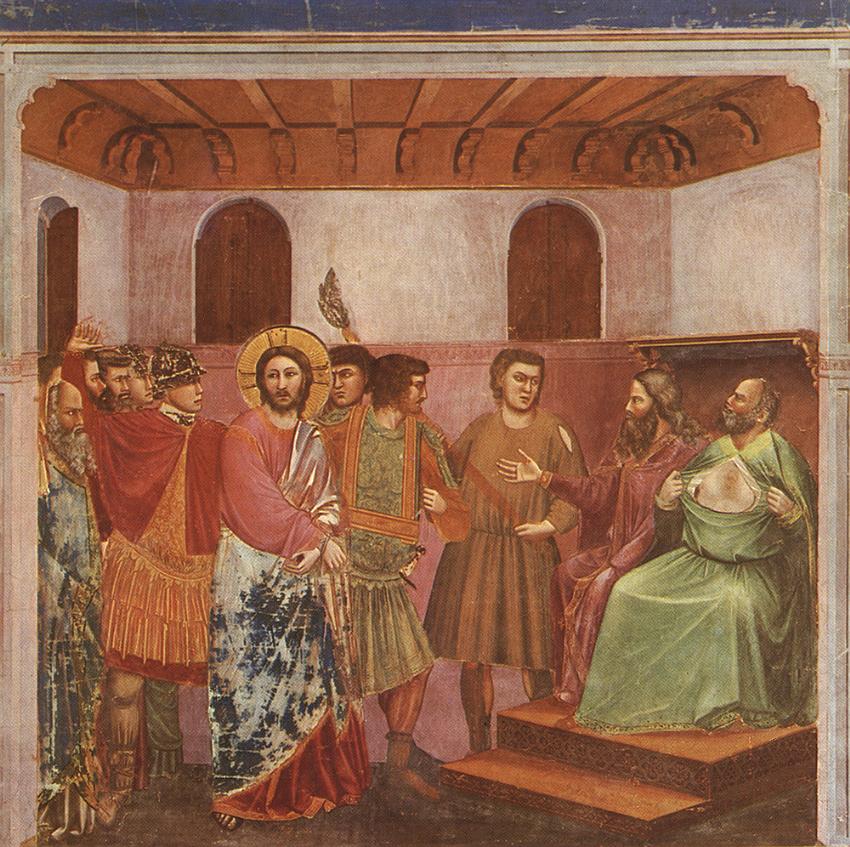
Joseph called Caiaphas held the high priesthood for eighteen years – an eternity in an office Rome bought and sold – by mastering the arithmetic of survival. His father-in-law Annas ran the family franchise; Caiaphas ran the meetings. When the raising of Lazarus panicked the council (“the Romans will come and take away both our place and our nation”), it was Caiaphas who cut through with realpolitik: “You know nothing at all. Nor do you understand that it is better for you that one man should die for the people, not that the whole nation should perish” (John 11:47-50).
John pauses over that sentence in wonder: “He did not say this of his own accord,” but as high priest he prophesied – meaning murder, speaking atonement – “that Jesus would die for the nation, and not for the nation only” (John 11:51-52). The most cynical sentence in the Gospel is also its most accurate theology.
At the night trial in his house, frustrated by silent Jesus and useless witnesses, Caiaphas put the question under oath – “tell us if you are the Christ, the Son of God” – received Daniel 7 for an answer, tore his robes, and had his verdict (Matthew 26:57-66). His ossuary, unearthed in 1990, now sits in the Israel Museum: the judge of that night reduced to a beautifully carved box, while the defendant needed no ossuary at all.
In the New Testament
- The unwitting prophecy (John 11:47-53)
- The night trial (Matthew 26:57-68; John 18:19-24)
- Prosecuting the apostles (Acts 4:5-22)
Key Locations
- The High Priest's House Where Jesus faced the Sanhedrin by night and Peter denied him in the courtyard.
- The Temple in Jerusalem The center of Israel's worship, rebuilt on a massive scale by Herod the Great.
- Jerusalem The holy city -- David's capital, the temple's home, the stage of the crucifixion, resurrection, and Pentecost.