
The High Priest's House
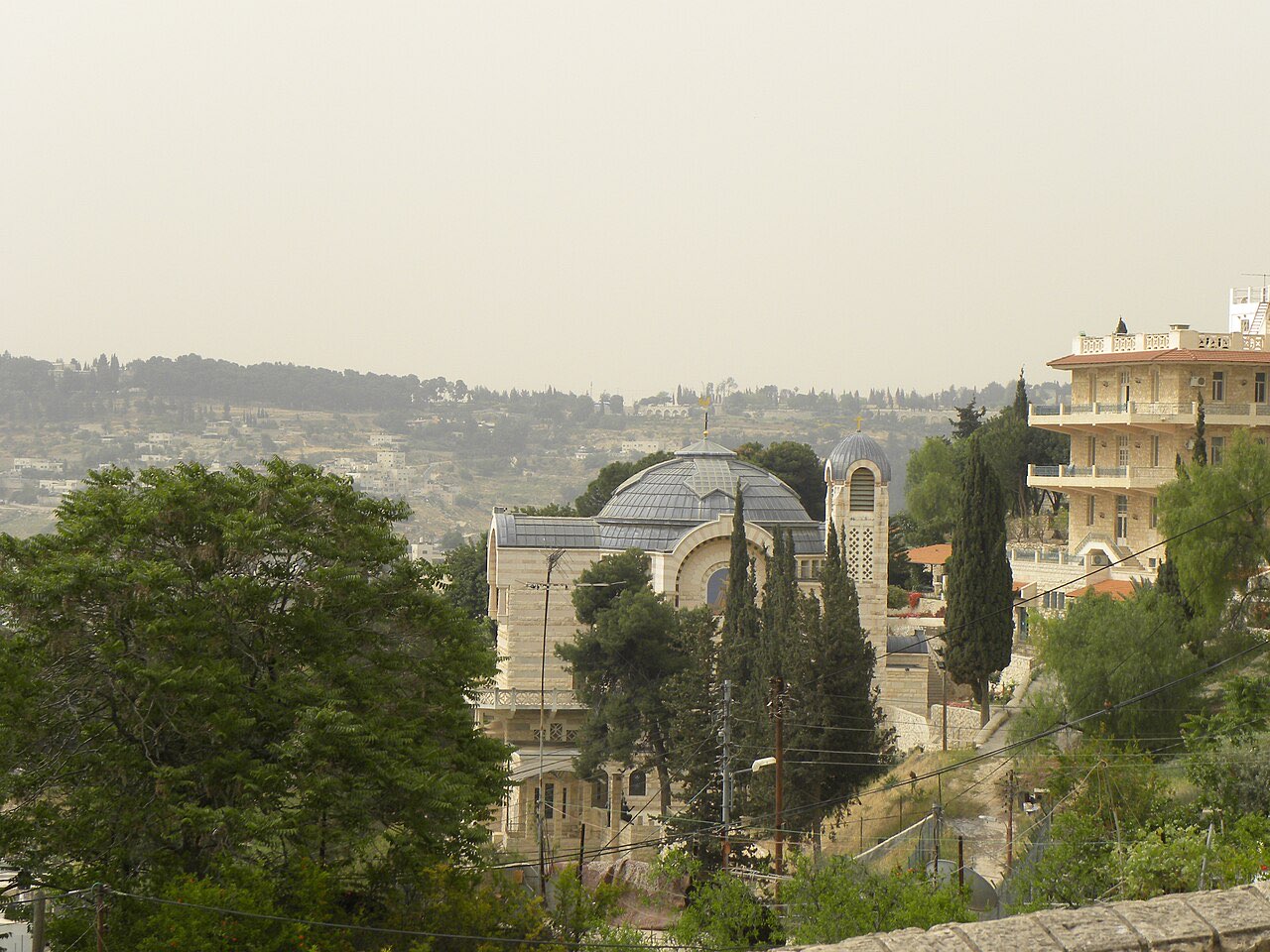
From Gethsemane the arresting party led Jesus back across the Kidron and up into the city’s wealthy upper quarter, to the residence of the high priest – first for a hearing before Annas, the old power behind the office, then before his son-in-law Caiaphas, where the Sanhedrin had gathered by night (John 18:12-24; Matthew 26:57). In that house came the false witnesses, the high priest’s demand – “tell us if you are the Christ, the Son of God” – Jesus’ answer from Daniel 7, and the verdict of blasphemy, sealed with spitting and blows (Matthew 26:59-68).
The Gospels keep cutting away to the courtyard below, where Peter warmed himself at a charcoal fire and three times swore he did not know the man. “And immediately the rooster crowed… And he went out and wept bitterly” (Matthew 26:69-75; Luke 22:61 adds the detail that breaks the heart: “the Lord turned and looked at Peter”).
Tradition places Caiaphas’ house on the eastern slope of Mount Zion, where the Church of St. Peter in Gallicantu (“at the cock-crow”) now stands. Beneath it are Second-Temple-era cellars and a rock-cut pit that pilgrims have long honored as the holding cell where Jesus may have spent the last night before his crucifixion – Psalm 88 is read there: “you have put me in the depths of the pit.”
In the New Testament
- The night hearings before Annas and Caiaphas (John 18:12-24; Matthew 26:57-68)
- Peter’s three denials in the courtyard (Matthew 26:69-75; Luke 22:54-62; John 18:15-27)
- The morning session that sent Jesus to Pilate (Luke 22:66-71)