
Agabus
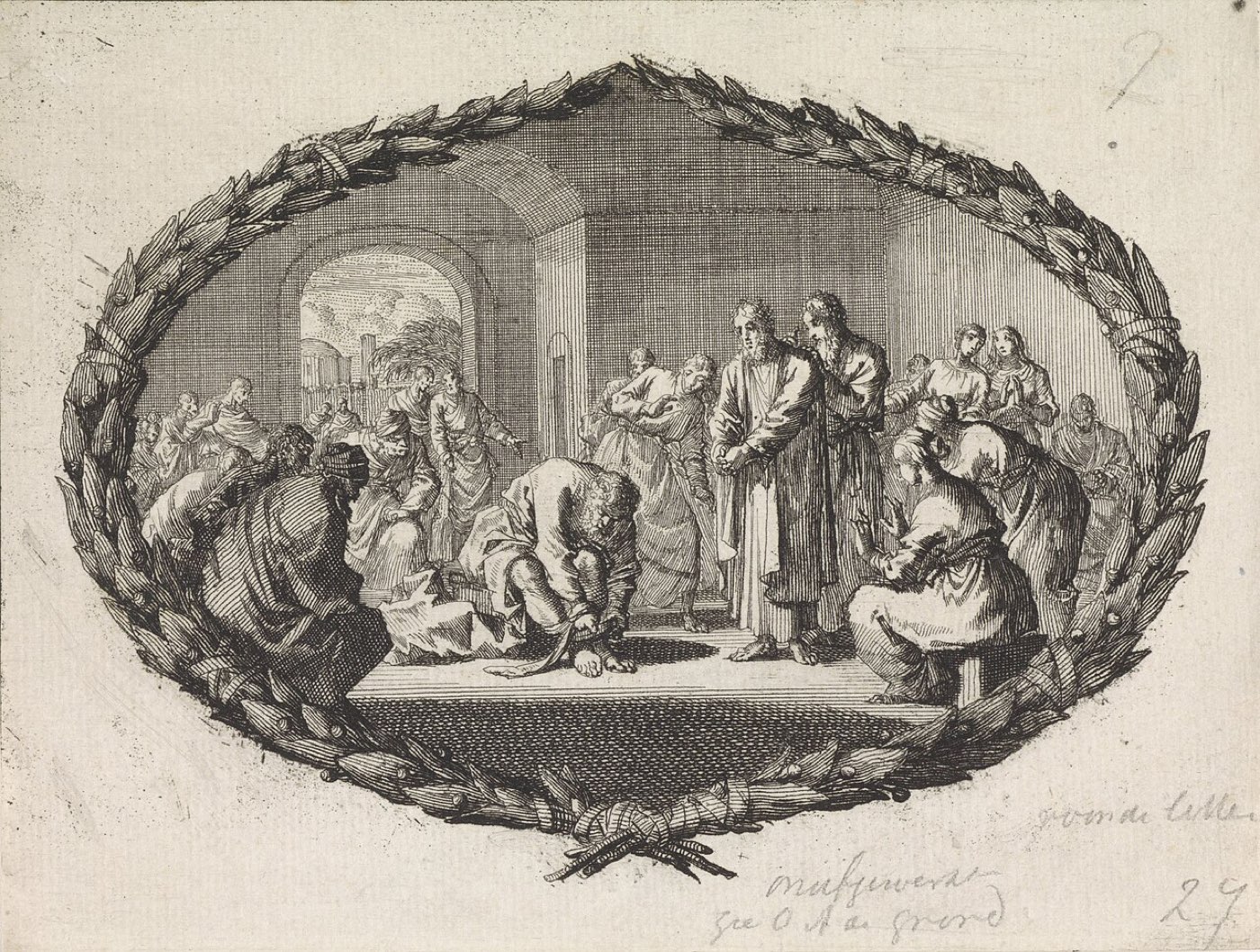
Agabus appears twice in Acts, both times with unwelcome news delivered accurately. At Antioch he “stood up and foretold by the Spirit that there would be a great famine over all the world (this took place in the days of Claudius)” – and the young Gentile church responded not with speculation but with a collection, sending relief to Judea by Barnabas and Saul (Acts 11:27-30). First prophecy, first inter-church aid program: the pattern of hearing and doing set early.
His second appearance is pure Old Testament theater. At Caesarea, as Paul headed for Jerusalem, Agabus took the apostle’s belt and bound his own feet and hands: “Thus says the Holy Spirit, ‘This is how the Jews at Jerusalem will bind the man who owns this belt and deliver him into the hands of the Gentiles’” (Acts 21:10-11) – an acted sign in the tradition of Isaiah’s walking barefoot and Jeremiah’s yoke. The room dissolved; Luke includes himself in the weeping (“we and the people there urged him not to go”).
The sequel matters most: the prophecy was true, and Paul went anyway – “I am ready not only to be imprisoned but even to die at Jerusalem for the name of the Lord Jesus.” The believers’ surrender is the story’s last word: “Let the will of the Lord be done” (Acts 21:12-14). Agabus shows what New Testament prophecy is for: not to reroute obedience, but to walk into it with open eyes.
In the New Testament
- The famine prophecy and the relief mission (Acts 11:27-30)
- The belt prophecy at Caesarea (Acts 21:10-14)
Key Locations
- Antioch The great city on the Orontes where believers were first called Christians and Paul's missions were launched.
- Caesarea Maritima Herod's harbor city, Rome's capital in Judea -- home of Cornelius, Philip, and Paul's two-year imprisonment.
- Jerusalem The holy city -- David's capital, the temple's home, the stage of the crucifixion, resurrection, and Pentecost.