
Zacchaeus
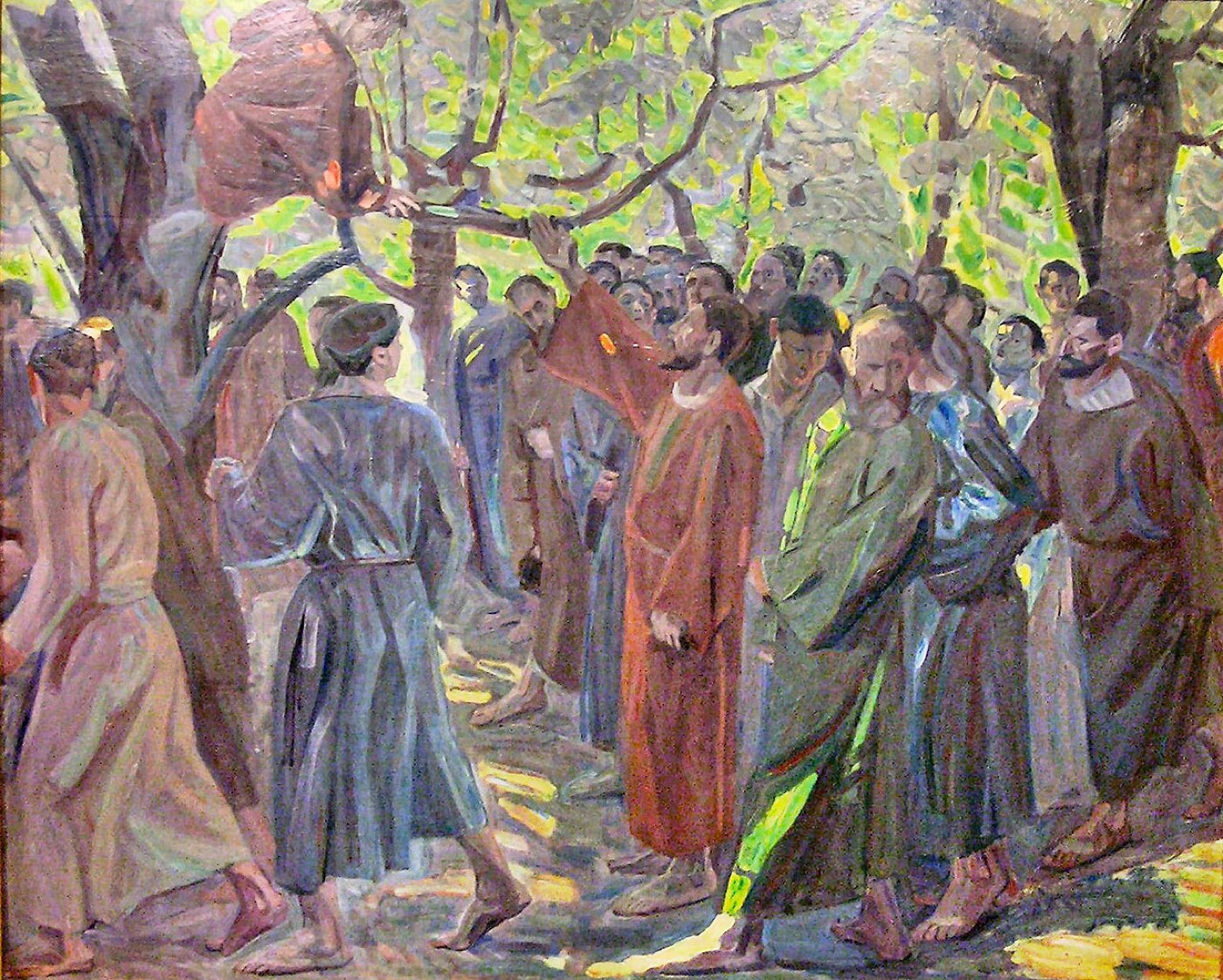
Jericho’s customs franchise made Zacchaeus rich, and being chief tax collector made him the most hated man on the balsam road: a collaborator’s collaborator. He was also short, curious, and past caring about appearances – a wealthy man sprinting ahead of a crowd and shinnying up a sycamore for a glimpse is comedy, and Luke lets it play (Luke 19:1-4).
Then the glimpse looked back. Jesus stopped under the tree, called him by name, and invited himself to dinner: “Zacchaeus, hurry and come down, for I must stay at your house today.” The crowd’s grumble wrote the day’s headline – “He has gone in to be the guest of a man who is a sinner” – while inside, unprompted by any recorded sermon, the little man stood up and dismantled his fortune: half to the poor, fourfold restitution to anyone defrauded, a figure that beggared the law’s requirements (Luke 19:5-8).
Jesus’ verdict gave Luke’s Gospel its thesis sentence: “Today salvation has come to this house, since he also is a son of Abraham. For the Son of Man came to seek and to save the lost” (Luke 19:9-10). The rich young ruler had walked away sad a chapter earlier; here the camel walked through the needle’s eye, proving the promise that “what is impossible with man is possible with God.”
In the New Testament
- Zacchaeus in the sycamore (Luke 19:1-10)
Key Locations
- Jericho The oasis city near the Jordan where Jesus healed blind Bartimaeus and called Zacchaeus down from his tree.