
The Woman Caught in Adultery
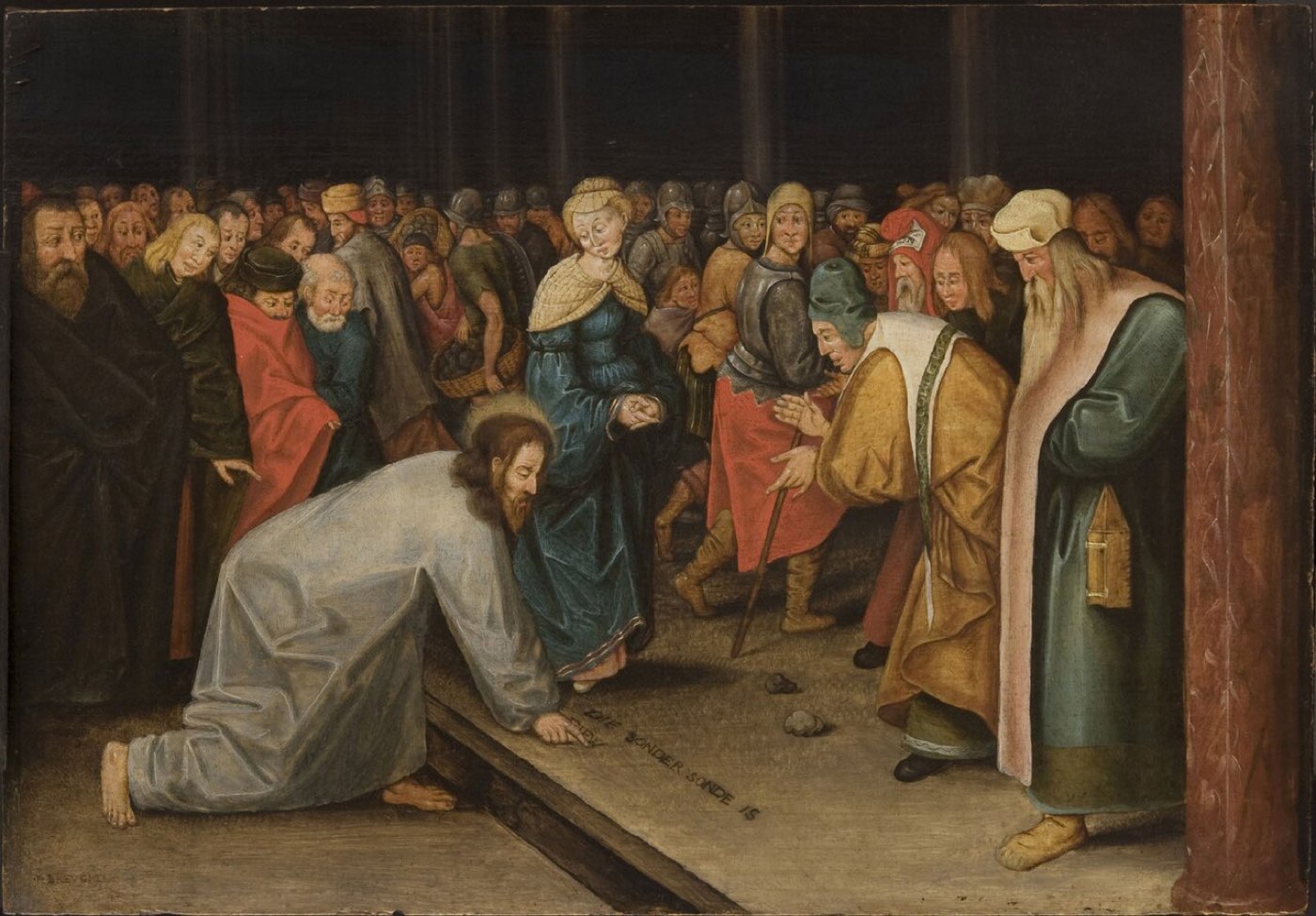
She was never the point, to her accusers. Caught “in the act” (the partner conspicuously absent), she was hauled into the temple courts as ammunition: if Jesus said “stone her,” Rome’s monopoly on execution and his own reputation for mercy both shattered; if he said “release her,” he contradicted Moses. “This they said to test him” (John 8:2-6).
Jesus bent down and wrote with his finger on the ground – the Bible never says what, though readers have wondered for two thousand years – and then straightened with the sentence that turned the court inside out: “Let him who is without sin among you be the first to throw a stone at her.” He stooped and wrote again, and the thud of dropped stones is almost audible in the text: “they went away one by one, beginning with the older ones” (John 8:7-9).
What remained was, in Augustine’s famous phrase, misera et misericordia – the wretched woman and Mercy himself. “Woman, where are they? Has no one condemned you?” “No one, Lord.” “Neither do I condemn you; go, and from now on sin no more” (John 8:10-11). The order of those last two clauses is the gospel in miniature: acceptance first, transformation commanded on the strength of it – neither condemnation without hope nor tolerance without holiness.
In the New Testament
- The woman taken in adultery (John 7:53-8:11)
Key Locations
- The Temple in Jerusalem The center of Israel's worship, rebuilt on a massive scale by Herod the Great.
- Jerusalem The holy city -- David's capital, the temple's home, the stage of the crucifixion, resurrection, and Pentecost.