
The Syrophoenician Woman
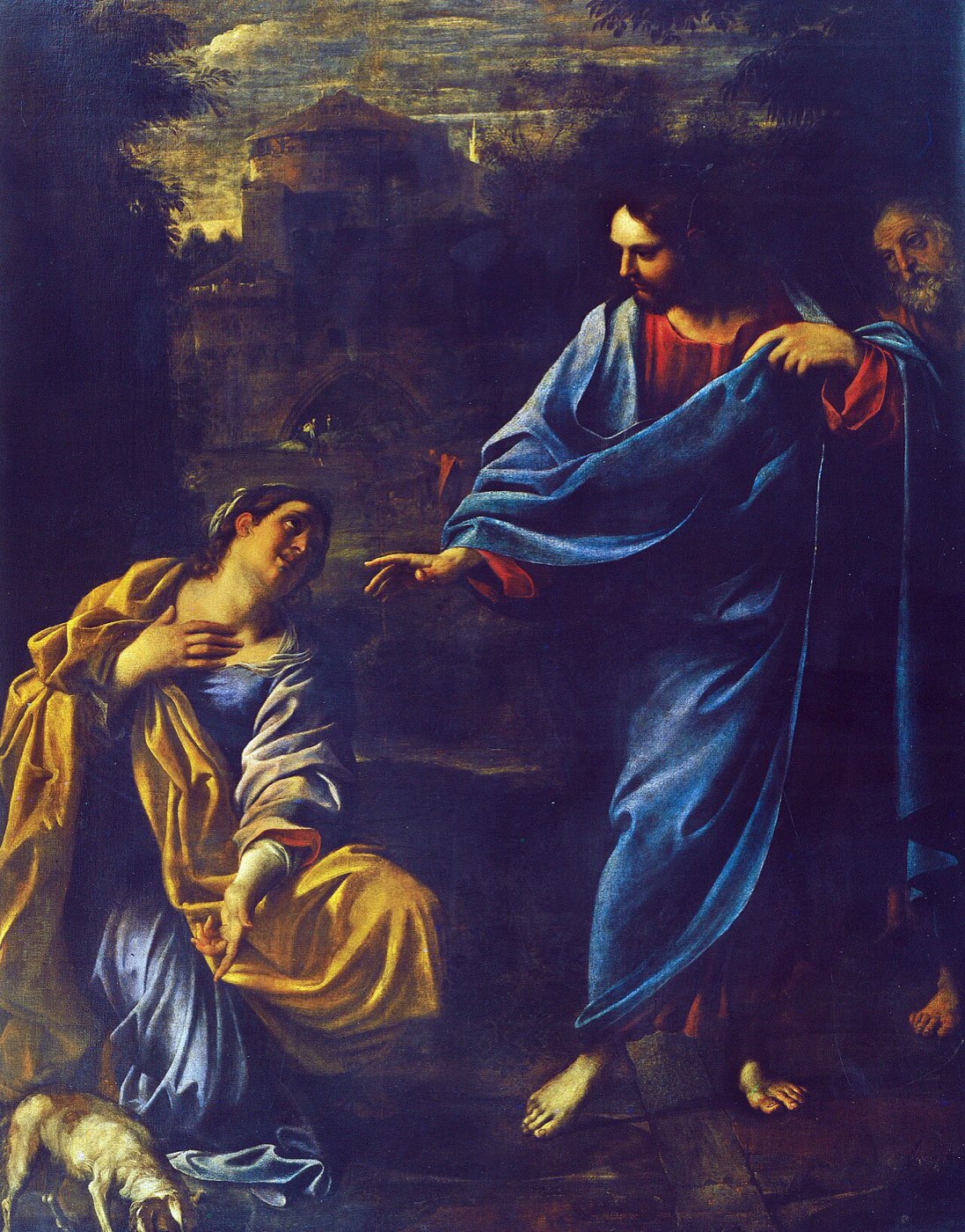
In the region of Tyre and Sidon – pagan territory, where Jesus had gone seeking quiet – a local woman found him anyway. Mark calls her “a Gentile, a Syrophoenician by birth”; Matthew uses the old war-name, “a Canaanite woman.” Her daughter was demon-oppressed, and she came shouting the most Jewish of prayers from the least Jewish of mouths: “Have mercy on me, O Lord, Son of David” (Matthew 15:21-22).
What follows is the strangest conversation in the Gospels: silence, then the mission statement (“I was sent only to the lost sheep of the house of Israel”), then the hard saying: “It is not right to take the children’s bread and throw it to the dogs.” She caught the word – the diminutive, house-dogs under the table – and answered with the only recorded instance of someone winning an exchange with Jesus, because she argued from his metaphor, not against it: “Yes, Lord, yet even the dogs eat the crumbs that fall from their masters’ table” (Matthew 15:23-27). She asked no place at the table, only the overflow – and reckoned a crumb of his power sufficient for her need.
“O woman, great is your faith! Be it done for you as you desire.” Her daughter was healed instantly, at a distance (Matthew 15:28; Mark 7:29-30). Many readers hear in the exchange a test staged to be lost – the hard saying spoken so that her faith could out-argue it aloud, a preview of the table soon to be opened to the nations.
In the New Testament
- The Syrophoenician woman’s plea and reply (Matthew 15:21-28; Mark 7:24-30)
Key Locations
- Tyre and Sidon The ancient Phoenician port cities northwest of Galilee, where Jesus met the Syrophoenician woman.