
Simon the Sorcerer
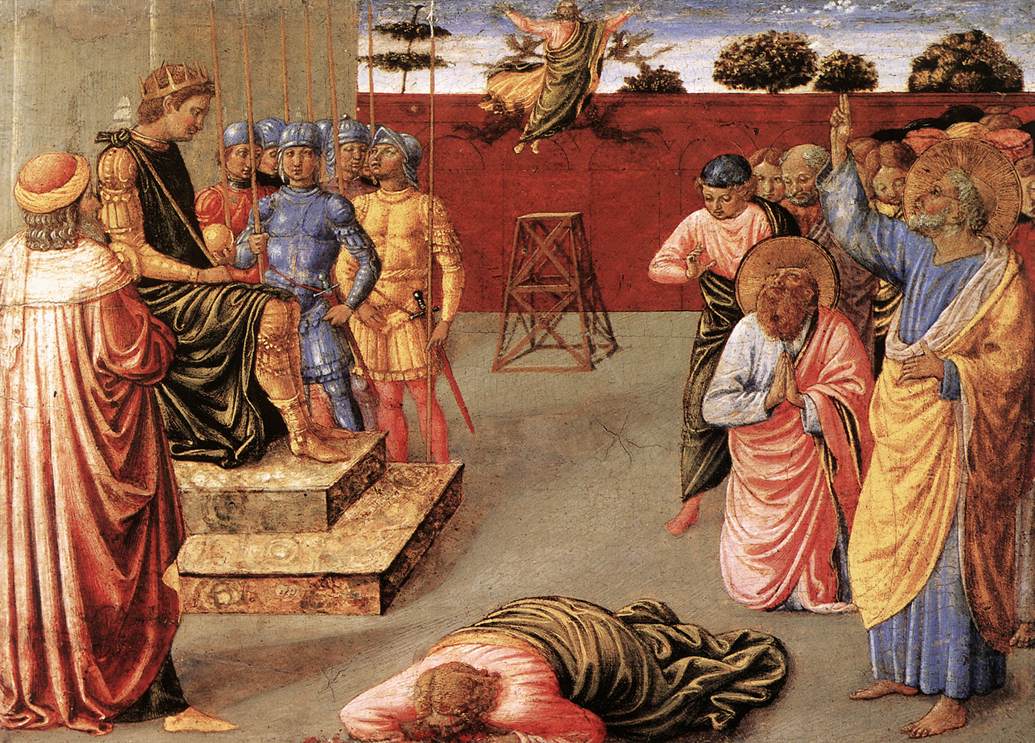
Samaria already had a wonder-worker when Philip arrived. Simon had amazed the city with magic for years, billing himself as “somebody great” and collecting the title “the power of God that is called Great” (Acts 8:9-11). Then real power showed up without a business model: Philip preached, the sick were healed, the city rejoiced – and Simon himself “believed, and after being baptized he continued with Philip,” gawking at miracles bigger than his tricks (Acts 8:12-13).
His old instincts surfaced when Peter and John came down and the Spirit was given through their hands. Simon reached for his wallet: “Give me this power also, so that anyone on whom I lay my hands may receive the Holy Spirit.” Peter’s answer scorched the page – “May your silver perish with you, because you thought you could obtain the gift of God with money!… your heart is not right before God” – with a call to repent and a diagnosis: “in the gall of bitterness and in the bond of iniquity” (Acts 8:18-23). Simon’s reply, asking Peter to pray for him rather than praying himself, leaves his soul an open question the text never closes.
His name did not fade: “simony,” the buying and selling of holy things, still carries it, and early church writers made him the archetype of every attempt to turn grace into a commodity. The gift of God is exactly that – a gift; Simon is Scripture’s warning against reading it any other way.
In the New Testament
- Simon amazed, baptized, and rebuked (Acts 8:9-24)
Key Locations
- Samaria / Sychar The Samaritan town at Jacob's well, where Jesus offered a foreign woman living water.