
Simeon
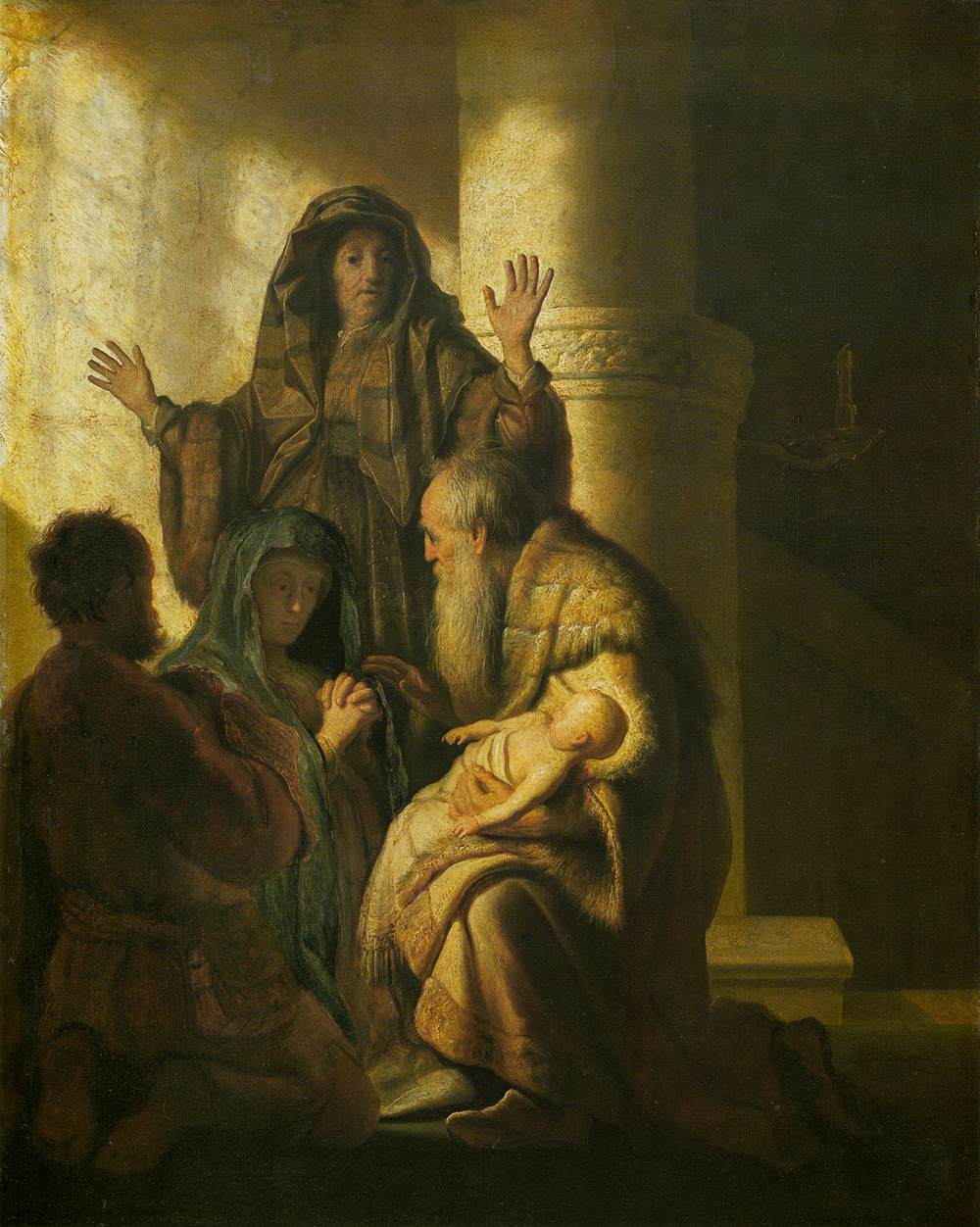
Simeon had been living on one promise: “it had been revealed to him by the Holy Spirit that he would not see death before he had seen the Lord’s Christ” (Luke 2:26). Luke describes him with the vocabulary of the faithful remnant – “righteous and devout, waiting for the consolation of Israel” – one of the quiet ones who kept the old hope alive through four hundred years of prophetic silence.
On the day Mary and Joseph brought their forty-day-old son to the temple with the poor family’s offering of two birds, the Spirit brought Simeon in at the same hour. He took the baby in his arms and sang the Nunc Dimittis, the song the church still prays at day’s end: “Lord, now you are letting your servant depart in peace… for my eyes have seen your salvation… a light for revelation to the Gentiles, and for glory to your people Israel” (Luke 2:29-32). An old man ready to die because he had held one particular infant – Luke could not have drawn the meaning of Christmas more sharply.
Then Simeon turned to Mary with the shadow side of the promise: this child is appointed for the fall and rising of many, a sign opposed – “and a sword will pierce through your own soul also” (Luke 2:34-35). The first prophecy of the cross was spoken over a nursing baby, to his mother, in the temple courts.
In the New Testament
- The presentation and the Nunc Dimittis (Luke 2:22-32)
- The prophecy to Mary (Luke 2:33-35)
Key Locations
- The Temple in Jerusalem The center of Israel's worship, rebuilt on a massive scale by Herod the Great.