
The Samaritan Woman
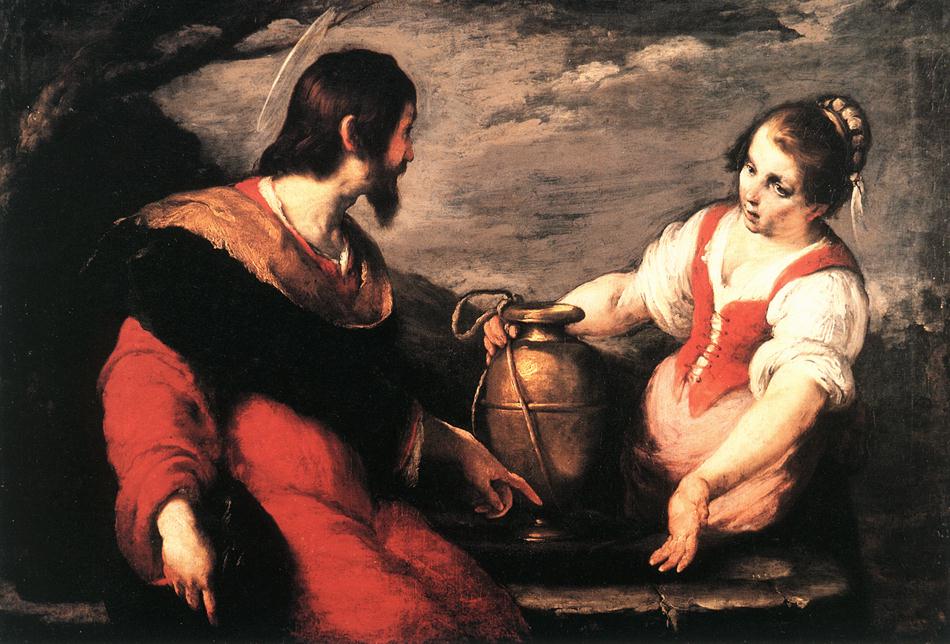
She came to Jacob’s well at noon – the hottest hour, when no one else would be there – carrying a jar and a history: five marriages ended, now living with a man who was not her husband, a Samaritan and a woman in a world where a rabbi spoke publicly with neither. Jesus was waiting, tired and thirsty, and opened with a request that shattered three social walls in four words: “Give me a drink” (John 4:7-9).
The conversation that follows is the longest Jesus has with anyone in the Gospels, and he gives its deepest treasures to this least credentialed audience: living water welling up to eternal life; worship in spirit and truth that outgrows every holy mountain; and the plainest self-revelation before his trial – to her question about Messiah, “I who speak to you am he” (John 4:10-26). He named her history without flinching and without crushing her; she parried, probed, and finally ran – leaving the water jar, the errand forgotten – to tell the town: “Come, see a man who told me all that I ever did. Can this be the Christ?” (John 4:28-29).
Sychar came, listened, and believed – “no longer because of your words… we have heard for ourselves, and we know that this is indeed the Savior of the world” (John 4:39-42). The woman who avoided the crowds became the reason the crowds came: the first cross-cultural evangelist in the Gospel, with a testimony one sentence long.
In the New Testament
- The conversation at the well (John 4:1-26)
- The abandoned jar and the town’s faith (John 4:27-42)
Key Locations
- Samaria / Sychar The Samaritan town at Jacob's well, where Jesus offered a foreign woman living water.