
The Sadducees and Chief Priests
The Sadducees were the party of the temple aristocracy: the high-priestly families and their allies, wealthy, politically supple, and content with Rome as long as Rome left the sanctuary trade alone. Theologically they were minimalists – accepting the books of Moses, denying resurrection, angels, and spirits (Acts 23:8), which is why Jesus answered their trick question about the seven-times-widowed bride from Moses himself: “I am the God of Abraham… He is not God of the dead, but of the living” (Mark 12:18-27).
The Gospels’ “chief priests” belong to this world – Annas, Caiaphas, and their clan, who ran the temple concessions Jesus overturned. It was the temple action, and the raising of Lazarus, that moved them from irritation to resolve: “it is better for you that one man should die for the people” (John 11:47-53). The Sanhedrin they dominated tried Jesus by night, and in Acts they kept arresting apostles for preaching “in Jesus the resurrection from the dead” (Acts 4:1-2) – the one doctrine they had staked their identity against.
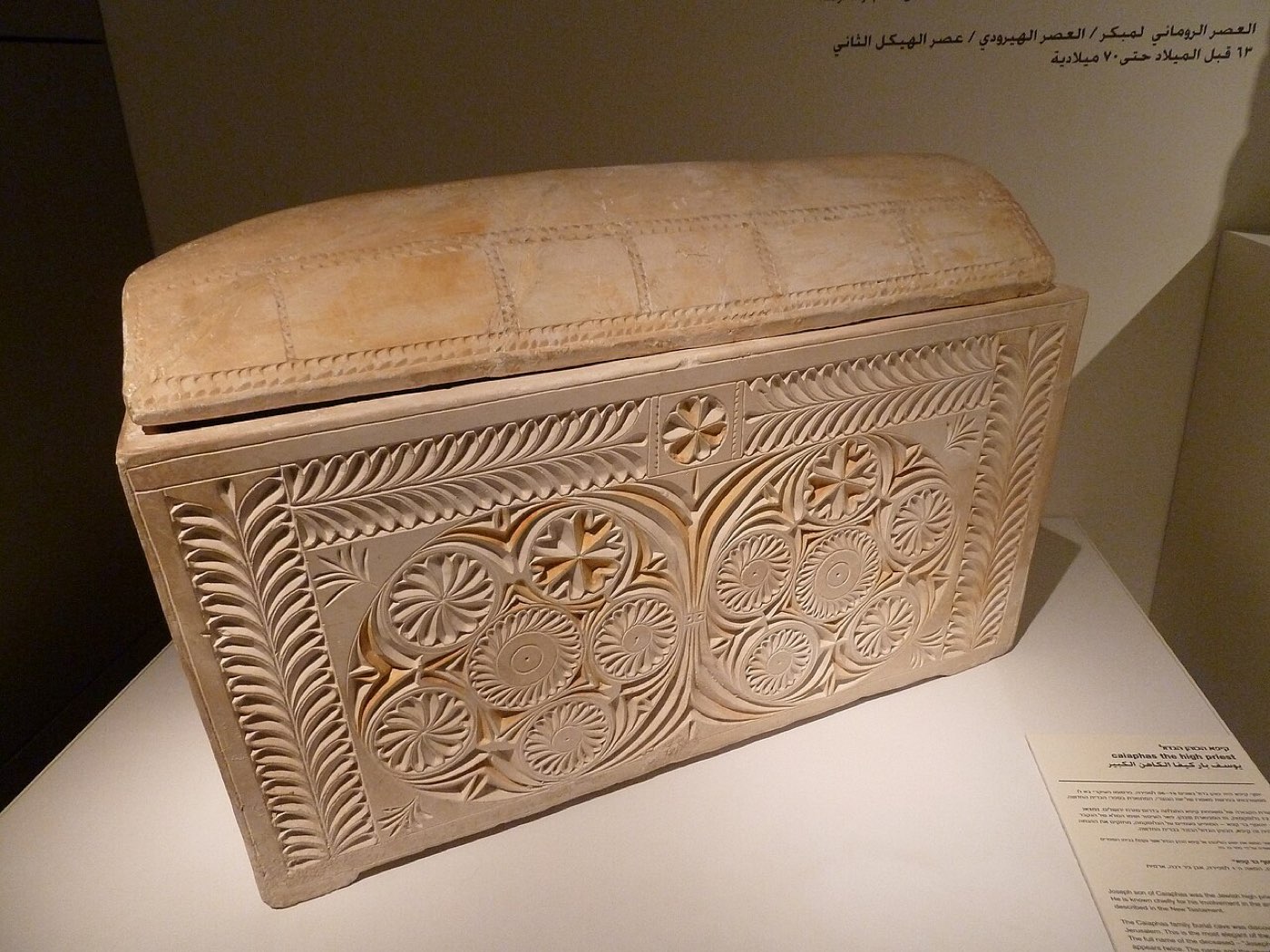
History gave their story an ending with a moral: the party built entirely on the temple did not survive the temple’s fall in AD 70. The ossuary above – almost certainly the burial box of the very Caiaphas of the Gospels – is among the most direct physical links archaeology has to the passion narrative.
In the New Testament
- The resurrection test question (Mark 12:18-27)
- The plot after Lazarus (John 11:47-53)
- The night trial (Matthew 26:57-68)
- Opposition to the apostles (Acts 4:1-22; 5:17-40; 23:6-10)
Key Locations
- Jerusalem The holy city -- David's capital, the temple's home, the stage of the crucifixion, resurrection, and Pentecost.
- The Temple in Jerusalem The center of Israel's worship, rebuilt on a massive scale by Herod the Great.