
The Rich Young Ruler
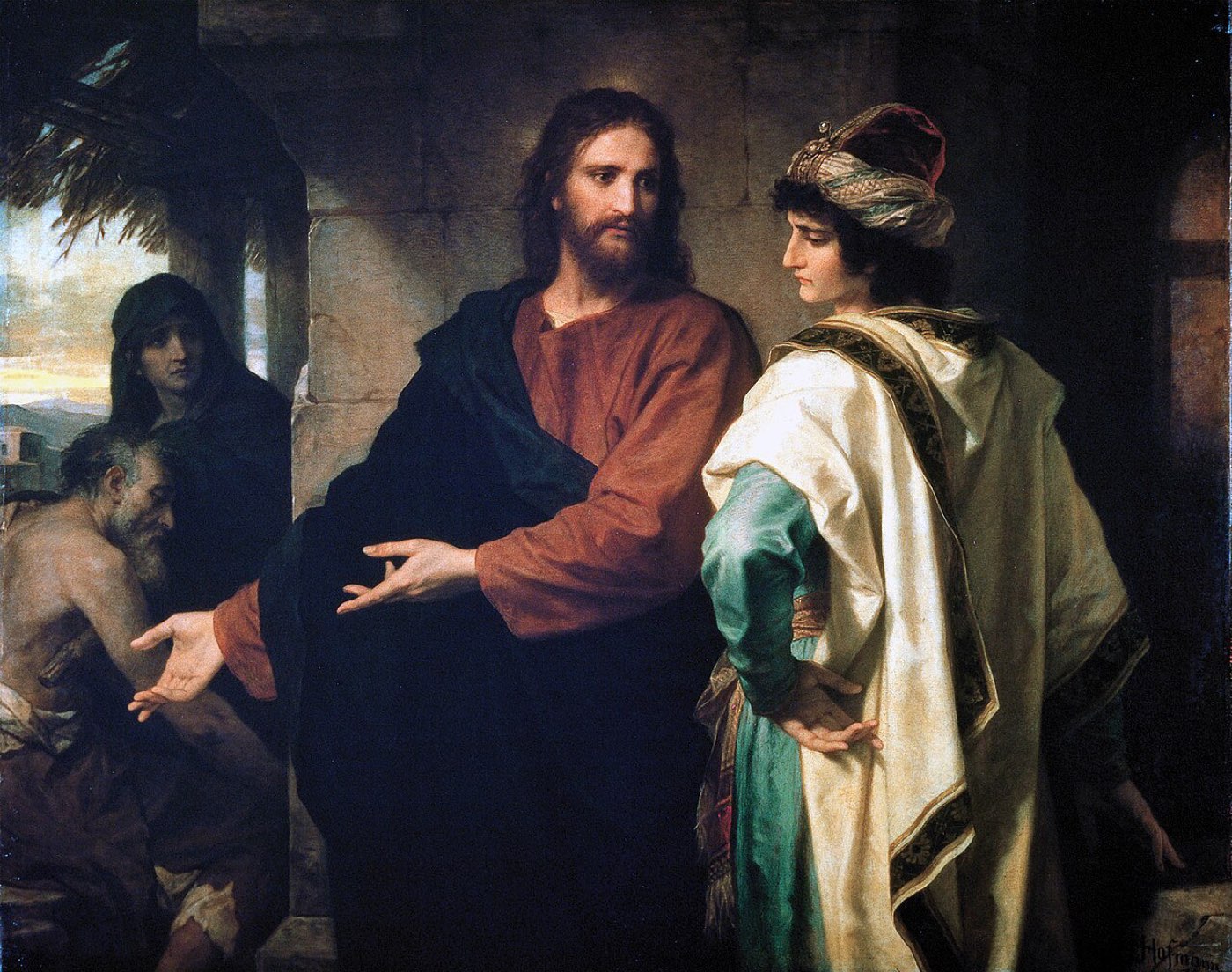
He is the Gospels’ most promising failure. Young (Matthew), a ruler (Luke), rich (all three), morally earnest – he came running, knelt, and asked the right question: “Good Teacher, what must I do to inherit eternal life?” He could honestly claim the commandments from his youth. And Mark preserves the detail that makes the ending ache: “Jesus, looking at him, loved him” (Mark 10:17-21).
The love came with a scalpel. “You lack one thing: go, sell all that you have and give to the poor, and you will have treasure in heaven; and come, follow me.” Jesus named the one rival on the throne of that particular heart – not wealth in general, this man’s wealth – and offered himself in its place. “Disheartened by the saying, he went away sorrowful, for he had great possessions” (Mark 10:22). He is the only person in the Gospels recorded as leaving Jesus sad – sad, because part of him knew what he was refusing.
The disciples’ shock at Jesus’ camel-and-needle verdict (“Then who can be saved?”) received the answer that keeps the story from despair: “With man it is impossible, but not with God. For all things are possible with God” (Mark 10:23-27). The door he walked away from stayed open.
In the New Testament
- The rich young ruler (Mark 10:17-31; Matthew 19:16-30; Luke 18:18-30)
Key Locations
- Perea The territory "beyond the Jordan" where Jesus ministered on his final approach to Jerusalem.