
Philip
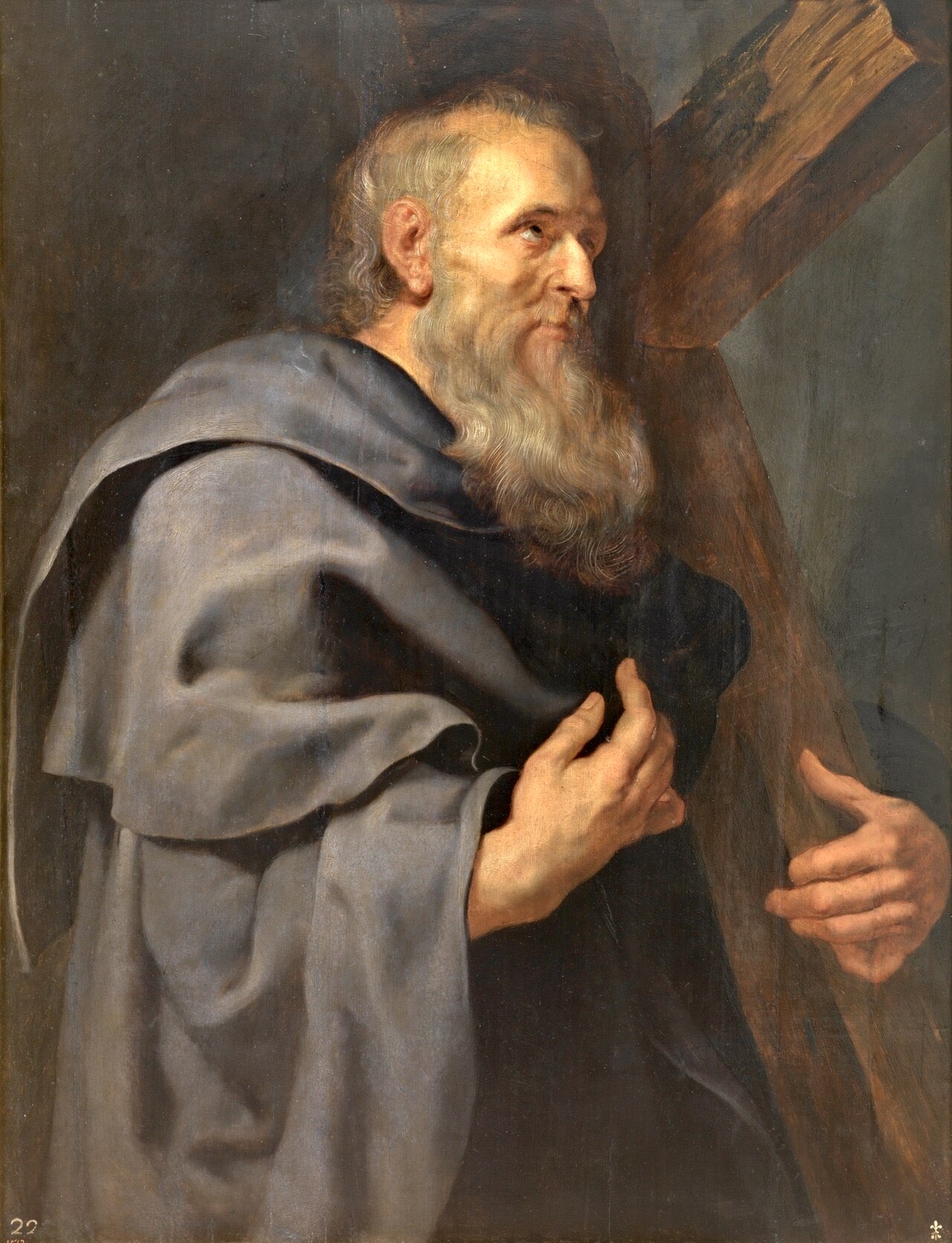
Philip – not to be confused with Philip the evangelist of Acts – came from Bethsaida, the same fishing town as Andrew and Peter, and received the tersest call in the Gospels: “Follow me” (John 1:43). His first act as a disciple set his pattern: he found Nathanael, made his case (“We have found him of whom Moses in the Law and also the prophets wrote”), absorbed the sarcasm about Nazareth, and answered with the world’s best apologetic – “Come and see” (John 1:45-46).
John’s Gospel keeps giving him small, telling scenes. Before the feeding of the five thousand, Jesus tests him – “Where are we to buy bread, so that these people may eat?” – and Philip reaches for his calculator: two hundred denarii would not be enough (John 6:5-7). When Greeks want to see Jesus, they come to Philip, the disciple with the Greek name (John 12:20-22). And at the Last Supper he makes the request that draws out one of Scripture’s summit statements: “Lord, show us the Father.” – “Whoever has seen me has seen the Father” (John 14:8-9).
An ordinary, practical man, slow to see past arithmetic, and used anyway. He stood in the upper room at Pentecost (Acts 1:13); tradition sends him afterward to Asia Minor, where Hierapolis – up the valley from Colossae – long claimed his tomb.
In the New Testament
- Called; bringing Nathanael (John 1:43-46)
- The bread arithmetic (John 6:5-7)
- The Greeks who wanted to see Jesus (John 12:20-22)
- “Show us the Father” (John 14:8-11)
Key Locations
- Bethsaida The fishing town of Peter, Andrew, and Philip, near where the five thousand were fed.
- Bethany Beyond the Jordan The place on the east bank of the Jordan where John was baptizing when he pointed to the Lamb of God.
- Jerusalem The holy city -- David's capital, the temple's home, the stage of the crucifixion, resurrection, and Pentecost.