
Bethsaida
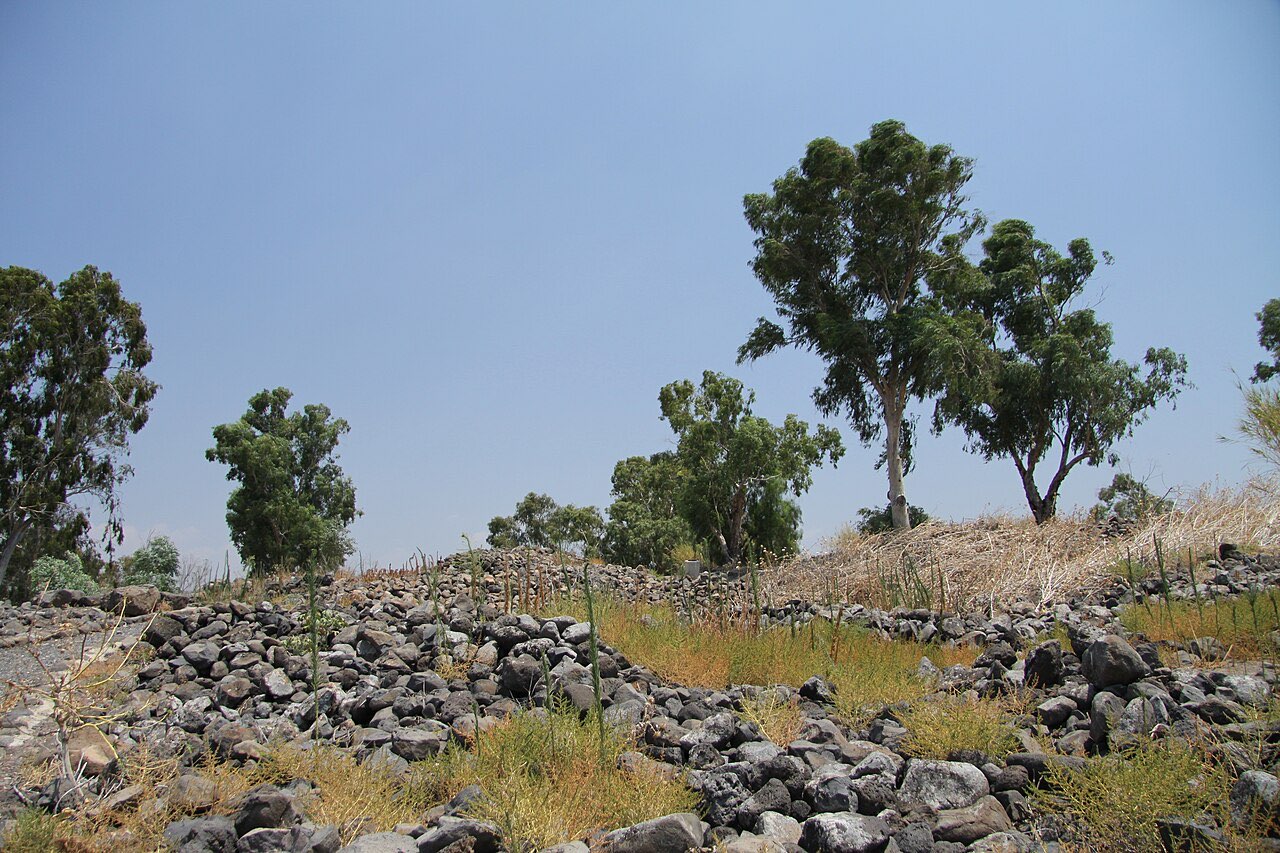
Bethsaida (“house of the fisherman”) lived up to its name: John tells us it was the hometown of Peter, Andrew, and Philip (John 1:44), fishermen all. It lay just east of where the Jordan enters the Sea of Galilee, and Herod’s son Philip raised it to the status of a city, renaming it Julias after the emperor’s family. Archaeologists debate its exact site – the mound of et-Tell, now well back from the shifting shoreline, is the leading candidate.
The town saw an extraordinary concentration of grace. The feeding of the five thousand happened in the “desolate place” nearby (Luke 9:10-17), and here Jesus healed a blind man in the Gospels’ only two-stage miracle – first “trees, walking,” then everything clear (Mark 8:22-26), an acted parable of the disciples’ own half-sight in the surrounding chapters.
Yet Bethsaida shares Chorazin’s woe. Privileged with miracles that would have brought Tyre and Sidon to repentance, it shrugged: “Woe to you, Bethsaida!” (Matthew 11:21). Three of the twelve apostles came from this town; the town itself did not follow them.
In the New Testament
- Hometown of Peter, Andrew, and Philip (John 1:44; 12:21)
- The feeding of the five thousand nearby (Luke 9:10-17)
- The two-stage healing of a blind man (Mark 8:22-26)
- The woe over unrepentant Bethsaida (Matthew 11:20-24)