
Lois and Eunice
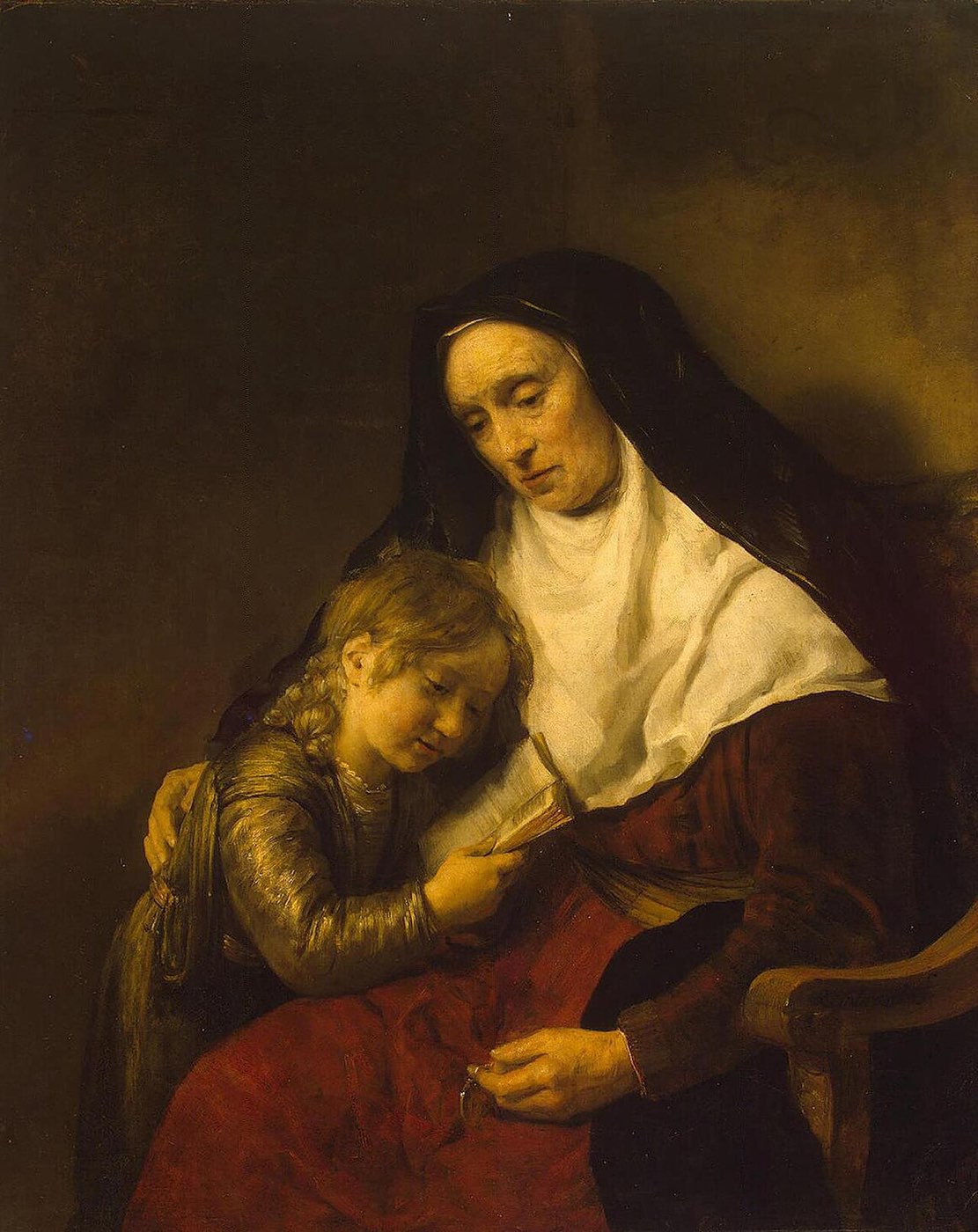
Paul, hunting for the source of Timothy’s steadiness, traced the stream two generations up: “I am reminded of your sincere faith, a faith that dwelt first in your grandmother Lois and your mother Eunice and now, I am sure, dwells in you as well” (2 Timothy 1:5). Luke fills in the household: at Lystra, Timothy was “the son of a Jewish woman who was a believer, but his father was a Greek” (Acts 16:1). A mixed marriage, a pagan town without a synagogue worth mentioning, no believing father in the picture – not the seedbed anyone would choose for the next generation’s premier pastor.
The two women worked with what they had, and what they had was the Book: “from childhood you have been acquainted with the sacred writings, which are able to make you wise for salvation through faith in Christ Jesus” (2 Timothy 3:14-15). Before there was a New Testament to give him, Lois and Eunice gave Timothy the Old – verse upon verse over an ordinary childhood – so that when Paul arrived preaching the Messiah those Scriptures promised, the boy was kindling laid for the match.
They appear nowhere else and need not: their monument is Timothy, and their encouragement is permanent. Faith that “dwelt first” in a grandmother reached a mother, then a son, then the churches of Asia, then every reader of two canonical letters. No pulpit; two women; three generations; incalculable yield.
In the New Testament
- The believing mother at Lystra (Acts 16:1-3)
- Sincere faith, three generations deep (2 Timothy 1:5)
- The childhood Scriptures (2 Timothy 3:14-15)
Key Locations
- Lystra The Lycaonian town that hailed Paul as a god, then stoned him -- and gave him Timothy.