
Jude
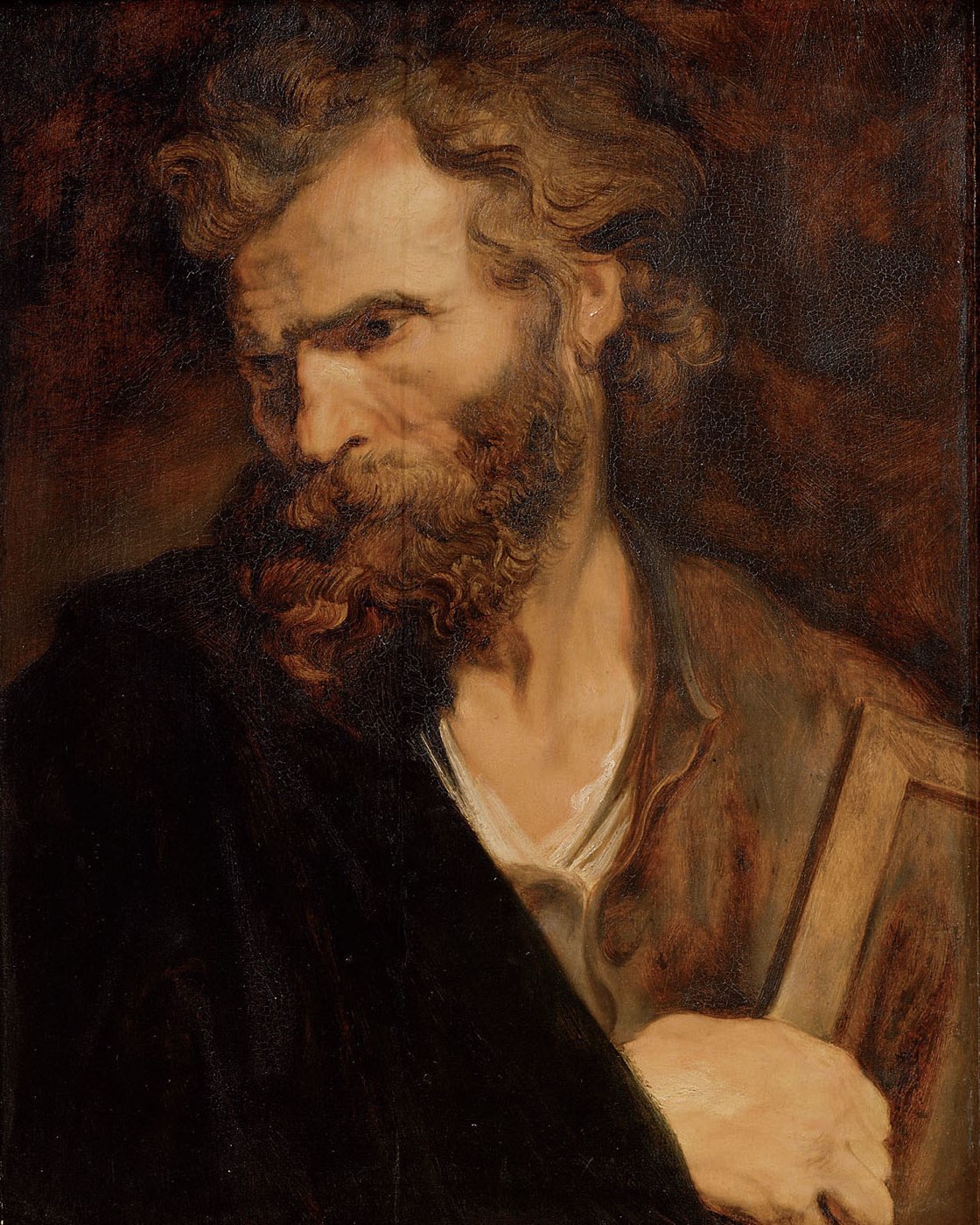
He introduces himself with the New Testament’s most self-effacing byline: “Jude, a servant of Jesus Christ and brother of James” (Jude 1). Brother of James means, by the standard reckoning, brother of Jesus too – one of the Nazareth siblings who did not believe during the ministry (Mark 6:3; John 7:5) and who prayed in the upper room after the resurrection changed everything (Acts 1:14). Like James, he claims service, not kinship. (Church art, as in the portrait above, has traditionally merged him with the apostle Thaddaeus; the letter’s own self-description points to the Lord’s brother.)
His one-page letter is the New Testament with its sleeves rolled up. He had wanted to write “about our common salvation,” but false teachers slipping grace loose from holiness forced a change of plans: “contend for the faith that was once for all delivered to the saints” (Jude 3-4). What follows is a fireworks display of judgment examples – the wilderness generation, the angels who fell, Sodom, Cain, Balaam, Korah – plus the New Testament’s strangest aside, Michael the archangel disputing over the body of Moses and refusing even the devil a slandering word (Jude 9).
Yet the letter lands on tenderness: “keep yourselves in the love of God… have mercy on those who doubt” – and rises into the doxology every benediction since has borrowed: “Now to him who is able to keep you from stumbling and to present you blameless before the presence of his glory with great joy…” (Jude 20-25). The brother who once doubted ends Scripture’s letters praying that no one else stumble.
In the New Testament
- Among the unbelieving brothers, then the praying church (Mark 6:3; John 7:5; Acts 1:14)
- The letter of Jude