
Nazareth
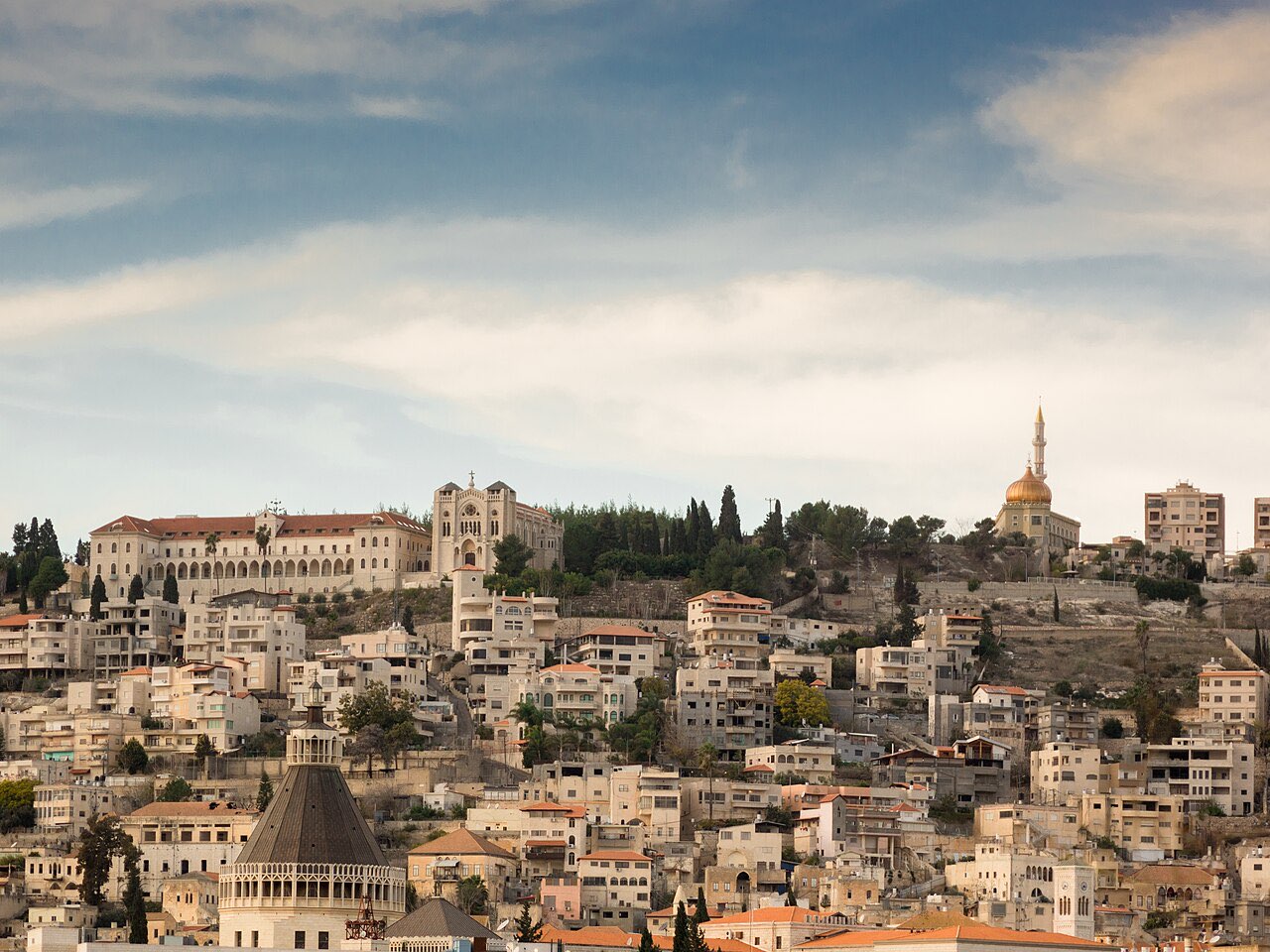
First-century Nazareth was a farming village of perhaps a few hundred people, tucked into a bowl of hills in Lower Galilee about four miles from the regional capital of Sepphoris. It appears nowhere in the Old Testament, in Josephus, or in the rabbinic writings – a silence that makes Nathanael’s sneer feel entirely natural: “Can anything good come out of Nazareth?” (John 1:46). That obscurity is the point. When God chose an address for his Son’s childhood, he chose one nobody had heard of.
Here Gabriel announced the impossible to a young woman named Mary (Luke 1:26-38), and here Jesus grew up, worked, and worshiped for roughly thirty years. The town’s synagogue was the scene of one of the most dramatic moments in Luke’s Gospel: Jesus read Isaiah 61, announced “Today this Scripture has been fulfilled in your hearing,” and his own neighbors tried to throw him off the brow of the hill (Luke 4:16-30).
Modern Nazareth is the largest Arab city in Israel, and the Basilica of the Annunciation – the largest church building in the Middle East – stands over a first-century dwelling venerated since the earliest centuries as Mary’s home.
In the New Testament
- The annunciation to Mary (Luke 1:26-38)
- The family settles in Nazareth after Egypt, fulfilling “he shall be called a Nazarene” (Matthew 2:19-23)
- Jesus’ boyhood and quiet years (Luke 2:39-40, 51-52)
- Rejection in the Nazareth synagogue (Luke 4:16-30; Mark 6:1-6)