
Felix
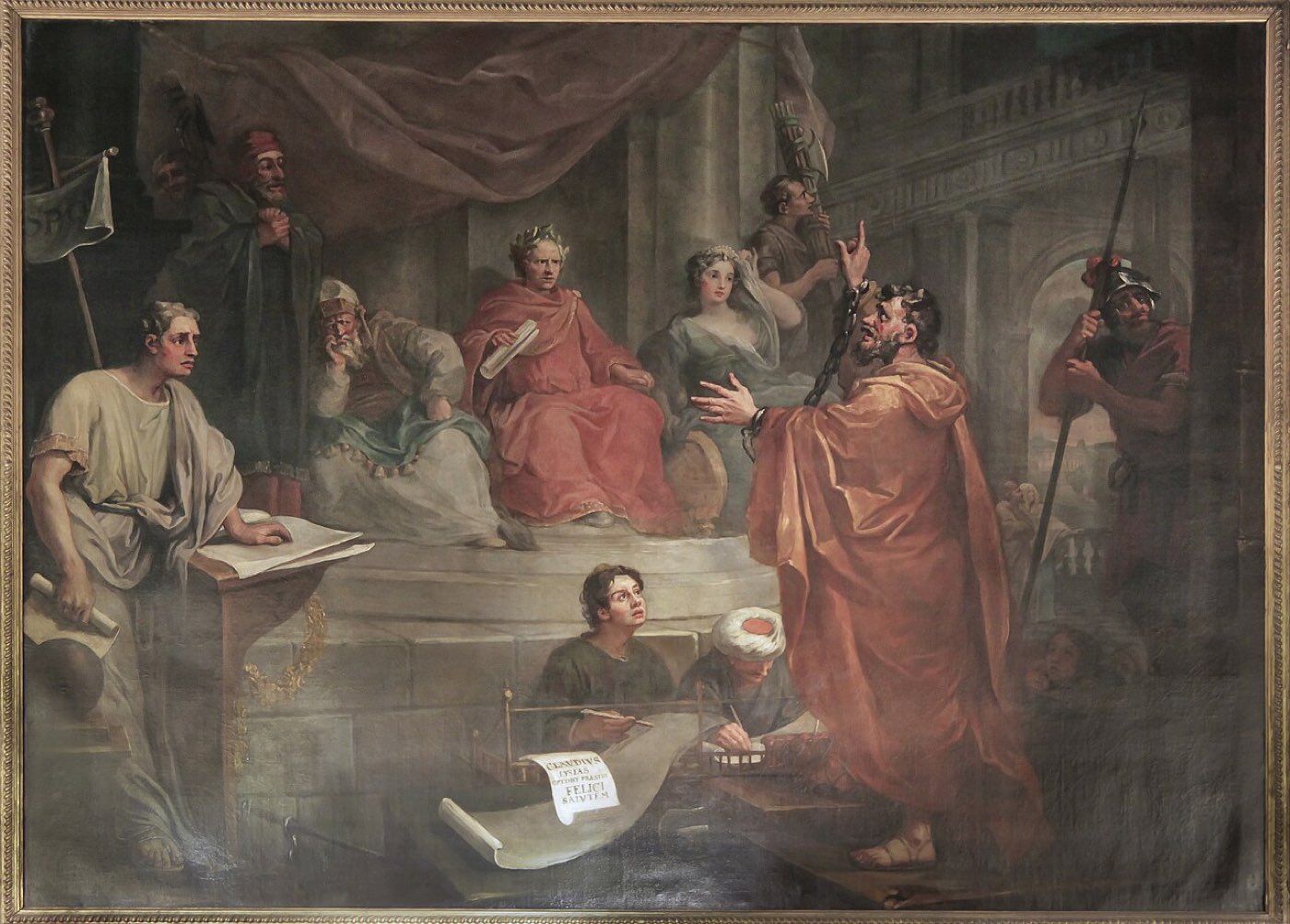
Antonius Felix rose from slavery to a governorship – a freedman of the imperial household who, in Tacitus’ unimprovable summary, “exercised the power of a king with the mind of a slave.” His Judean term (AD 52-59) was brutal and corrupt, and his third wife, Drusilla, was a Herodian princess he had lured from her husband. This was the bench Paul stood before at Caesarea.
Felix handled the case with a connoisseur’s cynicism. He understood the charges were hollow (“having a rather accurate knowledge of the Way”), adjourned indefinitely, and kept the prisoner accessible – partly entertainment, mostly investment: “he hoped that money would be given him by Paul” (Acts 24:22-26). The remarkable scenes are the private ones: Felix and Drusilla sending for the prisoner to hear him “speak about faith in Christ Jesus,” and Paul, of all possible topics, choosing “righteousness and self-control and the coming judgment” – to a judge famous for injustice, appetite, and impunity. “Felix was alarmed” – the old translations say he trembled – “and said, ‘Go away for the present. When I get an opportunity I will summon you.’”
The opportunity never quite came. For two years the summons meant conversation, never decision, and when recall to Rome arrived, Felix left Paul in prison “desiring to do the Jews a favor” (Acts 24:27). He stands in Scripture as the patron of the postponed verdict – the man who heard the gospel repeatedly, trembled once, and always found a more convenient season.
In the New Testament
- The trial and the two years of audiences (Acts 24)
Key Locations
- Caesarea Maritima Herod's harbor city, Rome's capital in Judea -- home of Cornelius, Philip, and Paul's two-year imprisonment.