
Eutychus
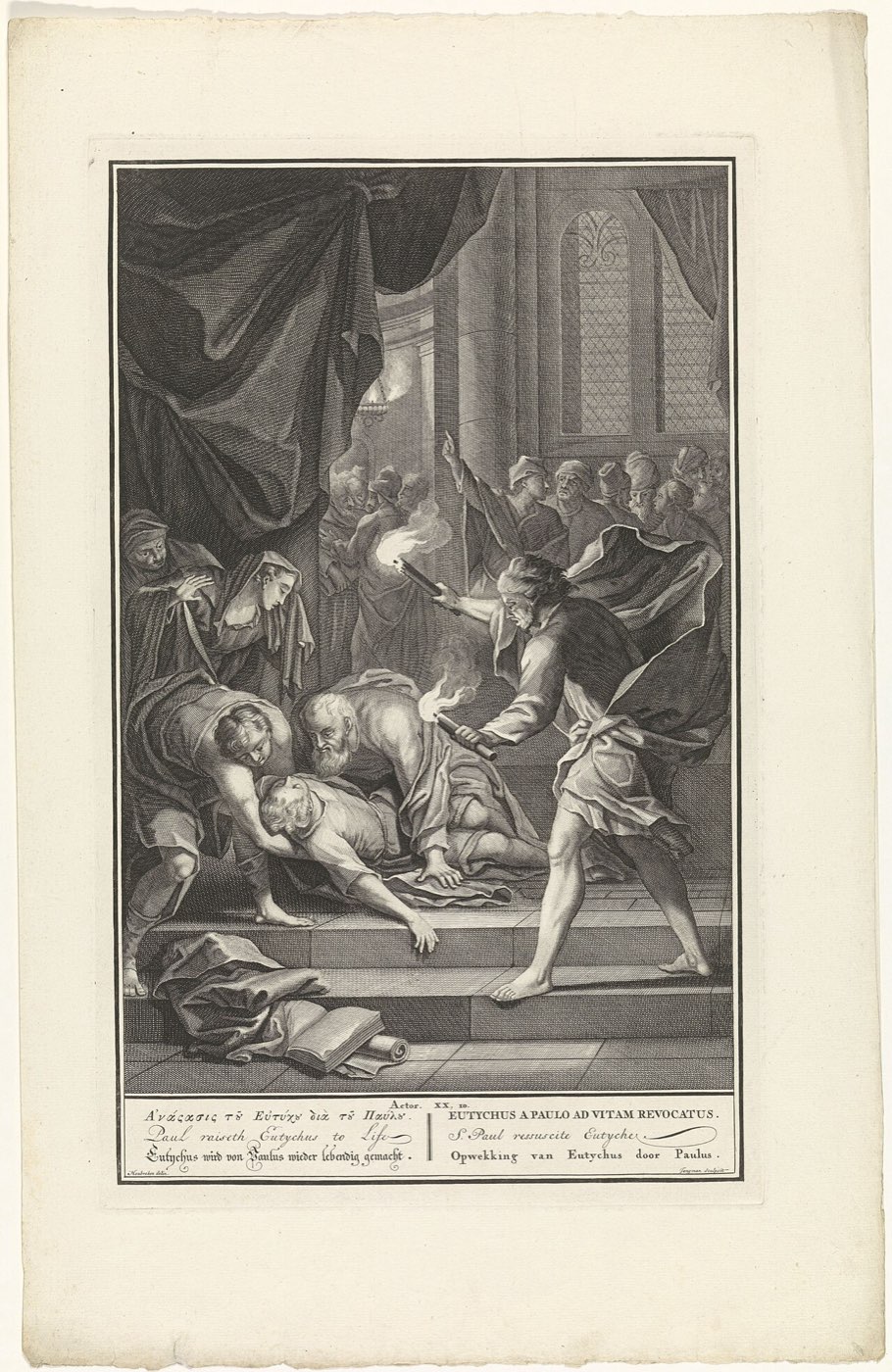
His name means “Fortunate,” which the church has always enjoyed. On Paul’s last night in Troas the believers packed an upstairs room to break bread and hear the apostle, who, “intending to depart on the next day… prolonged his speech until midnight.” Luke, an eyewitness, sets the scene with a detail every drowsy listener understands: “there were many lamps in the upper room” – heat, smoke, a long day’s end – and in the third-story window sat a young man named Eutychus, “sinking into a deep sleep as Paul talked still longer” (Acts 20:7-9).
He fell, and “was taken up dead.” Paul went down, stretched himself on the boy like Elijah and Elisha before him, and gave the room back its breath: “Do not be alarmed, for his life is in him.” Then – the detail that makes the story forever pastoral rather than merely miraculous – they all went back upstairs, broke the bread, “and talked with them a long while, until daybreak,” and departed, having brought the youth alive, “and were not a little comforted” (Acts 20:10-12).
Eutychus is Scripture’s kindness to every sleeper in a pew: the Bible’s one recorded sermon casualty, restored by the grace that outlasted the sermon. Luke, who was in the room, tells it on Paul and on the boy with equal affection.
In the New Testament
- The fall and raising at Troas (Acts 20:7-12)
Key Locations
- Troas The Aegean port where Paul saw the Macedonian vision -- and where Eutychus fell from the window.