
Elizabeth
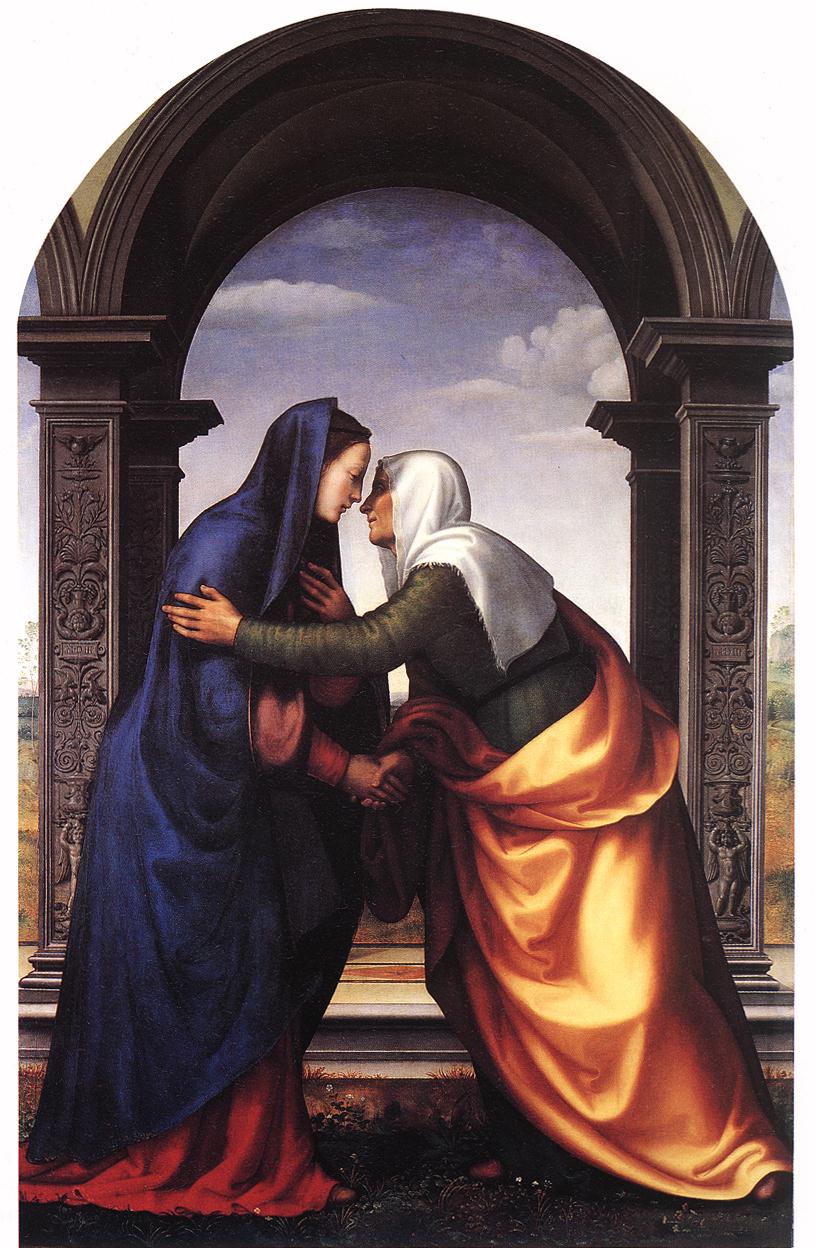
Luke introduces Elizabeth with a resume any Israelite would envy – “a descendant of Aaron… righteous before God, walking blamelessly in all the commandments” – and then the sentence that shadowed her whole adult life: “But they had no child, because Elizabeth was barren, and both were advanced in years” (Luke 1:5-7). She stands in the long biblical line of Sarah, Rebekah, Rachel, and Hannah: women whose empty arms became the very place God chose to show that nothing is impossible for him.
Her son was John the Baptist, and her five months of hidden joy ended with an unannounced visitor. When Mary’s greeting reached her ears, the baby leaped in her womb, Elizabeth was filled with the Holy Spirit, and an old woman in the hill country became the first human being to confess the incarnation: “And why is this granted to me that the mother of my Lord should come to me?” (Luke 1:39-45). Her blessing – “blessed is she who believed” – is the springboard from which Mary’s Magnificat takes flight.
Elizabeth appears once more, at John’s naming, backing her husband’s obedience against the whole family: “No; he shall be called John” (Luke 1:60). A minor character by verse count; by faith, one of the giants of the nativity story.
In the New Testament
- Righteous and barren (Luke 1:5-7)
- The conception of John (Luke 1:24-25)
- The Visitation: “the mother of my Lord” (Luke 1:39-45)
- The naming of John (Luke 1:57-61)
Key Locations
- The Hill Country of Judea The terraced hills west of Jerusalem where Mary visited Elizabeth and the Magnificat was sung.