
The Hill Country of Judea
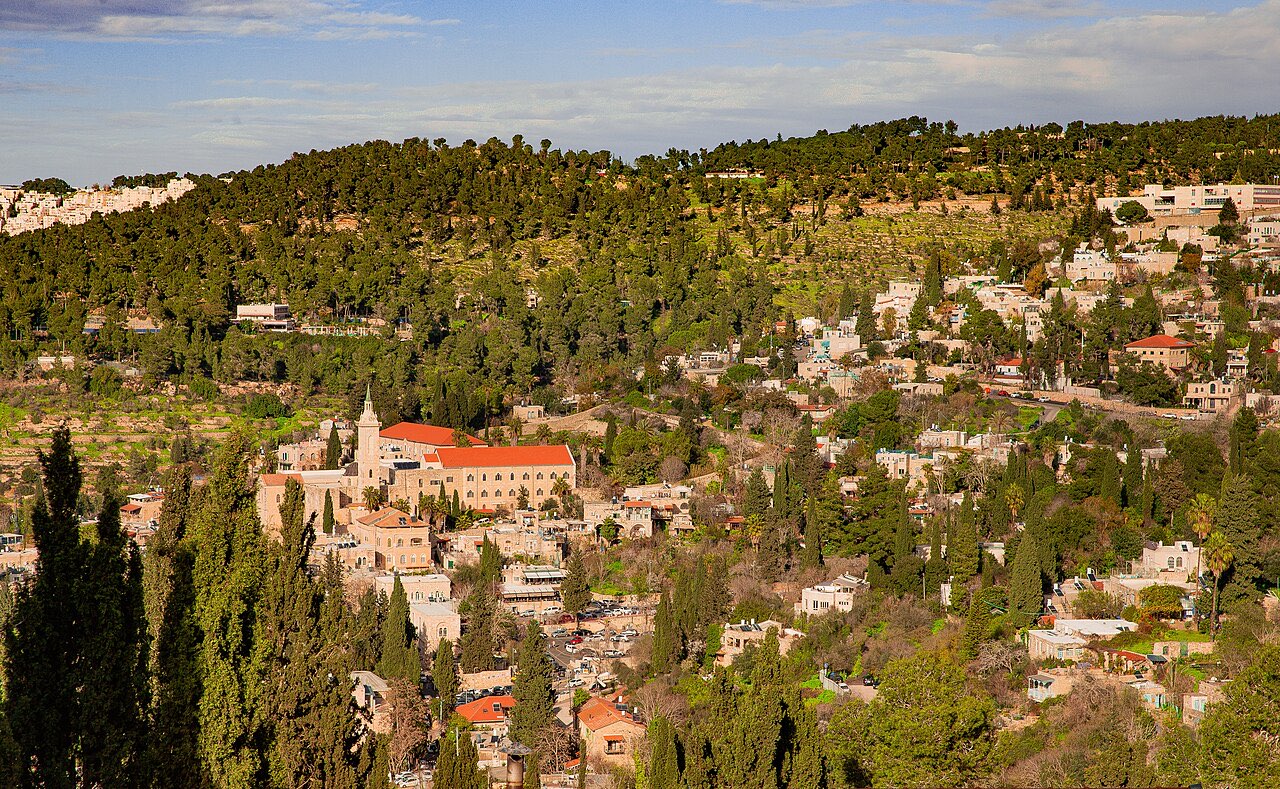
Luke tells us that after the annunciation, Mary “went with haste into the hill country, to a town in Judah” (Luke 1:39). The hill country is the spine of high, terraced ridges that runs through Judea around Jerusalem – olive and vine country, dotted with small villages, a journey of several days on foot from Nazareth.
Luke never names the town, but tradition since at least the sixth century has pointed to Ein Karem (“spring of the vineyard”), a village in a green fold of the hills about five miles west of Jerusalem’s Old City. Whatever the exact address, what happened there towers over the geography: Elizabeth’s unborn child leaped at the sound of Mary’s greeting, Elizabeth blessed “the mother of my Lord,” and Mary answered with the Magnificat – the longest passage of speech given to any woman in the New Testament, and one of the great hymns of Scripture (Luke 1:39-56).
John the Baptist was born and circumcised here, and his father Zechariah’s own hymn, the Benedictus, followed (Luke 1:57-80). Luke closes the scene by noting that the child “grew and became strong in spirit, and was in the wilderness until the day of his public appearance.”
In the New Testament
- Mary’s visit to Elizabeth and the Magnificat (Luke 1:39-56)
- The birth and naming of John the Baptist; the Benedictus (Luke 1:57-80)
- News of these events spreads “through all the hill country of Judea” (Luke 1:65)